US-Iran Relations: A Timeline of Tensions and Diplomacy
The relationship between the United States and Iran has been one of the most complex and volatile geopolitical dynamics of the past half-century. From the 1953 coup that installed the Shah to the 1979 Islamic Revolution and the hostage crisis that followed, tensions have ebbed and flowed through decades of sanctions, proxy conflicts, and sporadic diplomatic efforts. Today, the US-Iran relationship remains a critical flashpoint in global politics, influencing everything from Middle Eastern security to international oil markets and cyber warfare.
Understanding this relationship requires looking beyond the headlines. It demands an examination of historical grievances, economic pressures, and the shifting alliances that shape how Washington and Tehran interact. The following analysis explores key moments in this fraught history, the cultural and economic dimensions of the conflict, and the potential paths forward.
The Historical Roots of US-Iran Tensions
The origins of US-Iran hostilities trace back to the mid-20th century, when the CIA orchestrated a coup in 1953 to overthrow Iran’s democratically elected Prime Minister, Mohammad Mossadegh. The operation reinstated the pro-Western Shah, Mohammad Reza Pahlavi, who ruled with an iron fist until the 1979 Islamic Revolution. The revolution, led by Ayatollah Ruhollah Khomeini, overthrew the monarchy and established an Islamic Republic, fundamentally altering Iran’s political identity and its relationship with the US.
The revolutionaries’ slogan “Neither East nor West” encapsulated Iran’s rejection of both Soviet and American influence. This stance was cemented when Iranian militants seized the US Embassy in Tehran in November 1979, taking 52 American hostages and holding them for 444 days. The crisis severed diplomatic ties between the two nations, a rupture that has never fully healed.
During the Iran-Iraq War (1980-1988), the US initially backed Saddam Hussein’s regime in Iraq, seeing it as a counterbalance to Iran’s revolutionary fervor. However, the US later engaged in a series of covert operations, including the Analysis of the 1988 shooting down of Iran Air Flight 655 by the USS Vincennes, which killed 290 civilians and further strained relations.
Economic Warfare: Sanctions and Their Global Impact
The economic dimension of US-Iran tensions is dominated by sanctions, which have become a primary tool of American foreign policy. The US has imposed multiple rounds of sanctions targeting Iran’s oil exports, financial institutions, and military capabilities. These measures aim to cripple Iran’s economy and force concessions on its nuclear program and regional activities.
In 2015, the Joint Comprehensive Plan of Action (JCPOA), or Iran Nuclear Deal, temporarily eased sanctions in exchange for Iran limiting its nuclear activities. However, the Trump administration withdrew from the deal in 2018, reimposing sanctions and escalating tensions. The Biden administration has since sought to revive the agreement, but negotiations have stalled amid mutual distrust and regional conflicts.
The impact of these sanctions extends far beyond Iran’s borders. Countries like China and India, which have historically imported Iranian oil, have faced pressure to reduce their purchases. Meanwhile, Iran’s currency, the rial, has plummeted in value, and inflation has surged, pushing millions into poverty. The sanctions have also disrupted global supply chains, particularly in the energy sector, contributing to volatility in oil prices.
Here are some of the most significant economic consequences of US-Iran sanctions:
- Oil Market Disruptions: Iran, once OPEC’s second-largest oil exporter, has seen its production and exports decline sharply, reducing global oil supply and driving up prices.
- Humanitarian Crisis: Sanctions have limited Iran’s ability to import medicine and food, exacerbating shortages and affecting vulnerable populations.
- Regional Economic Strain: Countries in the Middle East, particularly Iraq and Lebanon, which rely on trade with Iran, have experienced economic slowdowns.
- Shift in Global Alliances: Sanctions have pushed Iran closer to allies like Russia and China, creating new geopolitical blocs that challenge US dominance.
Proxy Conflicts and Regional Power Struggles
The US and Iran are not directly at war, but they are engaged in a shadow conflict fought through proxies across the Middle East. This proxy war has played out in countries like Syria, Yemen, Iraq, and Lebanon, where both nations support opposing factions.
In Syria, Iran has been a key ally of President Bashar al-Assad, providing military support, funding, and fighters to help him stay in power. The US, on the other hand, has backed various rebel groups and Kurdish forces, aiming to counter Iranian influence and ISIS. The Syrian Civil War has become a battleground for these competing interests, with devastating consequences for the civilian population.
In Yemen, Iran supports the Houthi rebels, while the US backs the Saudi-led coalition fighting them. The conflict has resulted in one of the world’s worst humanitarian crises, with millions displaced and facing famine. Similarly, in Iraq, Iran-backed militias have clashed with US forces, creating a dangerous environment for American troops stationed there.
These proxy conflicts highlight the broader struggle for regional dominance between the US and Iran. For Iran, supporting proxies is a way to extend its influence and deter potential attacks. For the US, it’s a strategy to contain Iran’s ambitions and protect its allies, particularly Israel and Saudi Arabia.
Cultural Exchange and the Iranian-American Diaspora
Despite political tensions, cultural and people-to-people ties between the US and Iran remain strong. The Iranian-American community, one of the most educated and affluent immigrant groups in the US, has played a vital role in bridging the gap between the two nations. Iranian-Americans have made significant contributions to fields ranging from science and technology to arts and literature.
In the arts, Iranian filmmakers like Asghar Farhadi have gained international acclaim, winning multiple Academy Awards. Farhadi’s films, such as “A Separation” and “The Salesman,” offer nuanced portrayals of Iranian society, challenging Western stereotypes. Similarly, Iranian musicians and writers have found audiences in the US, using their platforms to foster dialogue and understanding.
However, cultural exchange is not without challenges. Travel restrictions, visa bans, and the stigma of being associated with Iran have made it difficult for artists and scholars to collaborate. The Trump administration’s travel ban, which targeted several predominantly Muslim countries including Iran, further strained these connections. While the ban has since been lifted, the emotional and psychological toll on Iranian-Americans and their families remains.
Despite these obstacles, grassroots efforts continue to promote cultural exchange. Organizations like the Education and cultural exchange programs, such as the Iran-U.S. Engagement Initiative, bring together students, artists, and professionals to foster mutual understanding. These initiatives are crucial in a climate where political rhetoric often overshadows human connections.
The Path Forward: Diplomacy or Escalation?
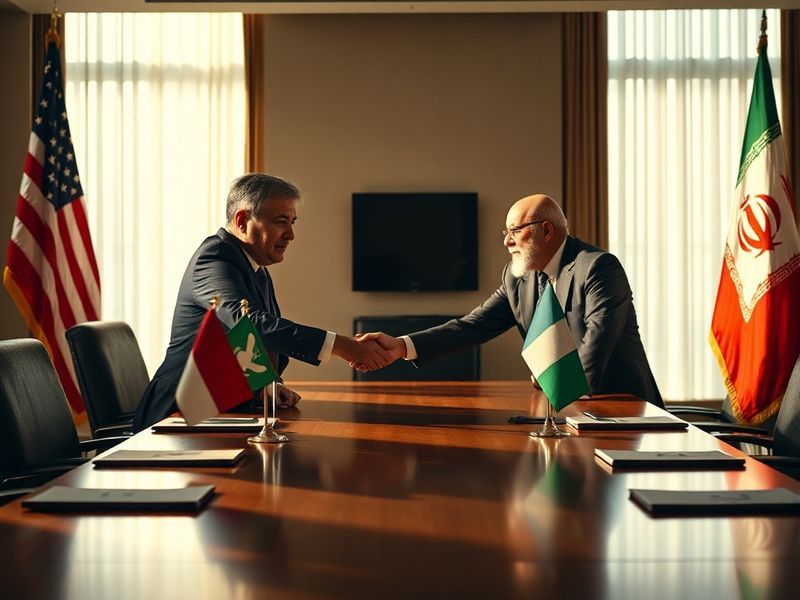
The future of US-Iran relations hinges on whether diplomacy can overcome decades of mistrust and hostility. The Biden administration has signaled a willingness to return to the JCPOA, but Iran’s demands for sanctions relief and guarantees against future US withdrawals have complicated negotiations. Meanwhile, hardliners in both countries oppose compromise, advocating for a more confrontational approach.
One potential avenue for de-escalation is the revival of the JCPOA, even in a limited form. A renewed agreement could pave the way for broader talks on regional security, including issues like Yemen, Syria, and Iraq. However, such efforts would require significant concessions from both sides and a willingness to set aside historical grievances.
Alternatively, the cycle of escalation could continue, with both nations doubling down on their respective strategies. The US might increase its military presence in the region, while Iran could further expand its proxy networks. Such a path risks unintended consequences, including direct military confrontations or broader regional conflicts.
Ultimately, the US-Iran relationship is a microcosm of the challenges facing global diplomacy in the 21st century. It highlights the tension between national security interests and the need for cooperation in an interconnected world. Whether through dialogue or confrontation, the choices made by both nations will have far-reaching implications for the Middle East and beyond.
For now, the world watches as these two powers navigate a delicate balance between rivalry and necessity. The outcome will shape not only the future of US-Iran relations but also the broader geopolitical landscape.