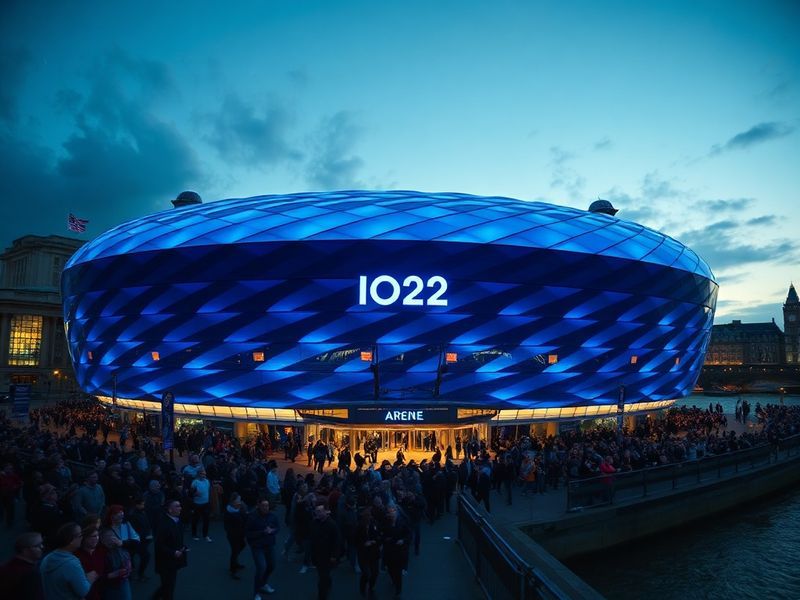
Since its opening in 2007, the O2 Arena has cemented itself as one of the world’s most iconic venues. Located on the Greenwich Peninsula, this architectural marvel has hosted legendary performances, high-profile sporting events, and groundbreaking corporate gatherings. With a seating capacity of nearly 20,000, it ranks among the largest indoor arenas globally, rivaling even New York’s Madison Square Garden.
The Arena’s Origins and Architectural Brilliance
The O2 Arena was originally constructed as the centerpiece of the Millennium Dome, a project designed to celebrate the year 2000. While the dome itself faced mixed reception, the arena emerged as a lasting legacy. Its most striking feature is the iconic white tensile fabric roof, designed by engineers Buro Happold and architects Richard Rogers Partnership. This design not only provides structural integrity but also creates an unmistakable visual identity.
Unlike traditional venues, the O2 Arena’s interior was engineered for versatility. Its modular design allows for rapid reconfiguration, accommodating everything from intimate concerts to full-scale sporting events. The arena’s acoustics, developed in collaboration with leading audio specialists, ensure an immersive experience for audiences regardless of the event.
Key Features of the O2 Arena
- Capacity: Up to 20,000 for concerts, with flexible seating for smaller events.
- Acoustics: Custom-engineered sound systems for optimal audio clarity.
- Accessibility: Fully wheelchair-accessible with designated viewing areas.
- Transport Links: Directly connected to the London Underground via North Greenwich station.
- Sustainability: Energy-efficient systems integrated into the venue’s operations.
A Cultural and Economic Powerhouse
The O2 Arena isn’t just a venue—it’s a cultural institution. Since its opening, it has welcomed over 10 million visitors and hosted more than 2,500 events. Its influence extends beyond entertainment, contributing significantly to London’s economy. According to a 2022 report, the venue generates approximately £180 million annually in tourism revenue, supporting local businesses and hospitality sectors.
Beyond its financial impact, the O2 Arena has played a pivotal role in shaping London’s cultural calendar. It has become a must-book destination for international artists, from Adele’s record-breaking residency to Beyoncé’s historic performances. The arena’s ability to attract global talent underscores its reputation as a premier entertainment hub.
Sporting events also draw massive crowds. The O2 has hosted major boxing matches, ATP Finals tennis tournaments, and even NBA games. Its adaptability makes it a favorite for organizers seeking a high-profile venue with state-of-the-art facilities.
Innovation and Technological Advancements
The O2 Arena has consistently pushed the boundaries of event hosting through technological innovation. In 2020, it became one of the first venues in Europe to implement a cashless payment system, streamlining transactions for attendees. The arena also utilizes advanced crowd management software to optimize entry and exit flows, reducing wait times and enhancing safety.
Recent upgrades include enhanced LED lighting systems that synchronize with performances, creating dynamic visual experiences. The venue’s partnership with leading tech companies ensures it remains at the forefront of event production. These advancements not only improve the attendee experience but also set new standards for the industry.
Technological Highlights
- Cashless Transactions: Over 90% of payments processed via contactless and mobile wallets.
- Augmented Reality: Integrated AR experiences for select events, blending digital and physical interactions.
- Sustainable Energy: Solar panel installations and energy-efficient HVAC systems reduce carbon footprint.
- Smart Ticketing: AI-driven ticket validation and anti-fraud measures enhance security.
The Future of the O2 Arena
As the entertainment landscape evolves, the O2 Arena continues to adapt. The venue has announced plans to expand its digital capabilities, including virtual reality (VR) concert experiences for remote audiences. These initiatives reflect a broader trend in the industry, where venues are leveraging technology to reach global audiences beyond physical attendance.
Sustainability remains a key focus. The O2 Arena aims to achieve net-zero carbon emissions by 2030, aligning with London’s broader environmental goals. This commitment includes initiatives like reducing single-use plastics and sourcing local produce for its concessions.
Looking ahead, the O2 Arena is poised to remain a cornerstone of London’s cultural and economic landscape. Its ability to innovate while honoring its legacy ensures it will continue attracting audiences for decades to come.
Conclusion
The O2 Arena stands as a testament to the power of visionary design and adaptability. From its origins as part of the Millennium Dome to its current status as a global entertainment leader, the venue has consistently redefined what a modern arena can achieve. Its impact on London’s economy, culture, and technological progress underscores its importance—not just as a venue, but as a symbol of innovation.
As the entertainment industry continues to evolve, the O2 Arena’s commitment to excellence ensures it will remain a vital part of the conversation. Whether hosting a sold-out concert, a high-stakes sporting event, or a groundbreaking corporate conference, the O2 Arena proves that great venues are defined by their ability to inspire and adapt.
For those seeking to experience world-class entertainment in a state-of-the-art setting, the O2 Arena remains an unmissable destination.