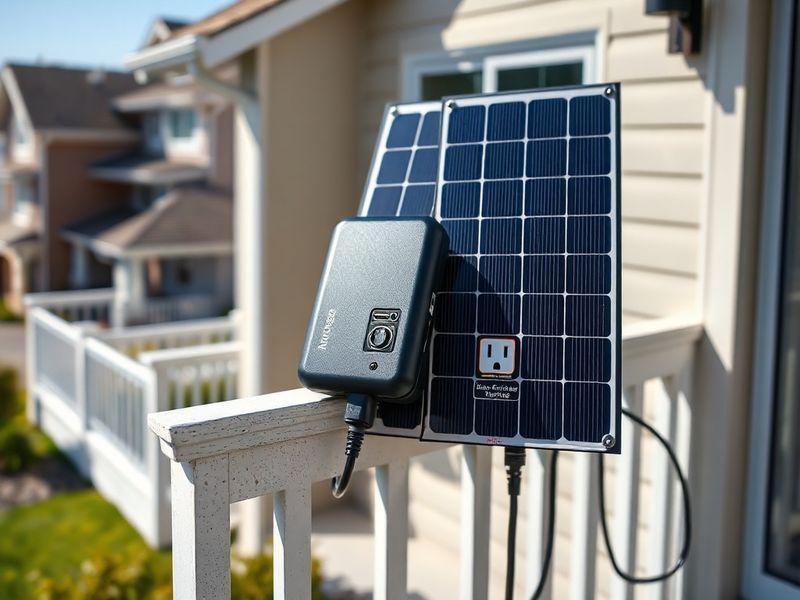
With energy costs rising and climate concerns growing, homeowners are searching for accessible ways to cut expenses and reduce their carbon footprint. Enter plug-in solar—a straightforward, low-barrier solution that lets nearly anyone generate clean electricity at home. Unlike traditional rooftop solar systems, which require permits, structural assessments, and significant upfront investment, plug-in solar units plug directly into standard outlets, turning balconies, patios, and backyards into mini power stations.
These compact devices, often called plug-and-play solar panels or solar generators, are gaining traction among renters, urban dwellers, and budget-conscious homeowners. They’re not meant to replace utility power but to supplement it, lowering monthly bills and reducing reliance on the grid. As technology improves and regulations evolve, plug-in solar is moving from a niche idea to a mainstream energy option.
How Plug-In Solar Works
At its core, plug-in solar is a self-contained solar panel system designed for easy installation. Most units include a small solar panel mounted on a stand or bracket, connected to an inverter and a battery or directly to a home’s electrical system via a standard outlet. Installation typically involves positioning the panel in a sunny spot, plugging it into a dedicated outdoor outlet (or a transfer switch), and monitoring output through a companion app.
Unlike traditional solar arrays, these systems don’t require professional installation or structural modifications. They’re engineered for portability and simplicity, making them ideal for renters or those who can’t commit to permanent rooftop panels. Some models can even be moved seasonally to track the sun or avoid shading from trees or buildings.
Key components of a basic plug-in solar setup include:
- Solar panel: Typically 100–400 watts, monocrystalline or polycrystalline
- Microinverter: Converts DC power to AC for household use
- Battery (optional): Stores excess energy for nighttime or outages
- Mounting hardware: Lightweight frames or stands for stability
- Monitoring app: Tracks energy production and system health
Because they’re modular, users can start with one panel and expand over time. This scalability lowers the barrier to entry—unlike full solar installations, which often require a large upfront investment.
Why Plug-In Solar Is Gaining Popularity
Several factors are driving the rise of plug-in solar. First is cost. Traditional residential solar systems can cost $10,000 to $30,000 installed. In contrast, a single plug-in solar panel starts around $200–$500, with multi-panel kits rarely exceeding $2,000. While they don’t generate enough power to run a whole home, they can offset 10–30% of a household’s electricity use, leading to noticeable savings on monthly bills.
Second is flexibility. Plug-in solar systems are designed for people who can’t or won’t install permanent panels. Renters, apartment dwellers, and homeowners with shaded roofs or HOA restrictions now have a viable option. Some cities even offer rebates or tax credits for plug-in solar units, further improving affordability.
Third is sustainability. Even small-scale solar reduces dependence on fossil fuels. When plugged into the grid, excess energy can be fed back through net metering programs in many areas, allowing users to earn credits on their utility bills. This turns unused rooftop or balcony space into a mini power plant.
The environmental benefit isn’t just theoretical. A 2023 study by the National Renewable Energy Laboratory found that widespread adoption of small solar devices—including plug-in units—could reduce U.S. residential carbon emissions by up to 2% annually by 2030. While modest, it’s a meaningful contribution when scaled across millions of homes.
Challenges and Considerations
Plug-in solar isn’t without limitations. The most obvious is output. A single 400-watt panel might generate 1.5–2 kilowatt-hours per day in full sun—enough to power a refrigerator for a few hours or run LED lights overnight. But it won’t run high-wattage appliances like air conditioners or electric stoves. Users must set realistic expectations and prioritize energy use accordingly.
Safety is another concern. While modern units are designed with UL-certified components, improper installation or use can pose risks. Panels must be grounded, and connections must comply with local electrical codes. Some utility companies have raised concerns about backfeeding energy into the grid without proper safeguards, leading to stricter regulations in certain regions.
Weather and placement also matter. Shading, orientation, and seasonal sun angles significantly affect output. A panel facing south at a 30-degree angle in Arizona will perform far better than one on a north-facing balcony in Seattle. Users need to assess their site carefully or use adjustable mounts to optimize performance.
Finally, there’s the issue of waste. While solar panels last 25–30 years, batteries and microinverters have shorter lifespans. As demand grows, so does the need for responsible recycling programs. Some manufacturers now offer take-back initiatives, but infrastructure lags behind adoption.
The Future of Plug-In Solar
Despite these challenges, the plug-in solar market is expanding rapidly. Industry analysts project a 20% annual growth rate through 2030, driven by falling panel costs, improved battery technology, and supportive policies. Innovations like bifacial panels (which capture sunlight from both sides) and flexible, rollable solar fabrics could make these systems even more versatile.
Governments are taking notice. The U.S. Inflation Reduction Act includes tax credits for small-scale solar devices, and several states now offer rebates for plug-in units. Meanwhile, companies like Renogy and EcoFlow are launching plug-and-play kits designed specifically for urban environments.
For renters and homeowners alike, plug-in solar represents more than just an energy upgrade—it’s a step toward energy independence. It democratizes access to clean power, proving that sustainability doesn’t require a mortgage or a permanent installation. As the grid grows more strained and climate policies tighten, these small but mighty devices may become a standard feature of modern living.
They won’t replace utility power overnight. But they offer something just as valuable: a way to act today. And in a world where every kilowatt counts, that’s a shift worth plugging into.