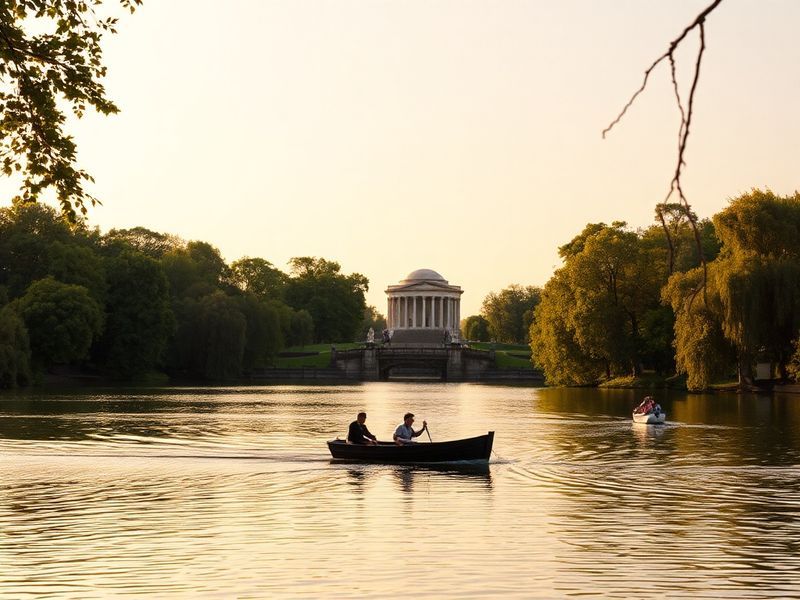
Nestled in the heart of London, Kensington Gardens offers a rare escape from the city’s relentless pace. Often overshadowed by its larger neighbor, Hyde Park, this 275-acre green space is a masterclass in understated elegance and historical depth. From the ornate Italian Gardens to the solemn memorials, it blends royal heritage with everyday tranquility.
The gardens trace their origins to the early 17th century, when they were part of the Kensington Palace estate. Unlike Hyde Park, which was traditionally a hunting ground for royalty, Kensington Gardens was designed as a private retreat for William III and Mary II in the 1680s. Their vision transformed the marshy land into a formal garden, complete with avenues, fountains, and groves. Today, the gardens retain that regal character while serving as a public sanctuary.
The Royal Heart of the Gardens
Kensington Palace remains the gardens’ undeniable focal point. The palace has been a royal residence since the 17th century and continues to house members of the British royal family, including the Prince and Princess of Wales. Its grand façade and sprawling grounds invite visitors to step into centuries of history.
The palace’s most famous resident, Queen Victoria, was born here in 1819. A blue plaque marks the spot where she took her first breath, a small but significant detail that underscores the gardens’ place in British history. While the interior of the palace is occasionally open to the public, the surrounding gardens offer their own treasures—many of which are free to explore.
- Italian Gardens: A lavish 19th-century water feature commissioned by Prince Albert, featuring four ornate fountains and a striking basin. The surrounding terrace offers one of the most picturesque spots in London.
- Kensington Palace Gardens: The private gardens of the palace, accessible only during special events, are a secluded enclave of manicured lawns and ancient trees.
- The Sunken Garden: Redesigned in 2012 to honor the Diamond Jubilee of Queen Elizabeth II, this garden features a striking statue of Diana, Princess of Wales, surrounded by vibrant seasonal blooms.
A Sanctuary for Wildlife and Culture
Beyond its royal connections, Kensington Gardens is a haven for biodiversity and cultural engagement. The Serpentine Galleries, located on its southern edge, are two of London’s most influential contemporary art spaces. The Serpentine North focuses on experimental work, while the Serpentine South hosts the annual Serpentine Pavilion, a temporary structure by emerging architects. These galleries transform the gardens into a dynamic cultural hub, bridging the gap between nature and avant-garde creativity.
The gardens are also a critical habitat within the city. Over 20 species of birds nest here, including woodpeckers and tawny owls, while the Round Pond attracts waterfowl like coots and moorhens. The mature oak and plane trees provide essential green corridors for urban wildlife, proving that even in a metropolis of nine million, pockets of wilderness persist.
Key Habitats and Features
- Round Pond: A 3.2-hectare body of water popular with model boat enthusiasts and birdwatchers. The pond’s calm surface reflects the gardens’ changing seasons.
- Broad Walk: A grand tree-lined avenue that stretches from the palace gates to the Queen’s Gate entrance, offering a shaded path for walkers and joggers.
- Diana, Princess of Wales Memorial Playground: A whimsical adventure playground designed for children, featuring a wooden pirate ship and sensory trails. It honors Diana’s legacy as a champion of children’s welfare.
- Peter Pan Statue: A bronze sculpture of the beloved literary character, gifted to the gardens in 1912. The statue’s placement beneath a tree is said to be a nod to J.M. Barrie’s original story.
More Than a Park: The Broader Implications
Kensington Gardens plays a subtle but vital role in London’s urban ecosystem. As green spaces come under pressure from development and climate change, its preservation offers lessons in balancing tradition with modern needs. The gardens’ management team has implemented sustainable practices, such as water recycling for irrigation and habitat restoration projects, to ensure its longevity.
For visitors, the gardens provide more than just a scenic stroll. Studies have shown that urban green spaces like Kensington Gardens reduce stress, improve mental health, and foster community connections. The annual Winter Lights Festival, for example, transforms the gardens into a luminous wonderland, drawing thousands of visitors who might otherwise overlook the space during colder months.
Its proximity to museums like the Victoria and Albert Museum and the Natural History Museum also makes it a gateway to cultural enrichment. Unlike many urban parks, Kensington Gardens doesn’t just complement its surroundings—it enhances them, creating a synergy that elevates the entire neighborhood.
Why It Matters Today
In an age where cities are increasingly defined by glass towers and digital distractions, spaces like Kensington Gardens serve as vital counterpoints. They remind us of the value of slow, reflective experiences—whether it’s watching a heron fish in the Round Pond or sitting on a bench beneath a 200-year-old oak, reading a book.
The gardens also reflect London’s layered history. Every path, statue, and fountain tells a story, from the Baroque splendor of the Italian Gardens to the modernist curves of the Serpentine Pavilion. This blend of old and new is what makes Kensington Gardens uniquely compelling. It’s not just a park; it’s a living museum of landscape design and royal legacy.
For those seeking respite or inspiration, a visit to Kensington Gardens is a reminder that beauty often lies in the details. It’s a place where history is felt in the air, where art and nature coexist, and where London’s past and present merge seamlessly.
Whether you’re a first-time visitor or a longtime local, the gardens offer something new with each season. From the crocuses of early spring to the golden hues of autumn, Kensington Gardens is a testament to the enduring power of green spaces in an urban world.
To explore more about London’s hidden gems and cultural landmarks, visit Dave’s Locker Culture and Dave’s Locker Travel sections for curated guides and insights.