plug-in solar
“`html
What Are Plug-In Solar Panels and How Do They Work?
Plug-in solar panels are small, portable photovoltaic systems designed for direct connection to standard electrical outlets. Unlike traditional rooftop installations, these devices plug into any 120V or 230V household socket using a standard power cord, converting sunlight into usable electricity that feeds directly into a home’s circuit. Most models include microinverters that convert the solar energy from direct current (DC) to alternating current (AC), making the power compatible with household appliances. This technology emerged from the broader movement toward decentralized energy solutions, offering homeowners a way to generate clean power without the complexity of permanent installations.
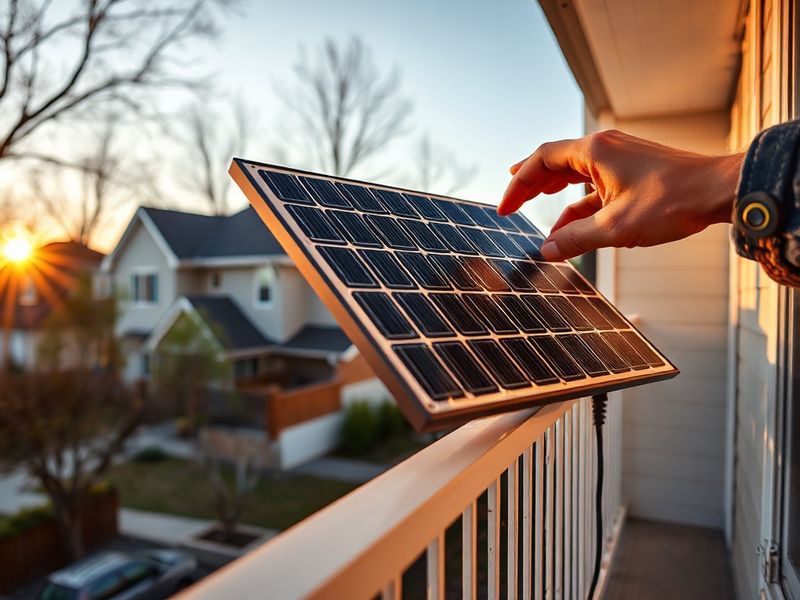
Unlike large-scale solar farms or fixed rooftop systems, plug-in solar devices are often marketed as “plug-and-play” solutions. They typically weigh under 20 kilograms and can be mounted on balconies, patios, or garden stands. Some designs integrate lightweight solar cells into folding frames, making them ideal for renters, apartment dwellers, or those who want to test solar power before committing to a full installation. The modular nature of these systems allows users to expand capacity by adding more panels over time, aligning with the growing trend of energy independence.
The Global Rise of Plug-In Solar: Who’s Adopting It and Why
Adoption of plug-in solar technology is accelerating across Europe, where energy prices have soared since Russia’s invasion of Ukraine in 2022. In Germany, sales of balcony power plants—small plug-in solar kits—more than doubled in 2023, reaching over 300,000 units. The German government even simplified regulations, waiving permit requirements for systems under 600 watts. Meanwhile, in the United Kingdom, plug-in solar kits have become a staple in community energy projects, particularly in urban areas where rooftop space is limited.
In Southeast Asia, plug-in solar is gaining traction as a climate adaptation tool. In the Philippines, where frequent typhoons damage power lines, portable solar panels provide emergency power during blackouts. Villages in rural India use plug-in systems to supplement unreliable grid electricity, reducing dependence on diesel generators. Even in Africa, where grid access remains uneven, small-scale solar kits are being distributed through microfinance programs, empowering off-grid communities to generate their own electricity.
Cultural attitudes play a significant role in adoption patterns. In countries with strong environmental awareness, such as Sweden and Denmark, plug-in solar is framed as a civic duty. Swedish municipalities offer subsidies that cover up to 50% of the cost, and local “solar ambassadors” host workshops to demystify the technology. In contrast, in regions where energy costs are low or fossil fuel subsidies persist, uptake remains sluggish. The contrast highlights how economic incentives and cultural narratives shape the transition to decentralized energy.
Costs, Savings, and the Reality of Plug-In Solar Performance
Prices for plug-in solar kits vary widely based on capacity and quality. Entry-level models with a single 400-watt panel typically cost between €300 and €500, while premium systems with two panels and smart monitoring can exceed €1,200. Installation is minimal—users often mount panels on balcony railings or garden stakes—but some regions require professional certification to ensure electrical safety. In Europe, the payback period averages 4 to 7 years, depending on local electricity rates and sunlight exposure.
Real-world performance depends on several factors. Orientation, shading, and seasonal sun angles significantly affect output. A south-facing panel in Spain may generate 800 kilowatt-hours per year, while the same panel in cloudy Scotland might produce only 500 kWh. Smart inverters and energy monitoring apps help users optimize placement and track savings, but overestimating output remains a common mistake. Some consumers install panels facing east or west to maximize morning or evening sun, accepting slightly lower daily output for steadier power throughout the day.
Despite these variables, plug-in solar offers tangible financial benefits. In Germany, where household electricity costs average €0.38 per kilowatt-hour, a 600W system can save users €150 to €250 annually. In the United States, where average rates are closer to €0.22 per kWh, savings are lower but still meaningful for high-usage households. The systems also qualify for tax credits in some countries, further improving affordability. For renters or property owners unable to modify structures, plug-in solar represents one of the few accessible ways to participate in the clean energy transition.
Challenges and Criticisms: Safety, Regulation, and Grid Impact
Safety concerns have emerged as plug-in solar grows in popularity. In 2023, a fire in a German apartment complex was linked to an improperly installed balcony power plant. Investigators found that while the panels themselves posed no risk, a faulty microinverter and uncertified wiring caused overheating. This incident prompted stricter testing standards across the European Union, with new regulations requiring inverters to carry CE and VDE certifications. Similar debates are unfolding in Australia and New Zealand, where fire authorities are reviewing installation guidelines for portable solar devices.
Regulatory frameworks remain inconsistent. Some countries treat plug-in solar as consumer electronics, exempt from electrical permitting. Others classify them as miniature power plants, subjecting them to the same inspections as rooftop systems. The lack of harmonized standards creates confusion for manufacturers and buyers alike. In the United States, the National Electrical Code now includes provisions for plug-in solar, but enforcement varies by state. Meanwhile, in Japan, where earthquakes pose additional risks, authorities require seismic-resistant mounting systems for all outdoor panels.
Grid integration is another area of contention. When thousands of small solar systems feed power into the same local grid, utilities sometimes struggle to balance supply and demand. In parts of Australia, excess solar generation during midday has led to voltage fluctuations, prompting network operators to install smart inverters that can throttle output automatically. Critics argue that without proper coordination, plug-in solar could destabilize local grids, especially in regions with outdated infrastructure. Proponents counter that smart meters and battery storage can mitigate these issues, turning individual systems into virtual power plants.
Environmental impact also raises questions. While plug-in solar reduces reliance on fossil fuels, the production of solar panels involves mining silicon, silver, and rare earth metals. Most panels have a lifespan of 25 years, but end-of-life disposal remains poorly regulated in many countries. Recycling programs are expanding in Europe under the Waste Electrical and Electronic Equipment directive, but in developing nations, improper disposal still poses environmental risks. The industry is responding with circular economy initiatives, including take-back schemes and panel designs that use fewer critical materials.
Looking Ahead: The Future of Plug-In Solar in the Energy Transition
Plug-in solar is poised to become a mainstream feature of urban energy landscapes. Innovations in panel efficiency and battery storage are extending the usefulness of these systems. Companies like Germany’s Technology startups are developing lightweight, semi-transparent solar cells that can be integrated into windows or balcony railings, blending aesthetics with function. Meanwhile, battery packs designed for plug-in systems allow users to store excess energy for use during peak evening hours, reducing reliance on the grid altogether.
Policy trends suggest growing support for decentralized energy. The European Green Deal includes provisions to streamline permitting for small-scale solar, while U.S. states like California are piloting “virtual net metering” programs that credit plug-in solar users for feeding power back into the grid. In Africa, organizations such as the World Bank are funding microgrid projects that combine plug-in solar with community battery storage, bypassing centralized utilities entirely. These developments indicate that plug-in solar is not just a niche solution but a scalable component of the global energy transition.
Cultural adoption will continue to shape the technology’s trajectory. In cities where space is at a premium, plug-in solar may become as common as Wi-Fi routers. In rural areas, it could serve as a bridge to full electrification. The key challenge will be ensuring that growth is inclusive—providing access to low-income households and avoiding a situation where only wealthier consumers benefit from clean energy innovations. With the right policies, education, and design adaptations, plug-in solar could help democratize the energy transition, one balcony at a time.
—
METADATA
{
“title”: “Plug-In Solar Panels: A Global Guide to Portable Clean Energy”,
“metaDescription”: “Explore how plug-in solar panels are reshaping energy access worldwide with low-cost, portable solutions for homes and communities.”,
“categories”: [“Technology”, “News”],
“tags”: [“solar energy”, “renewable energy”, “portable solar”, “clean energy solutions”, “decentralized power”],
“imageDescription”: “A modern apartment balcony in a European city, featuring two small plug-in solar panels mounted on a railing. The scene shows morning sunlight, a smart inverter unit plugged into a wall socket, and a family gardening below. The mood is bright and optimistic, capturing the blend of urban living and sustainable technology.”
}
—END METADATA—
“`