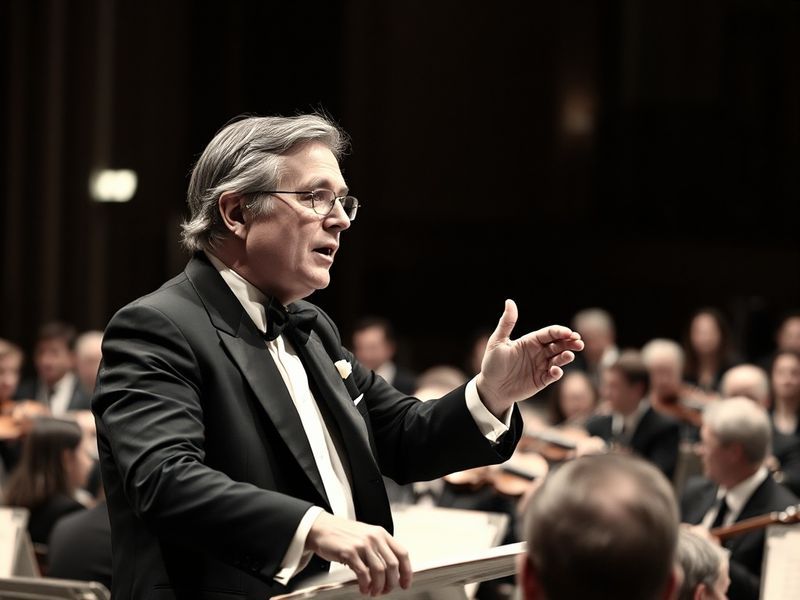
michael tilson thomas
“`html
Michael Tilson Thomas: A Maestro’s Legacy in Modern Music
Michael Tilson Thomas stands as one of the most influential figures in classical music today. With a career spanning over six decades, he has reshaped the way audiences perceive orchestral performance, blending tradition with innovation. As a conductor, pianist, and composer, Thomas has left an indelible mark on institutions like the San Francisco Symphony and the New World Symphony. His work transcends conventional boundaries, making him a pivotal figure in both educational outreach and avant-garde programming.
Early Life and Musical Foundations
Born on December 21, 1944, in Los Angeles, Michael Tilson Thomas was immersed in music from an early age. His grandparents were prominent figures in the Yiddish theater, and his mother was a violinist, fostering an environment rich in artistic expression. He began studying piano at age 10 and later attended the University of Southern California, where he studied with renowned pedagogues including Ingolf Dahl. His early exposure to both classical and contemporary music laid the groundwork for his eclectic approach to conducting.
Thomas’s breakthrough came in 1969 when he won the Koussevitzky Prize at Tanglewood, launching his career as a conductor. His mentorship under conductors like Leonard Bernstein further shaped his dynamic and expressive style. These formative years were critical in developing the qualities that would later define his leadership: a deep connection to the score, an ability to communicate musical ideas vividly, and an openness to experimentation.
The San Francisco Symphony Era
Thomas became the music director of the San Francisco Symphony in 1995, a role he held until 2020. During his tenure, he transformed the orchestra into a globally recognized ensemble known for its technical precision and emotional depth. Under his guidance, the orchestra expanded its repertoire to include contemporary works, film scores, and multimedia collaborations, reflecting Thomas’s belief in music as a living, evolving art form.
One of his most significant contributions was the creation of the San Francisco Symphony’s Keeping Score initiative, which brought classical music education to classrooms across the country. Through television documentaries and interactive online resources, Thomas made complex musical concepts accessible to millions. This project underscored his commitment not only to performance but to fostering the next generation of music lovers.
The orchestra’s recording of Mahler’s symphonies under Thomas’s baton earned widespread acclaim, including multiple Grammy Awards. His interpretations were celebrated for their clarity, warmth, and emotional intensity. Thomas also championed living composers, premiering works by John Adams, Jake Heggie, and others, ensuring the symphony’s relevance in the 21st century.
Innovative Programming and Cultural Impact
Thomas was instrumental in redefining concert hall experiences. He introduced thematic series that connected music to literature, visual arts, and history. For example, the “American Mavericks” festival celebrated iconoclastic composers like Charles Ives and Henry Cowell, while performances of film scores—such as those from Star Wars and Psycho—bridged classical and popular culture. These programs attracted diverse audiences and demonstrated music’s power to transcend genre.
His collaborations extended beyond the concert hall. Thomas worked with visual artists, dancers, and filmmakers to create immersive experiences. One notable project was the staging of Stravinsky’s The Rite of Spring alongside contemporary choreography, reimagining a seminal work for modern audiences. Such initiatives highlighted his belief in music as a multidisciplinary art form.
New World Symphony: Building the Future of Classical Music
In 1987, Thomas co-founded the New World Symphony (NWS) in Miami Beach, a training orchestra for young musicians aspiring to professional careers. The NWS is not just an institution; it’s a laboratory for innovation in orchestral performance. Thomas envisioned it as a place where tradition and experimentation coexist, preparing musicians for the realities of a rapidly changing industry.
The NWS’s unique model includes intensive training in orchestral repertoire, entrepreneurship, and community engagement. Fellows perform in diverse venues, from traditional concert halls to schools and nursing homes, learning to connect with audiences of all backgrounds. This approach has produced generations of musicians who are as comfortable on stage as they are in the classroom or recording studio.
Under Thomas’s leadership, the NWS also became a hub for digital innovation. The organization pioneered online masterclasses and virtual performances, long before the pandemic made such initiatives essential. These efforts ensured that classical music education remained accessible even during global disruptions.
Legacy and Influence
Michael Tilson Thomas’s impact can be measured not only in awards and accolades but in the lives he has touched. He has conducted nearly every major orchestra in the world, from the Berlin Philharmonic to the London Symphony Orchestra. His discography includes over 120 recordings, spanning classical masterpieces to contemporary works. Among his most celebrated recordings are his cycles of Mahler, Beethoven, and Copland symphonies, each praised for its fresh perspective and emotional resonance.
Beyond his artistic achievements, Thomas has been a vocal advocate for arts funding and education. He has testified before Congress on the importance of arts in public education and has partnered with organizations like the League of American Orchestras to strengthen the field. His advocacy reflects a deep conviction that music is not a luxury but a vital component of a vibrant society.
Looking Ahead: The Next Chapter
Though Thomas stepped down as music director of the San Francisco Symphony in 2020, his influence continues to grow. He remains active as a guest conductor, a sought-after speaker, and a mentor to young artists. His recent projects include collaborations with the London Symphony Orchestra and ongoing work with the NWS, where he now serves as artistic director laureate.
As classical music faces both challenges and opportunities in the digital age, Thomas’s approach offers a blueprint for adaptability. Whether through innovative programming, educational outreach, or boundary-pushing performances, he has consistently demonstrated that great music is not confined to the past—it is a living, breathing force that evolves with each generation.
In an era where the arts are often undervalued, Michael Tilson Thomas’s career serves as a reminder of music’s transformative power. His legacy is not just in the notes he has conducted but in the countless lives he has inspired to listen, learn, and engage with the world in new ways.
—
METADATA
{
“title”: “Michael Tilson Thomas: A Maestro’s Influence on Modern Music”,
“metaDescription”: “Explore the career of Michael Tilson Thomas, from San Francisco Symphony to New World Symphony and his lasting impact on classical music.”,
“categories”: [“Music”, “Culture”],
“tags”: [“Michael Tilson Thomas”, “San Francisco Symphony”, “New World Symphony”, “classical music”, “orchestral conducting”],
“imageDescription”: “A vibrant concert hall scene featuring Michael Tilson Thomas on the podium, baton raised, conducting a full orchestra. The musicians are in mid-performance, bathed in warm stage lighting, with a diverse audience visible in the foreground. The mood is dynamic and celebratory, capturing the energy of a live orchestral performance.”
}
—END METADATA—
“`