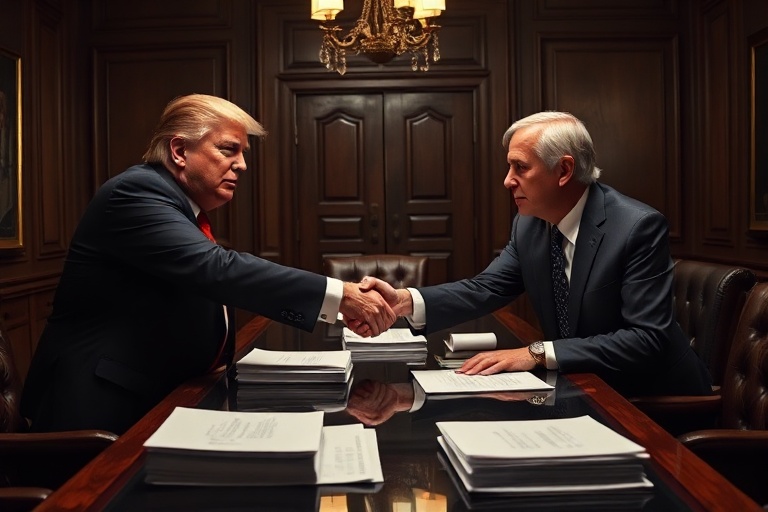
Presidential Pardons Explained: Power, Controversy, and History
“`html
Presidential Pardons: Power, Precedent, and Public Perception
The presidential pardon is one of the most powerful yet least understood tools in American governance. Rooted in Article II, Section 2 of the Constitution, it allows the president to grant clemency to individuals convicted of federal crimes, effectively absolving them of punishment. While often associated with dramatic political gestures, pardons carry deep legal, historical, and social implications that extend far beyond the individuals involved.
The power is absolute in scope, though not unlimited. It cannot be reviewed by courts or overridden by Congress, making it a unilateral executive authority. Yet its use remains deeply contentious, sparking debates about justice, mercy, and the boundaries of presidential power. Understanding pardons requires examining their origins, their role in shaping national narratives, and the controversies that inevitably surround their use.
The Constitutional Roots and Evolution of the Pardon Power
The pardon power traces its origins to English common law, where the monarch held the authority to forgive crimes and restore rights. When the U.S. Constitution was drafted in 1787, the framers included this power in Article II to prevent injustices that might arise from overly harsh laws or unfair prosecutions. Alexander Hamilton, writing in The Federalist Papers, argued that the pardon power was essential to temper the severity of the law with humanity.
The scope of the pardon power has expanded over time. Initially, it applied only to federal offenses, but its use has expanded to include a wide range of crimes—from minor infractions to high-profile cases. One of the most famous early pardons came in 1795, when President George Washington pardoned participants in the Whiskey Rebellion, signaling a conciliatory approach to dissent.
The power is not without limits. While the president can pardon anyone convicted of a federal crime, the authority does not extend to state-level offenses or civil liabilities. Additionally, pardons cannot expunge criminal records retroactively in all cases, leaving some individuals in legal limbo despite receiving clemency.
Key Features of the Presidential Pardon Power
- Absolute Authority: The president’s pardon power is final and cannot be challenged in court.
- Federal Scope: Pardons apply only to federal crimes, not state or local offenses.
- Conditional Grants: Pardons may come with conditions, such as completing a sentence or demonstrating rehabilitation.
- No Legal Obligation to Explain: The president is not required to justify or explain a pardon decision.
- Potential for Controversy: High-profile pardons often spark public backlash, particularly when perceived as politically motivated.
The Political and Social Weight of Pardons
Pardons are rarely neutral acts. They often serve as symbolic gestures, reinforcing a president’s stance on justice, mercy, or political loyalty. Some pardons have reshaped public perception of an administration, while others have fueled accusations of favoritism or corruption.
One of the most controversial pardons in modern history came in 2001, when President Bill Clinton pardoned 140 individuals on his final day in office, including financier Marc Rich. The decision drew sharp criticism from lawmakers and the public, who questioned the timing and motives behind the clemency. Similarly, President Donald Trump’s pardon of former allies and controversial figures, such as Joe Arpaio and Conrad Black, raised concerns about the weaponization of executive clemency.
Yet pardons can also serve as instruments of reconciliation. President Gerald Ford’s 1974 pardon of Richard Nixon, though widely unpopular at the time, was intended to help the nation move past the Watergate scandal. While controversial, it underscored the pardon’s potential to heal political wounds.
Pardons as Tools of Justice and Politics
Pardons occupy a unique space at the intersection of law and politics. They can correct judicial errors, provide relief to the wrongfully convicted, or offer a second chance to those who have served their time. However, they can also be used to reward loyalty, shield allies, or undermine public trust in the justice system.
The tension between mercy and power is inherent in the pardon process. Presidents must weigh the moral and ethical implications of their decisions against the political fallout. For some, pardons are an opportunity to right historical wrongs, such as President Barack Obama’s clemency grants to nonviolent drug offenders serving disproportionate sentences. For others, they become a means of consolidating power or rewarding personal connections.
The Broader Implications of Executive Clemency
The use of pardons reflects broader societal attitudes toward justice, forgiveness, and redemption. In an era of mass incarceration and racial disparities in sentencing, clemency offers a mechanism for addressing systemic inequities. Yet the process remains opaque, with little transparency about how decisions are made or who is considered for relief.
Critics argue that the pardon power is undemocratic, allowing one individual to override the decisions of judges and juries. Supporters counter that it is a necessary check on an imperfect justice system, providing a pathway to mercy when the law fails.
The debate over pardons also touches on issues of accountability. When a president pardons an individual who has not yet faced trial, such as President Trump’s pardon of three Blackwater contractors involved in the 2007 Nisour Square massacre, it raises questions about the limits of executive authority and the prioritization of political loyalty over justice.
The Future of the Pardon Power
As the nation grapples with issues of racial justice, mass incarceration, and political polarization, the role of pardons is likely to evolve. Some reform advocates have called for greater transparency in the clemency process, including the establishment of an independent commission to review applications. Others argue that the power should be expanded to include state-level offenses or even corporate accountability cases.
Regardless of the direction, pardons will continue to be a flashpoint in discussions about executive power, justice, and mercy. They are not merely legal instruments but reflections of a president’s values and priorities. In an era where trust in institutions is fragile, the pardon power remains a potent reminder of the weight—and the risks—of unchecked authority.
Conclusion: A Powerful but Imperfect Tool
The presidential pardon is a relic of a bygone era, yet it remains one of the most consequential powers in the American system of governance. It can heal, it can harm, and it can reshape the course of justice. Its use demands careful consideration, not just of the individuals involved, but of the broader principles at stake.
As the nation moves forward, the debate over pardons will likely intensify. Should they be used sparingly as acts of extraordinary mercy? Or should they be wielded more broadly to address systemic injustices? One thing is certain: the pardon power will continue to be a defining feature of presidential authority, for better or worse.
For those interested in exploring the intersection of law and politics, the News and Politics sections on Dave’s Locker provide in-depth coverage of current events and historical trends shaping the nation.