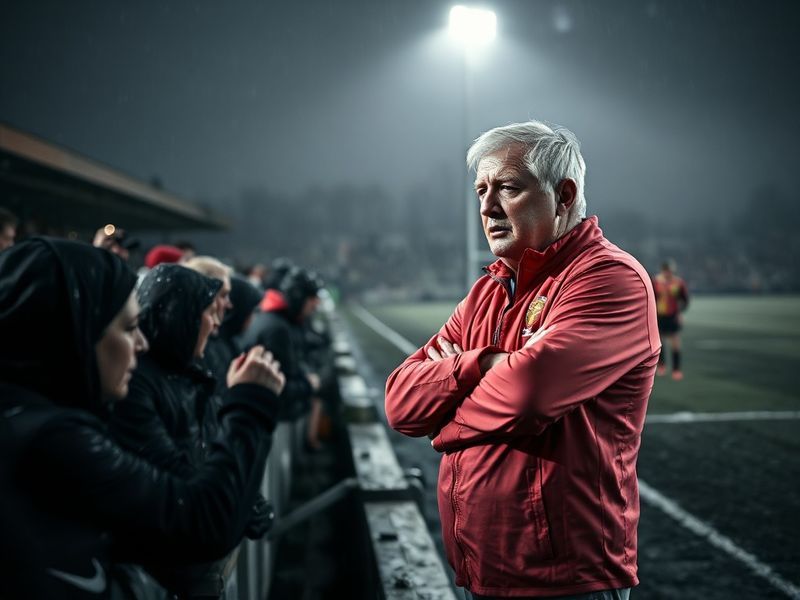
Steve McNamara: The Coach Who Reshaped Rugby League Tactics
Steve McNamara’s influence on rugby league extends far beyond his years as a player. As both a standout athlete and a forward-thinking coach, he has left an indelible mark on the sport’s tactical evolution. From his playing days in the 1980s and 1990s to his current role as a high-performance mentor, McNamara has consistently pushed boundaries. His work with clubs in the Super League and national teams has redefined how the game is approached, blending traditional values with modern innovation.
Born in Hull, England, McNamara’s journey began in a region where rugby league is more than a sport—it’s a cultural touchstone. His early years at Hull FC and later at Bradford Bulls shaped his understanding of the game’s physical and mental demands. Yet, it was his transition into coaching that allowed him to amplify his impact. Today, he is recognized not just as a former star, but as an architect of strategies that have influenced teams across Europe and beyond.
From Player to Coach: A Career Defined by Adaptability
McNamara’s playing career spanned two decades, during which he earned 25 caps for England and played over 500 club games. His versatility—capable of playing at fullback, stand-off, or loose forward—gave him a deep appreciation for the game’s tactical intricacies. This versatility became a cornerstone of his coaching philosophy. He understood that rugby league demands more than physical prowess; it requires mental agility and the ability to adapt to opponents’ strengths and weaknesses.
After retiring, McNamara quickly transitioned into coaching, taking on roles at clubs like Castleford Tigers and the Leeds Rhinos. His approach was methodical. He emphasized structure but also encouraged creativity. Under his guidance, teams developed a reputation for intelligent, possession-based rugby, a shift from the more traditional, set-piece-heavy styles of the past. This evolution mirrored broader changes in the sport, as clubs sought to attract new audiences while staying true to rugby league’s roots.
One of his most notable achievements came during his time as head coach of the England national team. He led the side to the semifinals of the 2017 Rugby League World Cup, a tournament where England’s blend of youth and experience caught global attention. The campaign showcased McNamara’s ability to foster cohesion in diverse groups, a skill honed over years of working with players from different clubs and backgrounds.
The Tactical Shift: How McNamara Redefined Modern Rugby League
McNamara’s coaching style is often characterized by its emphasis on structure and teamwork. He introduced systems that prioritized quick ball movement and positional discipline, reducing errors while maintaining attacking flair. This approach was not just about winning games; it was about elevating the sport’s profile. By making rugby league more dynamic and accessible, he helped attract fans who might have otherwise gravitated toward rugby union or football.
His influence can be seen in several key trends within modern rugby league:
- Possession retention: McNamara’s teams became known for their ability to maintain possession through structured plays, reducing turnovers and extending attacking phases.
- Defensive systems: He implemented defensive frameworks that balanced line speed with positional integrity, making it harder for opponents to exploit gaps.
- Youth development: A firm believer in nurturing young talent, McNamara’s coaching staff prioritized bringing through academy players, ensuring a pipeline of skilled athletes for future teams.
- Analytical approach: Utilizing data to inform training and tactics, he was an early adopter of performance analytics in rugby league, a practice that has since become standard across elite clubs.
This tactical evolution has had a ripple effect. Clubs that once relied on physical dominance now compete on technical merit. The shift has also influenced how young players are trained, with an increasing focus on decision-making and spatial awareness alongside traditional skills like tackling and passing.
Global Impact: McNamara’s Influence Beyond England
While McNamara’s primary impact has been in Europe, his ideas have resonated globally. Rugby league’s growth in countries like Italy, the United States, and Papua New Guinea has been partly fueled by the sport’s increasing emphasis on strategic play—a philosophy McNamara has championed. In Italy, for example, the national team’s adoption of structured, possession-based rugby has been attributed in part to coaching exchanges and shared tactical insights with English clubs.
In Australia, where rugby league is a dominant force, McNamara’s methods have sparked discussions about how the sport can evolve. While Australian teams traditionally prioritize physicality, there’s growing recognition of the need to adapt to faster, more technical styles. McNamara’s work offers a blueprint for blending these approaches, creating a hybrid model that appeals to both traditionalists and innovators.
His international collaborations have also been significant. McNamara has worked with coaches from France, Tonga, and Samoa, sharing insights that have helped elevate the standard of rugby league in these nations. These exchanges highlight the sport’s globalizing nature, where tactics and philosophies are no longer confined to one region but are instead shared and adapted worldwide.
A Legacy of Innovation and Leadership
Steve McNamara’s career is a testament to the power of evolution in sports. He has not only adapted to changes in rugby league but has actively driven them forward. His legacy is built on more than trophies or titles; it’s rooted in the way he has redefined what it means to be a coach in rugby league. By blending tradition with innovation, he has ensured that the sport remains vibrant and relevant in an ever-changing sporting landscape.
Looking ahead, McNamara’s influence shows no signs of waning. Whether through his work with clubs, national teams, or grassroots programs, he continues to shape the future of rugby league. For a sport that has often struggled to compete with football or rugby union for attention, his contributions have been invaluable. They remind us that rugby league’s greatest strength lies not just in its physicality, but in its capacity for reinvention.
As the sport continues to grow, McNamara’s ideas will likely remain central to its development. From Hull to Sydney, from youth academies to international stadiums, his fingerprints are everywhere. And in a game where tactics can make the difference between victory and defeat, that’s a legacy worth celebrating.