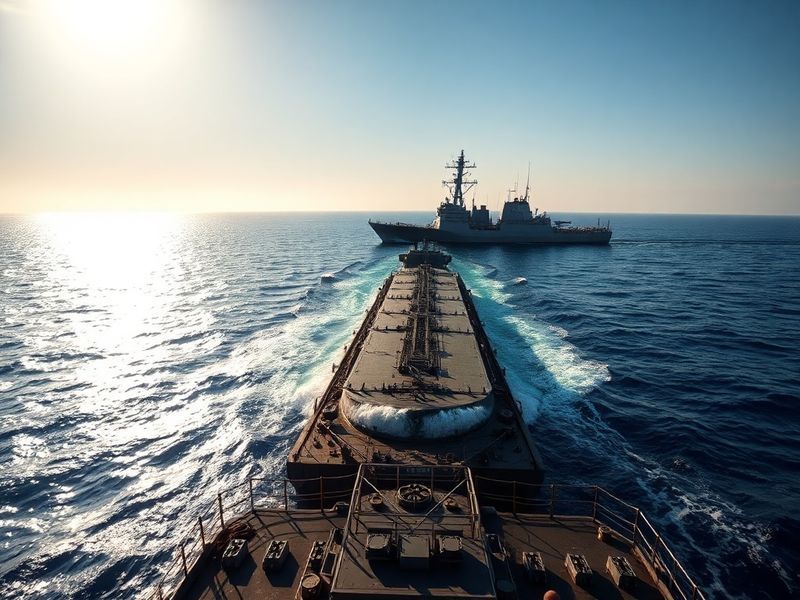
The Strait of Hormuz remains one of the most strategically significant maritime chokepoints in the world. Connecting the Persian Gulf to the Gulf of Oman and, by extension, the Arabian Sea, this narrow waterway handles roughly a third of the world’s seaborne oil shipments. When it flows freely, economies thrive. When access is threatened—by conflict, political tension, or environmental risks—the consequences ripple across continents.
Recent developments have kept the Strait of Hormuz in the spotlight. Diplomatic negotiations, military posturing, and economic shifts have all played a role in determining whether this critical passage stays open. Understanding its importance requires looking beyond the headlines to the historical context, geopolitical tensions, and the daily realities of global trade that depend on its uninterrupted flow.
The Strait’s Role in Global Energy and Trade
Every day, millions of barrels of crude oil and vast quantities of liquefied natural gas pass through the Strait of Hormuz. It’s not just about volume; it’s about control. The strait is only about 21 nautical miles wide at its narrowest point, with a two-mile-wide shipping lane in each direction. This makes it highly vulnerable to disruption. Even minor interference—whether intentional or accidental—can lead to major disruptions in energy markets.
According to data from the U.S. Energy Information Administration, nearly 21 million barrels of oil per day moved through the strait in 2023. That’s roughly 20% of global petroleum liquids consumption. Any prolonged closure would send shockwaves through fuel prices worldwide, affecting everything from transportation costs to food prices, given agriculture’s reliance on diesel and fertilizers.
Beyond oil, the strait is a key route for container ships carrying electronics, automobiles, and consumer goods. Major shipping lines like Maersk and MSC actively monitor conditions in the region, rerouting vessels when tensions rise. While alternative routes exist—such as the Suez Canal or overland pipelines—they are either more expensive, slower, or already operating at capacity.
The Historical Weight of the Strait
The geopolitical importance of the Strait of Hormuz dates back centuries. It has been a flashpoint during several conflicts, including the Iran-Iraq War in the 1980s, when both sides targeted oil tankers to cripple each other’s economies. More recently, tensions escalated in 2019 when Iran seized a British-flagged tanker in response to the detention of an Iranian ship by the UK. The incident highlighted how quickly commercial shipping can become entangled in broader political disputes.
Iran has repeatedly threatened to close the strait in response to sanctions or perceived threats. While such declarations are often strategic posturing, they underscore the fragility of the situation. The 2021 drone attack on an Israeli-linked tanker, allegedly by Iran, served as a grim reminder that asymmetric threats—small boats, drones, or cyberattacks—can disrupt shipping without a full-scale military confrontation.
Environmental and Technological Threats
Beyond geopolitics, the Strait of Hormuz faces environmental and technological risks. Oil spills, though rare, can devastate marine ecosystems and shut down shipping lanes for weeks. In 2017, a pipeline leak in the UAE led to a temporary halt in tanker traffic as a precaution. Such incidents, while localized, illustrate the vulnerability of the strait’s infrastructure.
Cyber threats also loom large. In 2020, a cyberattack on a major oil facility in Saudi Arabia briefly disrupted operations. While the attack did not occur in the strait itself, it demonstrated how digital vulnerabilities could paralyze critical energy infrastructure. With shipping increasingly reliant on GPS and automated systems, the potential for disruption grows.
What Happens When the Strait Closes?
A full closure of the Strait of Hormuz would be catastrophic for the global economy. The immediate impact would be felt in oil prices, which could surge by 50% or more within days. Countries in Asia, particularly China, Japan, and South Korea, would scramble to secure alternative supplies, leading to bidding wars and supply shortages.
Europe, already grappling with energy shortages following the Russia-Ukraine war, would face further strain. The continent’s reliance on Middle Eastern oil would force a rapid pivot to alternative sources, potentially accelerating the shift toward renewable energy—but not without economic pain in the short term.
In the United States, gasoline prices would climb, straining household budgets and potentially influencing political outcomes. The Federal Reserve might respond with interest rate hikes to curb inflation, further slowing economic growth.
Alternatives Exist, But They’re Not Equal
While the world would not collapse without the Strait of Hormuz, the alternatives are far from ideal:
- Suez Canal: Already handling 12% of global seaborne oil, the Suez is a viable but congested alternative. Expansion projects are underway, but political instability in Egypt remains a risk.
- Overland Pipelines: Pipelines like the East-West Pipeline in Saudi Arabia can carry oil from the Persian Gulf to the Red Sea, bypassing the strait. However, capacity is limited, and geography restricts their reach.
- Arctic Shipping Routes: As ice melts, Arctic routes are becoming more accessible. But these are seasonal, expensive, and logistically complex, making them unsuitable for bulk oil transport.
- Longer Sea Routes: Vessels can sail around Africa’s Cape of Good Hope, adding thousands of miles and weeks to voyages. This increases costs and delays shipments.
None of these alternatives can fully replace the Strait of Hormuz. Their limitations highlight why the waterway remains indispensable—and why its stability is a top priority for governments, corporations, and financial markets.
Diplomacy and Deterrence in the 21st Century
Managing the risks of the Strait of Hormuz requires a delicate balance of diplomacy, deterrence, and economic resilience. International coalitions, such as the U.S.-led Combined Maritime Forces, patrol the region to deter aggression and ensure freedom of navigation. These efforts are complemented by backchannel negotiations, sanctions, and confidence-building measures.
Yet diplomacy alone cannot guarantee safety. The 2023 attack on a tanker by Yemen’s Houthi rebels, though not directly targeting the strait, showed how regional conflicts can spill over into critical shipping lanes. The involvement of non-state actors adds another layer of complexity, making it difficult to assign responsibility or enforce accountability.
Economic diversification offers a long-term solution. Countries like the UAE and Saudi Arabia are investing heavily in ports, logistics, and alternative energy to reduce their dependence on the strait. However, these efforts will take years to bear fruit. In the meantime, the world remains reliant on the fragile stability of the Strait of Hormuz.
Conclusion: A Fragile Lifeline
The Strait of Hormuz is more than a maritime chokepoint; it is the economic backbone of the modern world. Its openness is not guaranteed, and its closure would send tremors through every corner of the global economy. While alternatives exist, none can fully replace the volume, efficiency, and strategic importance of this narrow waterway.
For now, the strait remains open, but the risks are ever-present. Governments must continue to invest in diplomacy, military deterrence, and energy diversification to safeguard this vital artery. Businesses must prepare for disruptions, and consumers must recognize the fragility of the system that delivers their fuel, food, and goods. The Strait of Hormuz is not just a geopolitical flashpoint—it is a reminder of how interconnected and vulnerable our world remains.