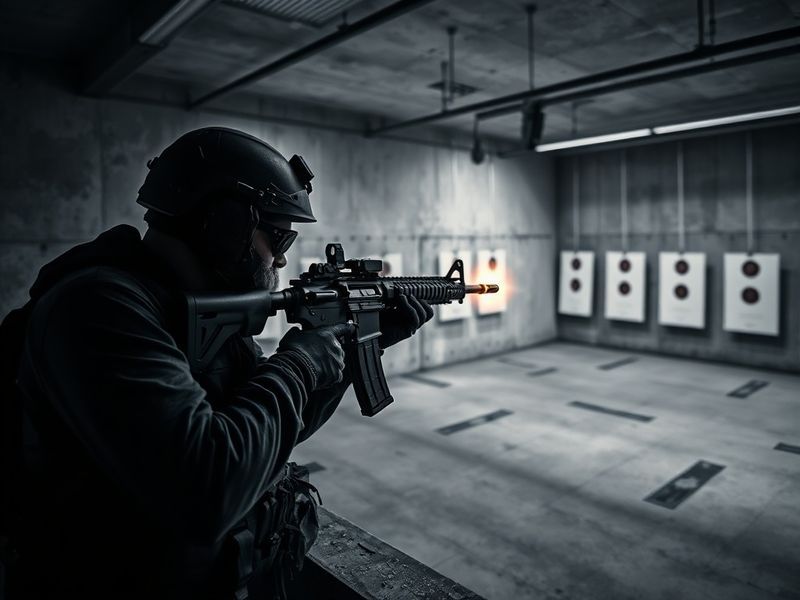
The act of shooting spans millennia, evolving from a primitive survival tool to a refined skill practiced in competition, art, and defense. Across cultures and contexts, shooting remains a discipline that blends precision, focus, and technical mastery. Whether through the steady aim of an Olympic marksman or the tactical training of a survivalist, the principles remain rooted in discipline and adaptability.
The Evolution of Shooting: A Historical Perspective
Shooting began as a necessity. Early humans used projectiles—arrows, slings, and spears—to hunt and defend. The invention of gunpowder in 9th-century China transformed warfare and hunting, introducing firearms that would dominate battlefields for centuries. By the Renaissance, firearms became more sophisticated, leading to the development of rifles and pistols that demanded greater skill from users.
In the 19th century, shooting transitioned from military application to sport. The first recorded shooting competitions appeared in 18th-century England, where marksmen gathered to test their accuracy at targets. The creation of standardized firearms and targets in the 1800s formalized the sport, leading to the inclusion of shooting in the first modern Olympics in 1896. Today, disciplines like pistol, rifle, and shotgun shooting are governed by international federations, with events drawing global audiences.
Key Milestones in Shooting History
- 9th Century: Gunpowder invented in China, marking a turning point in projectile technology.
- 16th Century: Matchlock firearms become widespread in Europe, improving reliability in combat.
- 1830s: The first recorded shooting clubs form in England, formalizing target practice as a sport.
- 1896: Shooting debuts at the Athens Olympics, cementing its place in international competition.
- 20th Century: Advances in optics, materials, and training refine shooting into a precise science.
Shooting in Sport: Precision and Competition
Competitive shooting is a test of mental discipline as much as physical skill. Athletes train for years to achieve the consistency required to hit targets millimeters in size from distances of 50 meters or more. The International Shooting Sport Federation (ISSF) oversees multiple disciplines, including air rifle, pistol, and trap shooting, each with its own rules and equipment standards.
In Olympic shooting, athletes compete under pressure that tests their ability to block out distractions. The mental aspect cannot be overstated. A single breath, a flicker of doubt, or a misaligned sight can mean the difference between gold and obscurity. This blend of precision and psychology makes shooting one of the most mentally demanding sports in the world.
Beyond the Olympics, shooting sports thrive in clubs and competitions worldwide. In the United States, disciplines like bullseye pistol and three-gun competition attract thousands of participants annually. Europe, particularly Germany and Italy, has a strong tradition in precision rifle shooting, while clay target sports like skeet and trap remain popular in the UK and Australia.
Training and Technique in Competitive Shooting
Mastery in shooting begins with fundamentals: grip, stance, sight alignment, and trigger control. Coaches emphasize muscle memory, drilling techniques until actions become automatic. Breathing techniques help steady aim, while mental visualization prepares athletes for competition pressure.
Equipment plays a crucial role. High-end rifles and pistols are customized for the shooter’s physiology, with adjustments to stock length, trigger weight, and sight radius. Ammunition selection is equally critical, with match-grade bullets designed for consistency and accuracy. In shotgun sports, the choice of choke and shell type can significantly affect performance.
Shooting as Survival: Tactics and Tools
While competitive shooting celebrates precision, tactical shooting focuses on speed, adaptability, and real-world application. From law enforcement to wilderness survival, the ability to shoot accurately under stress is a critical skill. Tactical training emphasizes scenarios like hostage situations, active shooter response, and long-range engagements in unpredictable environments.
Survival shooting, a niche discipline, blends marksmanship with wilderness skills. Hunters and preppers rely on firearms to secure food, deter predators, and defend territory. The choice of firearm depends on the environment—bows may suffice in dense forests, while rifles with high-capacity magazines are preferred in open terrain. Caliber selection is vital; a .223 Remington is effective for small game, while a .308 Winchester offers power for larger animals.
In urban survival scenarios, compact pistols and shotguns become essential. Tactical training drills emphasize rapid target acquisition, movement under fire, and decision-making in high-pressure situations. Organizations like the National Rifle Association (NRA) and tactical schools worldwide offer courses that teach these skills to civilians, law enforcement, and military personnel alike.
Essential Gear for Tactical and Survival Shooting
- Firearm: Choose based on purpose—pistols for concealment, rifles for range and power, shotguns for close-quarters defense.
- Ammunition: Match-grade for training, defensive rounds for protection, and specialty loads for hunting or varmint control.
- Optics: Red dot sights, scopes, and magnifiers enhance target acquisition and accuracy.
- Holsters and Slings: Secure and accessible storage ensures quick deployment when needed.
- Cleaning Kits: Maintenance is critical for reliability, especially in harsh or remote environments.
Cultural and Ethical Dimensions of Shooting
Shooting carries deep cultural significance. In some societies, it is a rite of passage—young men in rural America may receive their first rifle as a symbol of responsibility. In Scandinavian countries, hunting is tied to tradition and sustainability, with strict regulations ensuring ethical practices. Conversely, in regions plagued by conflict, firearms represent oppression and violence, underscoring the duality of shooting as both tool and weapon.
Ethics play a central role in shooting culture. Responsible firearm ownership includes safe storage, proper training, and adherence to laws. Advocacy groups like the Brady Campaign and Everytown for Gun Safety push for stricter regulations, arguing that access to firearms without oversight contributes to societal harm. Meanwhile, organizations like the NRA emphasize education and self-defense rights, framing shooting as a fundamental freedom.
Artistic expressions of shooting also exist. Paintings, films, and literature often depict marksmen as figures of precision and heroism. Classic Westerns, for instance, glorify the quick-draw artist, while modern cinema explores the psychological toll of snipers in war. Photography captures the beauty of motion in clay target sports, freezing a moment of shattered porcelain in mid-air.
Shooting in Popular Culture
- Film: “American Sniper” dramatizes the life of a military marksman, while “The Deer Hunter” explores hunting’s emotional weight.
- Literature: Ernest Hemingway’s stories often feature hunting and shooting, reflecting themes of masculinity and mortality.
- Video Games: Titles like “Call of Duty” and “Escape from Tarkov” simulate tactical shooting, blending realism with entertainment.
- Art: Photographers like David Chancellor capture the intensity of competitive shooting, highlighting athletes in moments of concentration.
Looking Ahead: The Future of Shooting
The future of shooting is shaped by technology and shifting cultural attitudes. Smart firearms, equipped with biometric locks and tracking systems, aim to enhance safety while addressing concerns about theft and misuse. Electronic targets and VR training simulators are becoming standard in competitive and tactical training, offering immersive, cost-effective alternatives to traditional ranges.
Cultural debates will continue to influence shooting’s role in society. As nations grapple with gun violence and self-defense rights, the conversation will likely focus on education, technology, and regulation. Meanwhile, shooting sports will evolve, with younger generations embracing disciplines like action shooting and practical pistol competitions that emphasize speed and adaptability.
One thing remains certain: the fundamental human fascination with shooting—whether as sport, survival, or art—will endure. It is a discipline that demands mastery, respect, and responsibility, connecting us to our past while shaping our future.
For those interested in exploring shooting further, local ranges and clubs offer beginner courses, while organizations like the ISSF and NRA provide resources for competitive and tactical training. The journey begins with a single shot—and the commitment to improve.