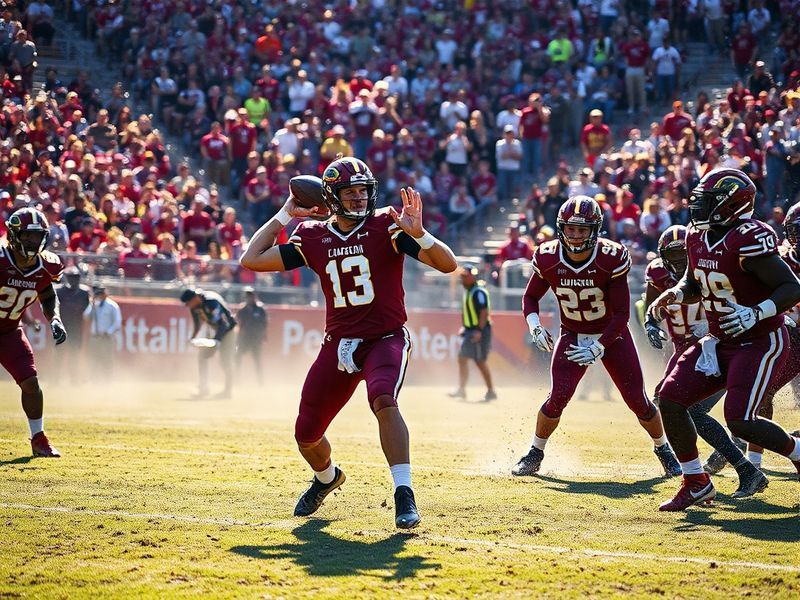
The Washington Commanders, formerly known as the Washington Football Team, represent one of the NFL’s oldest franchises, with a history stretching back to 1932. Once a powerhouse in the league, the team has spent much of the past two decades searching for consistent success. Under new ownership and with a rebranding effort behind them, the Commanders are attempting to redefine their identity both on and off the field.
The franchise’s journey reflects broader shifts in professional sports, from branding and fan engagement to roster construction and organizational culture. While the team’s recent struggles have dominated headlines, the changes underway suggest a franchise intent on writing a new chapter.
The Rebranding: From Football Team to Commanders
In February 2022, the franchise officially dropped its former name, which had long been considered offensive by many Native American groups. The interim name, Washington Football Team, served as a placeholder while the organization evaluated new branding options. After months of public input and internal deliberation, the team unveiled its new identity as the Washington Commanders in February 2022.
The name pays homage to Washington, D.C.’s military heritage, drawing inspiration from the city’s role as the capital of the United States and its longstanding connection to national defense. The Commanders logo features a stylized “W” with a winged helmet, evoking both leadership and readiness.
Rebranding a historic franchise is never simple. The process required balancing tradition with sensitivity, particularly as the team sought to distance itself from past controversies. While some fans embraced the change immediately, others remained skeptical, questioning whether the rebrand would translate to on-field success.
For the organization, the rebrand was as much about perception as it was about identity. It signaled a commitment to progress and inclusivity, values that the team’s new ownership group, led by Josh Harris and Mitchell Rales, has emphasized since taking over in 2023.
Ownership Transition: A New Era of Leadership
The Commanders’ ownership change in 2023 marked a pivotal moment for the franchise. After years of instability under previous leadership, a group led by Harris and Rales acquired the team for a record $6.05 billion, making it the most expensive sports franchise sale in history.
The new ownership group brought fresh capital, a clear vision, and a willingness to invest in both the team and the community. Harris, a private equity executive, and Rales, co-founder of Danaher Corporation, have backgrounds in building successful organizations. Their approach emphasizes long-term planning over short-term wins.
One of their first major moves was hiring Adam Peters as general manager. Peters, known for his work with the San Francisco 49ers and Tampa Bay Buccaneers, brought a data-driven, analytical approach to roster construction. His arrival signaled a shift toward modern NFL decision-making, where analytics and player development play central roles.
Under Peters, the Commanders have focused on drafting young talent and building through the draft rather than relying on expensive free-agent signings. This strategy aligns with the NFL’s current trend toward sustainable success, where teams prioritize cap efficiency and player development.
On-Field Challenges: Rebuilding a Winning Culture
The Commanders have struggled to sustain success in recent years, with only one playoff appearance since 2015. The team’s last division title came in 2020, and their overall record over the past decade ranks among the league’s worst. Injuries, inconsistent coaching, and poor roster management have all contributed to the franchise’s prolonged struggles.
The arrival of head coach Dan Quinn in 2024 marked another attempt to right the ship. Quinn, a defensive-minded coach with Super Bowl experience as the coordinator for the Atlanta Falcons, brings a structured, disciplined approach to the locker room. His hiring reflects the organization’s commitment to defensive improvement, a critical area of need for the Commanders.
Defensively, the Commanders ranked near the bottom of the league in 2023, particularly against the pass. Addressing this weakness will require both schematic adjustments and roster upgrades. The team’s offseason moves, including the drafting of edge rusher Chop Robinson and safety Quan Martin, suggest a focus on bolstering the secondary.
Offensively, quarterback stability remains a question mark. While Sam Howell showed flashes in 2023, his inconsistency led to the team drafting Jayden Daniels in the first round of the 2024 NFL Draft. Daniels, a dual-threat playmaker from LSU, represents the franchise’s latest attempt to find a long-term solution under center.
The Commanders’ offensive line, long a liability, has undergone significant changes. The team drafted both a right tackle (Roger Rosengarten) and a center (Ben Settipane) in 2024, addressing immediate needs. If the offensive line improves, it could unlock the potential of the team’s skill-position players, including Terry McLaurin and Brian Robinson Jr.
Key Areas Needing Improvement
- Quarterback Play: Stability under center remains the franchise’s top priority. Whether through development or free agency, the Commanders must find a reliable starter.
- Defensive Upgrades: The unit needs more playmakers on the edge and in the secondary to complement standout linebacker Cole Holcomb.
- Offensive Line: Depth and talent at tackle and guard positions are essential for protecting the quarterback and opening running lanes.
- Special Teams: Consistency in kicking and return games could provide a competitive edge in close games.
Fan Engagement and Community Impact
The Commanders’ relationship with their fan base has been tested in recent years. The rebranding effort, while necessary, has not yet translated to on-field success, leaving some fans frustrated. However, the organization has made concerted efforts to reconnect with the community through outreach programs and partnerships with local businesses.
One notable initiative is the Commanders’ commitment to youth football development. The team has expanded its football camps and clinics, providing resources to underserved communities in the D.C. area. These efforts aim to rebuild trust with fans while fostering the next generation of players.
The franchise has also focused on enhancing the game-day experience at FedExField. Renovations to the stadium, including upgrades to concourses and premium seating areas, reflect the ownership group’s investment in creating a more fan-friendly environment. While attendance has fluctuated, the team remains committed to making games a destination experience.
Social media and digital engagement have become increasingly important for modern sports franchises. The Commanders have leveraged platforms like Instagram, TikTok, and X to connect with younger audiences. Content highlighting players’ personalities and behind-the-scenes access has helped humanize the team and attract new followers.
Looking Ahead: Can the Commanders Compete?
The Washington Commanders’ path to relevance is clear but challenging. The franchise possesses the financial resources, organizational structure, and fan base to return to prominence. However, success will require patience, smart decision-making, and a bit of luck.
The 2024 season will be a critical barometer. With a new coaching staff, a revamped roster, and a clear strategic direction, the Commanders have the pieces in place to take a step forward. If the defensive unit improves and the quarterback position stabilizes, the team could surprise many in the NFC East.
For fans, the journey will test their loyalty and optimism. The Commanders’ history is filled with near-misses and unfulfilled potential. Yet, the ongoing efforts to modernize the franchise offer hope that this era will be different.
The organization’s commitment to transparency and community engagement sets it apart from past regimes. If the Commanders can marry on-field progress with off-field responsibility, they may finally shed the label of a franchise in transition and write a new story—one defined by sustained success.
As the NFL landscape continues to evolve, the Commanders have the opportunity to redefine themselves in an era where branding, analytics, and fan experience matter as much as wins and losses. Whether they seize that opportunity remains to be seen, but the foundation is being laid for a brighter future.
For more analysis on NFL franchises, visit our Sports section.
Explore deeper insights into team rebuilding strategies in our Analysis category.