Why the Strait of Hormuz Remains a Global Flashpoint in 2024
“`html
Strait of Hormuz: A Vital Chokepoint in Global Energy Flows
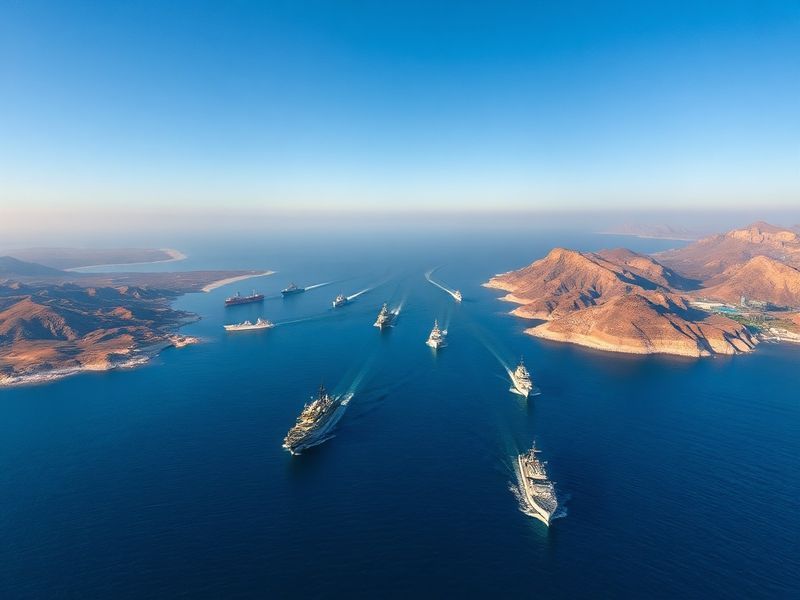
The Strait of Hormuz remains one of the most strategically significant waterways in the world, serving as a critical juncture for global oil and gas shipments. Positioned between Iran and Oman, this narrow passage connects the Persian Gulf to the Gulf of Oman and, ultimately, the Arabian Sea. Its importance cannot be overstated: at its narrowest point, the strait is just 21 miles wide, with a shipping channel only two miles wide in each direction. The flow of maritime traffic through these waters underscores its role as a potential flashpoint in international relations.
Every day, millions of barrels of crude oil pass through the Strait of Hormuz, making it a lifeline for energy-dependent economies. Countries in Asia, Europe, and beyond rely on this route to secure vital resources. Disruptions here can send ripples across global markets, influencing fuel prices and economic stability. The strait’s geopolitical volatility has made it a focal point for military and diplomatic strategies alike.
The Historical Weight of the Strait
The Strait of Hormuz has been a contested space for centuries, long before the discovery of oil transformed its significance. Historically, it was a crossroads for trade routes connecting the Middle East, South Asia, and East Africa. The Portuguese, British, and Dutch empires all sought control over the strait at different points, reflecting its enduring strategic value.
In the modern era, the strait became a critical chokepoint after the discovery of vast oil reserves in the Persian Gulf. The 1956 Suez Crisis highlighted the vulnerabilities of global oil supply chains, reinforcing the strait’s importance. Today, nearly one-third of the world’s seaborne-traded oil passes through its waters, according to data from the U.S. Energy Information Administration. This makes any disruption here a potential catalyst for global economic upheaval.
Geopolitical Tensions and Recent Developments
Tensions in the Strait of Hormuz have escalated in recent years, driven by regional rivalries and international sanctions. Iran, a key littoral state, has repeatedly threatened to close the strait in response to economic pressures, particularly after the U.S. reimposed sanctions following its withdrawal from the 2015 nuclear deal. These threats have led to a series of high-stakes confrontations, including attacks on commercial shipping and the seizure of foreign vessels.
In 2019, a series of mysterious attacks on oil tankers near the strait raised alarms about the security of global energy supplies. The U.S. and its allies responded by increasing military patrols in the region, while Iran conducted naval exercises to assert its presence. The situation remains fluid, with incidents such as drone strikes and cyberattacks adding layers of complexity to an already volatile environment.
Key incidents in recent years include:
- 2019 Tanker Attacks: Four commercial ships were damaged in suspected Iranian attacks near Fujairah, UAE.
- 2021 Seizure of South Korean Tanker: Iran detained a South Korean-flagged vessel in retaliation for frozen assets.
- 2022 Drone Strike on UAE: A Houthi-affiliated drone attack targeted Abu Dhabi, highlighting the strait’s vulnerability.
These events underscore the strait’s role as a potential flashpoint in broader regional conflicts, particularly between Iran and its adversaries in the Gulf.
Global Implications of a Strait Closure
A prolonged closure of the Strait of Hormuz would have far-reaching consequences for the global economy. Oil prices would likely surge, straining economies dependent on affordable energy. Countries in Europe and Asia, which rely heavily on Middle Eastern oil, would face immediate supply shortages. The International Energy Agency estimates that a disruption here could remove up to 17 million barrels of oil per day from the market—nearly 20% of global demand.
The economic fallout would extend beyond energy markets. Supply chain disruptions could ripple through industries reliant on petroleum-based products, from plastics to fertilizers. Shipping costs would rise, and insurance premiums for vessels transiting the region would skyrocket. Nations with strategic petroleum reserves, such as the U.S. and China, might release stocks to stabilize markets, but the impact would still be severe.
Military responses would also be inevitable. The U.S. Fifth Fleet, based in Bahrain, would likely play a central role in reopening the strait. Other nations, including the UK and France, have also deployed naval forces to the region in recent years. However, any military intervention risks escalating into a broader conflict, with unpredictable consequences for global stability.
Alternative Routes: A Temporary Solution?
In the event of a strait closure, countries would likely turn to alternative shipping routes to mitigate the impact on oil supplies. The most prominent of these is the East-West Pipeline, also known as the Petroline, which runs from Saudi Arabia’s Eastern Province to the Red Sea port of Yanbu. This pipeline can carry up to 5 million barrels of oil per day, bypassing the strait entirely.
Other options include the Abu Dhabi Crude Oil Pipeline, which connects Habshan to Fujairah on the Gulf of Oman, and the expansion of export facilities in Iraq’s northern region. However, these alternatives have limitations. Pipelines often operate at reduced capacity, and new infrastructure requires significant investment and time to develop.
For countries like China, which imports over 60% of its oil from the Middle East, the stakes are particularly high. Beijing has sought to diversify its supply chains by investing in pipelines from Russia and Central Asia, but these routes cannot fully replace the volume of oil transiting the Strait of Hormuz.
Conclusion: Navigating Uncertain Waters
The Strait of Hormuz remains a critical artery for global energy flows, its stability hinging on a delicate balance of geopolitical forces. While tensions ebb and flow, the potential for disruption looms large, casting a shadow over energy markets and international relations. The recent escalation of military posturing and asymmetric attacks demonstrates how quickly the situation can spiral, with consequences that extend far beyond the region.
For now, the strait remains open, but the risks are undeniable. Countries must prepare for the possibility of disruptions by diversifying their energy sources and strengthening their strategic reserves. Meanwhile, diplomatic efforts to de-escalate tensions must continue, as the alternative—a prolonged closure—could plunge the world into economic and geopolitical turmoil.
As the global energy landscape evolves, the Strait of Hormuz will remain a focal point for policymakers, military strategists, and economists alike. Its fate is inextricably linked to the broader challenges of energy security, regional stability, and international cooperation. The world watches closely, knowing that the stakes could not be higher.