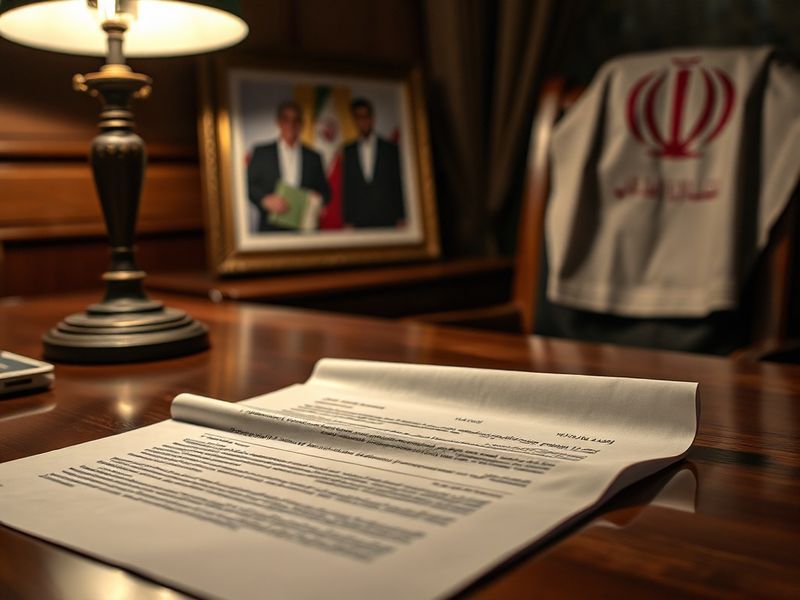
The Iran Nuclear Deal: A Complex Puzzle in Global Diplomacy
The Joint Comprehensive Plan of Action, commonly known as the Iran nuclear deal, remains one of the most contentious and closely watched international agreements of the 21st century. Signed in 2015 after years of negotiations, the deal aimed to curb Iran’s nuclear program in exchange for sanctions relief. Yet its legacy is far from settled. The agreement’s future continues to shape debates among world leaders, diplomats, and citizens alike, reflecting broader tensions between isolation and engagement in global affairs.
The deal emerged from a moment when diplomacy seemed to offer a rare path forward. After decades of strained relations, the Obama administration pursued negotiations with Iran, joined by China, France, Germany, Russia, the United Kingdom, and the European Union. The result was a landmark accord that placed strict limits on Iran’s uranium enrichment and plutonium production, while lifting economic sanctions that had crippled its economy. For proponents, the deal represented a triumph of multilateralism—a chance to prevent nuclear proliferation without military conflict. Critics, however, warned that it granted too much trust to a regime with a history of defiance and regional aggression.
This tension between hope and skepticism has defined the deal’s journey. When the Trump administration withdrew in 2018, reimposing sanctions and escalating pressure, the agreement’s survival hinged on the remaining signatories’ willingness to uphold it. Europe’s attempts to bypass U.S. sanctions through trade mechanisms like INSTEX highlighted the fragility of global unity. Meanwhile, Iran’s gradual reduction of its commitments—while carefully calibrated—sent a clear message: patience was wearing thin.
The Structure of the Agreement: What Was Promised and What Was Delivered
The Iran nuclear deal was meticulously designed to balance incentives with oversight. Under its terms, Iran agreed to:
- Limit uranium enrichment: Enrichment levels were capped at 3.67%, far below the 90% needed for weapons-grade material.
- Reduce its stockpile: Iran was required to ship excess low-enriched uranium out of the country, shrinking its stockpile by 98%.
- Modify the Arak reactor: The heavy-water reactor was redesigned to prevent plutonium production.
- Allow intrusive inspections: The International Atomic Energy Agency (IAEA) gained unprecedented access to Iranian nuclear sites, including military locations.
- Phase out sanctions: In return, the U.S. and EU lifted nuclear-related sanctions, unlocking billions in frozen assets and trade opportunities.
The agreement also included a sunset clause, with key restrictions set to expire between 2025 and 2030. This provision became a focal point for critics who argued that the deal merely delayed Iran’s nuclear ambitions rather than ending them. Supporters countered that the temporary nature of the restrictions was a pragmatic concession to ensure short-term compliance over long-term ideological confrontation.
Yet the deal’s implementation revealed unforeseen challenges. Sanctions relief, for instance, did not flow as smoothly as promised. Banking restrictions and the threat of secondary U.S. sanctions deterred foreign companies from re-engaging with Iran. European businesses, in particular, faced a stark choice: risk U.S. penalties or abandon lucrative opportunities in the Iranian market. The result was a hollowed-out economic recovery, leaving ordinary Iranians disillusioned and the regime’s hardliners emboldened.
Regional Dynamics: How the Deal Reshaped Middle East Alliances
The Iran nuclear deal did not exist in a vacuum. Its ripple effects extended across the Middle East, where regional powers viewed it through the lens of their own security concerns. Saudi Arabia and Israel, in particular, saw the agreement as a dangerous concession to Iran, a country they viewed as a destabilizing force. The deal’s failure to address Iran’s ballistic missile program and its support for proxy groups like Hezbollah and the Houthis only deepened their unease.
For Saudi Arabia, the nuclear deal symbolized a shifting U.S. foreign policy—one that prioritized dialogue with adversaries over the traditional alliances of the Cold War era. The kingdom responded by pursuing its own strategic realignments, including a rapprochement with arch-rival Qatar and closer ties with Russia and China. Meanwhile, Israel took a more confrontational approach, launching covert operations to sabotage Iranian nuclear facilities and publicly threatening military strikes. The tensions culminated in a series of high-profile assassinations and cyberattacks, underscoring the covert warfare that had quietly escalated beneath the deal’s diplomatic surface.
Iran, for its part, leveraged the deal’s economic openings to expand its influence in Iraq, Syria, and Lebanon. The lifting of sanctions allowed it to fund military operations and political allies, further entrenching its role as a regional power broker. This dynamic fueled a cycle of proxy conflicts that spilled beyond the deal’s original scope, drawing in actors like Turkey and the United Arab Emirates. The result was a Middle East where old alliances frayed and new rivalries simmered, all while the nuclear deal’s future hung in the balance.
For a deeper look at how regional tensions intersect with global diplomacy, explore our coverage of Politics and the broader implications for international relations.
The Biden Administration’s Dilemma: Can Diplomacy Still Work?
When President Joe Biden took office in 2021, the Iran nuclear deal lay in tatters. Trump’s withdrawal had left the agreement on life support, and Iran’s incremental violations of its commitments—including enriching uranium to 60% purity—had pushed the program closer to weapons-grade levels. Yet Biden entered office with a clear preference for diplomacy over confrontation. His administration signaled a willingness to return to the negotiating table, provided Iran resumed full compliance.
The road to revival, however, proved far more complicated than anticipated. Iran’s presidential election in 2021 brought Ebrahim Raisi, a hardline cleric, to power. Raisi’s administration adopted a maximalist negotiating stance, demanding guarantees that future U.S. administrations would not abandon the deal—a condition Washington was unwilling to meet. Meanwhile, Iran’s nuclear advances and the IAEA’s inability to verify the full scope of its program raised alarms about the deal’s viability.
Compounding the challenge was the regional fallout from the deal’s collapse. Israel’s covert operations, including the assassination of Iran’s top nuclear scientist Mohsen Fakhrizadeh in 2020, had already demonstrated the risks of escalation. The 2022 protests in Iran, sparked by economic grievances and the regime’s repression, further complicated negotiations by hardening the positions of hardliners who saw the deal as a distraction from domestic priorities.
By 2023, indirect talks between the U.S. and Iran had stalled, with neither side willing to make the first move. The Biden administration faced a dilemma: return to the original deal with fewer safeguards or pursue a more limited agreement that addressed only the most urgent nuclear concerns. The latter option risked leaving critical issues unresolved, while the former could revive the agreement but at the cost of political capital in Washington and Tehran alike.
Looking Ahead: The Deal’s Legacy and the Future of Nuclear Diplomacy
The Iran nuclear deal’s fate remains uncertain, but its impact on global diplomacy is undeniable. It demonstrated both the power and the limitations of multilateral agreements in an era of rising nationalism and distrust. The deal’s collapse also highlighted the risks of relying on a single agreement to address complex security challenges, particularly in a region as volatile as the Middle East.
Yet the deal’s legacy extends beyond its immediate failures. It showcased the potential of diplomacy to avert crises, even if imperfectly. The IAEA’s monitoring regime, for instance, provided unprecedented transparency into Iran’s nuclear activities, offering a model for future non-proliferation efforts. Similarly, the deal’s emphasis on economic incentives underscored the role of trade and investment in shaping state behavior—a lesson that resonates in today’s geopolitical rivalries.
As the world grapples with new nuclear threats—from North Korea’s expanding arsenal to Russia’s nuclear posturing—the Iran deal serves as a cautionary tale. It reminds us that agreements, no matter how carefully crafted, are only as strong as the political will behind them. Diplomacy requires patience, compromise, and a willingness to engage with adversaries, even when the stakes are high and the trust is low.
The question now is whether the international community can learn from the deal’s successes and failures. Can new frameworks emerge to address Iran’s nuclear ambitions without repeating the mistakes of the past? Or will the region continue to lurch from crisis to crisis, each more dangerous than the last? The answers may well determine the future of global security in the decades to come.
Key Takeaways: What the Iran Deal Teaches Us About Global Diplomacy
The Iran nuclear deal offers several lessons for policymakers and observers alike:
- Multilateralism has limits: Even when major powers agree, domestic politics and regional dynamics can derail the best-laid plans. The deal’s collapse after the U.S. withdrawal showed how fragile international consensus can be.
- Economic carrots are powerful but unpredictable: Sanctions relief was intended to incentivize compliance, but the threat of secondary sanctions often overshadowed its benefits. The result was a half-recovered economy that failed to translate into political goodwill.
- Sunset clauses matter: The deal’s temporary nature was both a strength and a weakness. While it allowed for a negotiated solution, it also left open the question of what would happen once the restrictions expired.
- Regional security cannot be ignored: The deal’s architects underestimated the depth of regional hostility toward Iran. Addressing nuclear proliferation without addressing broader security concerns proved impossible.
- Diplomacy requires persistence: The deal’s revival remains a distant possibility, but the process itself has already reshaped the geopolitical landscape. The question is whether future negotiations can build on these changes or repeat the same mistakes.
The Iran nuclear deal may no longer dominate headlines, but its shadow lingers over global diplomacy. As nations weigh the costs of engagement versus confrontation, the lessons of the JCPOA will continue to shape the conversation—whether in Tehran, Washington, or the halls of the United Nations.