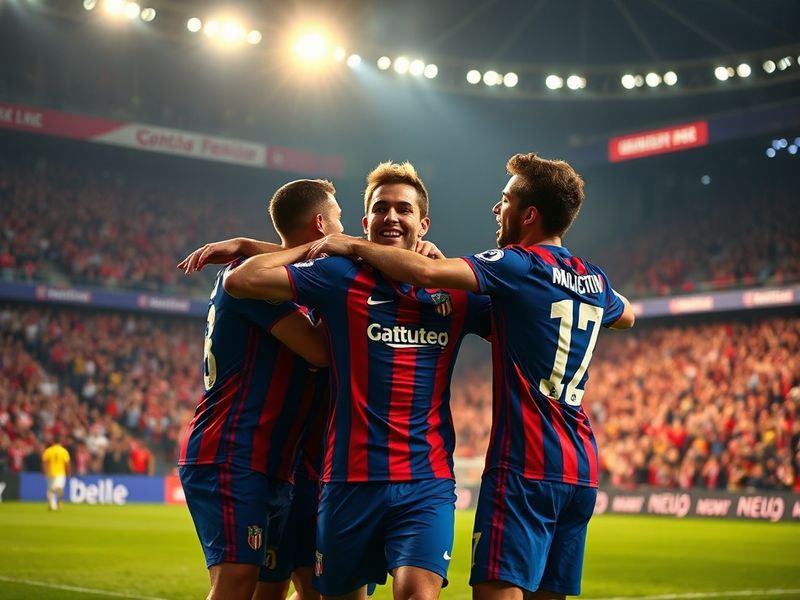
Few clubs embody resilience, tactical brilliance, and unwavering identity like Atlético Madrid. Since its founding in 1903, the club from the Spanish capital has carved a unique path in football’s upper echelons, blending local pride with European ambition. While Real Madrid and Barcelona dominate headlines, Atlético has consistently punched above its weight—challenging the status quo and redefining what it means to compete at the highest level.
The Rise of a Working-Class Giant
Atlético Madrid was born from a split within Athletic Bilbao’s Madrid branch. Workers from the Basque region who had moved to the capital sought to create their own footballing home. The club’s early years were defined by struggle and survival, mirroring the lives of its working-class supporters. Unlike its wealthier rivals, Atlético’s identity was rooted in grit over glamour—a trait that remains central to its ethos today.
By the 1940s and 1950s, Atlético began to emerge as a force. Under the guidance of legendary coach Helenio Herrera, the club secured its first La Liga title in 1940. The 1950s and 60s saw further success, including back-to-back league titles in 1951 and 1952. Yet, the club’s true breakthrough came in the 1970s under the leadership of Luis Aragonés, a figure who would later become a symbol of Atlético’s fighting spirit.
What sets Atlético apart is its ability to thrive despite financial constraints. While Real Madrid and Barcelona rely on global commercial empires, Atlético’s model prioritizes smart recruitment, tactical discipline, and a deep connection to its fanbase. This approach has not only sustained the club but allowed it to punch above its weight on multiple occasions.
Diego Simeone: Architect of a New Era
No discussion of Atlético Madrid is complete without acknowledging Diego Pablo Simeone. Arriving in December 2011, the Argentine manager transformed a club in crisis into a perennial title challenger. His arrival marked a turning point—not just for Atlético, but for the broader landscape of European football.
Simeone’s philosophy is built on three pillars: defensive solidity, high-intensity pressing, and an unshakable belief in collective effort. While critics argue that his style lacks the aesthetic appeal of possession-based football, his results speak for themselves. Under his leadership, Atlético has secured two La Liga titles (2014, 2021), reached two Champions League finals (2014, 2016), and become a consistent top-four club in Europe.
The 2013-14 season remains a defining moment. Atlético clinched the league title on the final day, denying Barcelona a historic treble. Just days later, they came within minutes of winning the Champions League, only to fall to Real Madrid in extra time. That near-miss crystallized Simeone’s impact: a club that refuses to accept second-class status.
Key Contributions of Simeone’s Atlético
- Defensive Organization: Atlético’s backline, led by players like Diego Godín and Jan Oblak, became one of the most formidable in Europe.
- Cultivation of Talent: The club’s ability to develop and integrate young players, such as Koke and Saúl Ñíguez, has been crucial.
- European Consistency: Over a decade, Atlético has remained a top-four club in Europe, defying financial disparities.
- Cultural Identity: Simeone instilled a mentality that prioritizes sacrifice, work rate, and collective success over individual brilliance.
Beyond the Pitch: Atlético’s Global Influence
Atlético Madrid’s impact extends far beyond trophies and league positions. The club’s model has influenced how mid-sized clubs approach European competition. By focusing on tactical discipline and smart recruitment—rather than chasing superstars—Atlético has demonstrated that success is not solely a matter of financial firepower.
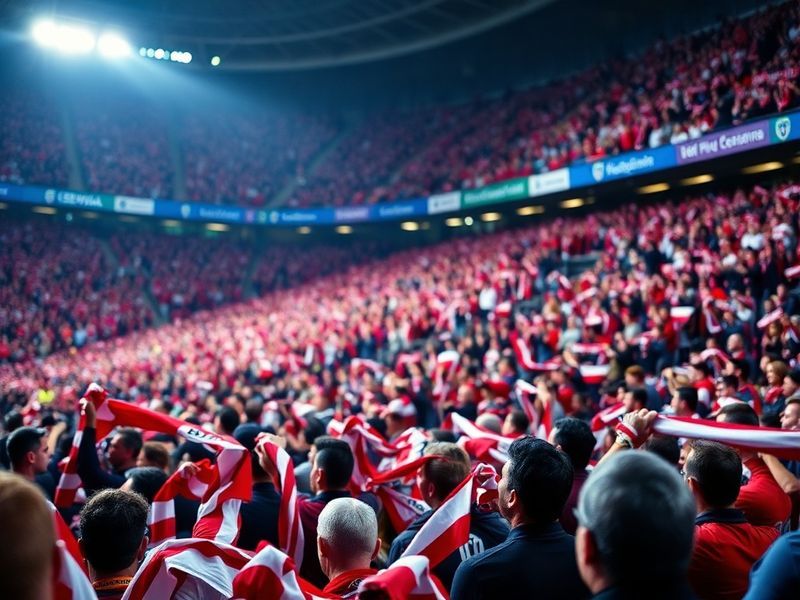
In an era where football is increasingly dominated by oligarchs and sovereign wealth funds, Atlético remains a club owned by its members. This democratic structure fosters a deep connection between the team and its supporters, creating an atmosphere that is both intimidating and inspiring in equal measure.
The club’s global fanbase has grown significantly, particularly in Latin America and Asia. Atlético’s commitment to developing young talent from these regions has strengthened its international appeal. Players like Rodri (now at Manchester City) and Lucas Hernández (Bayern Munich) began their careers at Atlético before moving to Europe’s elite clubs, serving as ambassadors for the club’s philosophy.
The Road Ahead: Challenges and Ambitions
Despite its achievements, Atlético faces challenges. The loss of key players in recent years—including Antoine Griezmann, Diego Godín, and Filipe Luís—has forced the club to adapt. The departure of players who grew under Simeone’s system highlights the difficulty of maintaining a competitive edge without significant financial backing.
Yet, Atlético’s ability to reload rather than rebuild has been impressive. The emergence of young stars like João Félix, Renan Lodi, and Geoffrey Kondogbia demonstrates the club’s commitment to sustainable success. The 2020-21 La Liga title, secured under Simeone’s guidance, proved that Atlético remains a force to be reckoned with.
Looking ahead, the club’s ambitions are clear: compete domestically, challenge in Europe, and continue developing talent. The opening of the new Estadio Metropolitano in 2017 provided a modern stage for these ambitions. With a capacity of over 68,000, the stadium has become a fortress, reflecting the club’s growth and ambition.
Atlético’s story is one of defiance. It is a club that has repeatedly proven that football is not solely about wealth or global appeal. Instead, it is about identity, resilience, and the unyielding belief that success is earned—not bought.
Atlético Madrid’s Enduring Legacy
- Redefining Competitiveness: Atlético has shown that financial disparity does not preclude success on the pitch.
- Tactical Evolution: Simeone’s system has influenced a generation of managers, proving that organization can triumph over individual talent.
- Cultural Resilience: The club’s working-class roots and democratic ownership structure set it apart in modern football.
- Global Reach: Atlético’s ability to scout and develop talent from non-traditional markets has expanded its influence beyond Europe.
As football continues to evolve, Atlético Madrid remains a reminder of what is possible when a club stays true to its principles. It is not merely a competitor to its more illustrious rivals—it is a testament to the power of belief, hard work, and unwavering identity.
In an era where football is often reduced to spectacle and excess, Atlético stands as a counterpoint: a club that thrives on grit, determination, and the unshakable conviction that greatness is not measured in trophies alone, but in the hearts of its supporters and the legacy it leaves behind.
For more on Spanish football and tactical analysis, visit our Sports and Analysis sections.