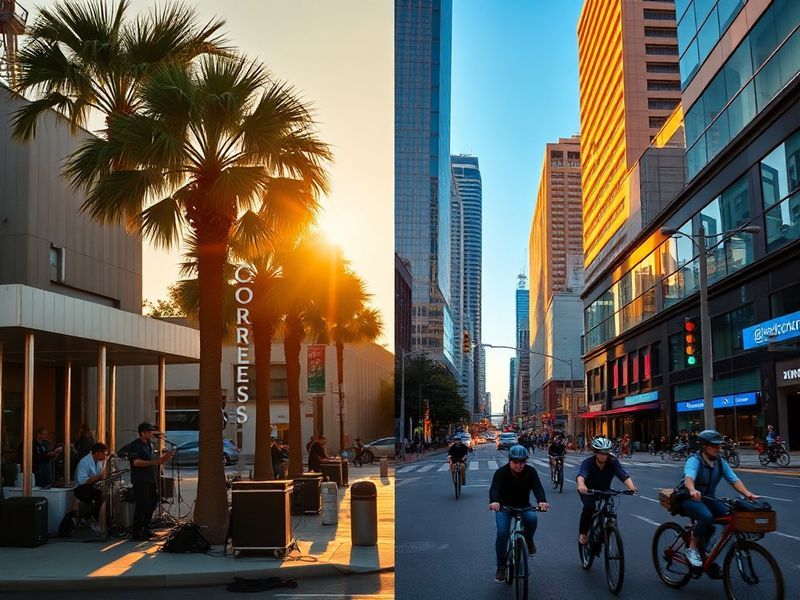
Two North American cities often celebrated for their dynamism, creativity, and economic growth, Austin and Toronto, stand as contrasting yet complementary models of urban development. While both attract transplants from across the globe, their personalities, challenges, and opportunities differ sharply. Understanding these distinctions reveals much about the evolving priorities of modern cities—particularly how they balance culture, affordability, and innovation.
Toronto, Canada’s largest city, operates as the country’s financial and cultural nucleus. With a population exceeding 2.9 million within its city limits and over 6 million in the Greater Toronto Area, it serves as a gateway to Canada for immigrants and multinational corporations alike. Austin, by contrast, is Texas’s state capital and a rising tech hub, its population of around 1 million within the city proper belying its outsized influence in the Lone Star State’s economy.
The Economic Engine: Finance Meets Technology
The economic foundations of Austin and Toronto could hardly be more distinct. Toronto’s financial sector is entrenched, with the Toronto Stock Exchange anchoring a robust ecosystem of banks, asset managers, and fintech startups. The city’s Bay Street corridor functions as Canada’s Wall Street, drawing top talent from around the world and anchoring the national economy. In 2023, Toronto’s financial services sector contributed over CAD $30 billion to provincial GDP, underscoring its systemic importance.
Austin, meanwhile, has cultivated a reputation as a tech magnet. Fueled by lower taxes, a business-friendly regulatory environment, and the presence of major companies like Tesla, Apple, and Dell, Austin has seen its tech workforce expand rapidly. Between 2015 and 2023, the city’s tech employment grew by nearly 50%, outpacing both national and state averages. While Austin’s tech scene lacks the depth of Silicon Valley, its growth reflects a strategic shift toward decentralized innovation hubs.
This divergence highlights a broader trend: Toronto represents the mature, diversified economy of a global city, while Austin embodies the agility of a regional powerhouse reinventing itself through technology. Each model offers lessons for cities seeking to adapt in an era of economic transformation.
Affordability and Urban Pressure
Affordability is the most visible pressure point in both cities, but the nature of the crisis differs dramatically. In Toronto, skyrocketing housing costs and rental prices have pushed middle-class residents to the suburbs and beyond. The average home price in Toronto now exceeds CAD $1.1 million, with downtown condos often selling for over CAD $1,500 per square foot. Rising costs have fueled debates over zoning reform and inclusionary housing policies, with activists pushing for more density and affordable units.
Austin, though also experiencing rapid price inflation, remains relatively more affordable than Toronto. The median home price hovers around $550,000, a figure high by historical standards but still within reach for tech professionals earning six-figure salaries. However, Austin’s growth has come at a cost: gentrification has displaced long-time residents in neighborhoods like East Austin, and traffic congestion has worsened as infrastructure struggles to keep pace with population growth.
Both cities face a paradox: their economic success is both the cause and consequence of housing shortages. Toronto’s crisis is more entrenched, rooted in decades of constrained supply and high immigration. Austin’s is newer but accelerating, driven by corporate relocations and remote workers fleeing pricier coastal cities. The pressure in both cases underscores the need for bold housing policy—whether through zoning reform, public investment, or innovative financing models.
Culture and Identity: From Music to Multiculturalism
Cultural identity is where Austin and Toronto reveal their most vivid contrasts. Austin is synonymous with music, branding itself as the “Live Music Capital of the World.” The city’s Sixth Street district, South by Southwest (SXSW) festival, and legendary venues like the Continental Club define its creative identity. Music is woven into the city’s civic fabric, supported by a robust nonprofit sector and a DIY ethos that values grassroots expression over corporate sponsorship.
Toronto, by contrast, is a mosaic of global cultures. Over 50% of its residents were born outside Canada, and more than 200 languages are spoken within its borders. The city’s cultural institutions—from the Royal Ontario Museum to the Toronto International Film Festival—reflect this diversity. Toronto’s music scene is equally eclectic, with genres from Afrobeat to classical thriving in venues across the city. Yet, unlike Austin, Toronto’s cultural identity is less about a single art form and more about the interplay of countless traditions.
This difference speaks to a broader dynamic: Austin’s culture is self-curated, a product of local pride and intentional branding. Toronto’s is organic, emerging from centuries of migration and settlement. Both approaches have merit, but they also raise questions about authenticity and commodification in the modern city.
Climate and Livability: Heat, Snow, and Everything In Between
Climate shapes daily life in both cities, but in fundamentally different ways. Austin’s subtropical climate brings scorching summers, with temperatures regularly exceeding 100°F (38°C). The city’s heat islands, exacerbated by concrete and limited tree canopy, create public health challenges. Yet Austin’s mild winters and abundant sunshine make it an attractive destination for outdoor enthusiasts year-round.
Toronto, by contrast, endures a humid continental climate with snowy winters and humid summers. The city’s infrastructure is built around snow removal and heating systems, while its residents adapt with layers of parkas and hot beverages. Despite the severity of its winters, Toronto’s green spaces—from High Park to the Toronto Islands—offer respite and recreation. The city’s climate resilience is being tested by increasingly erratic weather patterns, including ice storms and heatwaves.
These environmental realities influence everything from urban design to public health policy. Austin’s focus on heat mitigation—through tree planting initiatives and cooling centers—reflects its climate challenges. Toronto’s investments in winter maintenance and flood control highlight its own vulnerabilities. Both cities are learning that climate adaptation is not optional but essential to long-term livability.
Key Takeaways: What We Can Learn
- Diversification vs. Specialization: Toronto’s economy is broad and resilient, while Austin’s tech focus offers rapid growth but higher volatility.
- Housing Policy as a Litmus Test: Both cities struggle with affordability, but their responses—Toronto’s advocacy for density, Austin’s embrace of market solutions—offer contrasting models.
- Cultural Identity in Flux: Austin’s music-driven brand contrasts with Toronto’s multicultural ethos, reflecting different approaches to civic identity.
- Climate as a Design Challenge: Austin’s heat and Toronto’s snow each demand innovative urban solutions, from green infrastructure to emergency preparedness.
Conclusion: Two Cities, One North American Future
The Austin-Toronto comparison is more than a curiosity—it’s a window into the forces reshaping North American urbanism. Toronto represents the challenges and opportunities of a mature global city: balancing growth with equity, tradition with innovation. Austin embodies the ambition of a mid-sized city reinventing itself through technology and culture, albeit with growing pains.
What unites them is a shared reality: cities are no longer just places to live or work, but engines of identity and opportunity. Their struggles—over housing, culture, and climate—are not unique but emblematic of a continent in transition. As Toronto grapples with its housing crisis and Austin confronts its infrastructure limits, both are writing the blueprint for what comes next.
For policymakers, developers, and residents alike, the lessons are clear. Success will not come from emulating one model over the other, but from adapting their strengths to local needs. Whether through Toronto’s multicultural institutions or Austin’s tech-driven dynamism, the future of North American cities will be defined by how well they balance growth with belonging.
One thing is certain: as long as talent and ambition continue to flow into these cities, the conversation will only grow louder.
For more insights into urban culture and innovation, visit Dave’s Locker Culture or explore Dave’s Locker News for the latest developments.