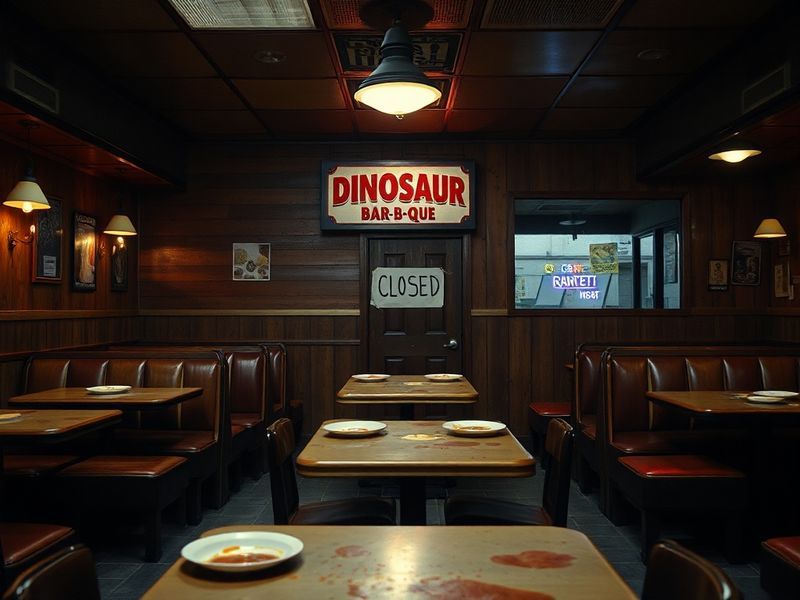
Dinosaur Bar-B-Que, a beloved fixture in the American barbecue scene since 1993, has announced the permanent closure of all its restaurants. The Syracuse-based chain, known for its smoky, slow-cooked meats and vibrant atmosphere, confirmed the decision in a statement that cited evolving industry challenges and financial pressures. The news marks the end of an era for fans who have followed the brand’s growth from a small takeout window to a multi-state restaurant group.
Founder John Stage opened the first Dinosaur Bar-B-Que in Syracuse’s Armory Square in 1993, turning a former plumbing-supply warehouse into a destination for barbecue enthusiasts. Over the years, the restaurant expanded to locations in New York City, Rochester, and even Atlanta, Georgia, earning a reputation for its Texas-style brisket, pulled pork, and signature sauces. Despite its cult following, the chain struggled to maintain profitability in a competitive dining landscape dominated by delivery apps and rising operational costs.
The Factors Behind the Closure
The decision to close all locations was not made lightly. Dinosaur Bar-B-Que faced a confluence of challenges that ultimately proved insurmountable. Rising food and labor costs, combined with changing consumer habits, squeezed margins tighter than a well-smoked brisket. The pandemic accelerated these trends, forcing many restaurants to adapt to takeout and delivery models—a transition that Dinosaur Bar-B-Que attempted but found difficult to sustain profitably.
Competition in the barbecue space has also intensified. Chains like Texas Roadhouse and regional favorites have expanded aggressively, while food delivery platforms have commoditized dining experiences, making it harder for independent brands to stand out. Dinosaur Bar-B-Que’s commitment to traditional slow-smoking techniques, while a point of pride, also meant higher overhead costs compared to faster, more scalable concepts.
In an interview with The Post-Standard, a company spokesperson acknowledged the “brutal realities” of the restaurant industry post-2020. “We gave it everything we had,” the spokesperson said. “But the math just didn’t work anymore. You can’t out-cook rising rents, ingredient prices, and the expectation that a plate of ribs should cost less than a streaming service subscription.”
A Look Back at Dinosaur Bar-B-Que’s Legacy
Dinosaur Bar-B-Que wasn’t just a restaurant; it was a cultural touchstone for communities in Upstate New York and beyond. Its locations became hubs for local events, live music, and gatherings, embodying the spirit of regional pride. The Syracuse original, in particular, was a point of pilgrimage for barbecue purists, who lined up for hours to savor its tender meats and tangy sauces.
The chain’s influence extended beyond the dinner plate. Dinosaur Bar-B-Que popularized Central New York-style barbecue, characterized by its emphasis on pork and bold, vinegar-based sauces—a departure from the sweeter, tomato-heavy styles of the South and Midwest. Its success inspired a generation of aspiring pitmasters and helped put Syracuse on the culinary map.
For many, the closure feels like the loss of a neighborhood institution. Longtime patrons shared memories of first dates, family celebrations, and late-night snacks at Dinosaur Bar-B-Que, where the aroma of wood smoke and the hum of conversation created an unmistakable ambiance. The restaurant’s mascot—a cartoon dinosaur wielding a meat cleaver—became synonymous with its brand, a playful nod to its commitment to hearty, no-frills comfort food.
What’s Next for Dinosaur Bar-B-Que?
While the restaurant’s physical locations are closed, the future of Dinosaur Bar-B-Que remains uncertain. The company has not ruled out exploring other opportunities, such as pop-up events or merchandise sales, to keep the brand alive in some form. Fans have already taken to social media to express their disappointment and nostalgia, with many hoping for a potential comeback under new ownership or a different business model.
For now, the focus is on winding down operations responsibly. Employees have been notified, and the company is working to fulfill outstanding catering orders and gift card redemptions. The chain’s website and social media channels have been updated with closure notices, urging patrons to support local barbecue spots in their communities.
Key Takeaways from Dinosaur Bar-B-Que’s Closure
- Rising Costs: Ingredient prices, labor wages, and overhead expenses squeezed profitability.
- Changing Consumer Habits: Delivery and takeout demand reshaped the restaurant industry, favoring scalable models over traditional dine-in experiences.
- Competitive Pressure: The barbecue market has become crowded, with both chains and regional favorites vying for attention.
- Legacy Over Scalability: Dinosaur Bar-B-Que’s commitment to slow-smoking techniques and authentic flavors limited its ability to expand rapidly or cut costs.
- Community Impact: The closure leaves a void in local dining scenes, particularly in Syracuse, where the restaurant was a cultural landmark.
Broader Implications for the Restaurant Industry
The closure of Dinosaur Bar-B-Que is more than the end of a single restaurant; it’s a microcosm of the struggles facing independent and regional chains in today’s market. The pandemic exposed vulnerabilities in the restaurant business model, but the challenges Dinosaur Bar-B-Que faced predate COVID-19. They reflect a broader trend of consolidation and homogenization in the dining industry, where only the most adaptable or well-funded concepts survive.
For barbecue enthusiasts, the news is a reminder of the fragility of beloved institutions. While national chains and celebrity-backed concepts dominate headlines, it’s often the local pitmasters and family-owned spots that define regional food cultures. Dinosaur Bar-B-Que’s story underscores the need for consumers to support these businesses, not just as places to eat, but as pillars of community identity.
Industry analysts suggest that the rise of ghost kitchens and virtual brands could offer a lifeline for struggling restaurants, allowing them to cut overhead costs by eliminating physical dining spaces. However, for a brand built on atmosphere and tradition, such a pivot would require a fundamental reimagining of its identity. Whether Dinosaur Bar-B-Que pursues this path remains to be seen.
A Final Thought: Preserving the Spirit of Dinosaur Bar-B-Que
As Dinosaur Bar-B-Que fades into memory, its legacy lives on in the recipes shared by fans, the cookbooks that documented its techniques, and the memories created within its walls. For those who experienced its magic, the closure is a bittersweet reminder of the fleeting nature of culinary landmarks. Yet it also serves as a call to action for preserving the diversity of the American dining landscape.
In an era where chains and algorithms dictate what we eat, there’s still value in supporting the quirky, the stubborn, and the unapologetically authentic. Dinosaur Bar-B-Que’s story is a testament to the power of food to bring people together—and a cautionary tale about the costs of staying true to your craft in an unforgiving industry.
For now, the smoke has cleared in Syracuse, Rochester, New York City, and Atlanta. But the spirit of Dinosaur Bar-B-Que endures in the smoldering pits and the communities it helped feed.
To explore more about the restaurant industry’s evolving trends, visit our News and Food sections for in-depth coverage.