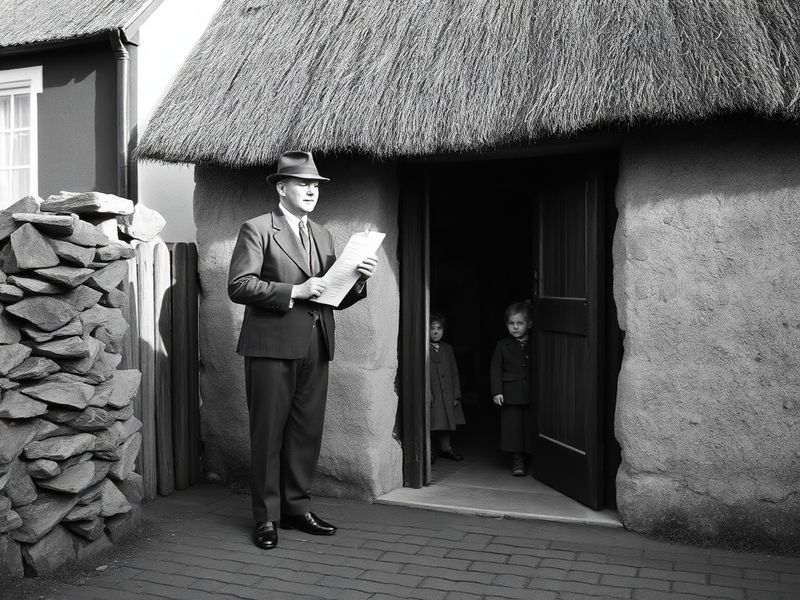
The Irish Census of 1926 stands as a pivotal document, capturing a society in the midst of profound change. Just four years after the establishment of the Irish Free State, the census offered a statistical portrait of a nation still finding its footing. It was more than a bureaucratic exercise—it was a mirror held up to a population emerging from centuries of colonial rule, civil war, and economic upheaval.
Unlike earlier censuses, conducted under British administration, the 1926 edition was the first to reflect an independent Ireland. The data it collected—on population, employment, language, and housing—provided the young state with critical insights. For historians and sociologists, it remains an indispensable resource, revealing patterns of migration, urbanization, and cultural identity that shaped modern Ireland.
The Historical Context: Ireland in the Early 20th Century
The early 1920s were a turbulent period in Irish history. The War of Independence (1919–1921) had culminated in the Anglo-Irish Treaty, which established the Irish Free State—a dominion within the British Empire—while partitioning the island. The subsequent Civil War (1922–1923) left deep scars, with thousands displaced or displaced from their homes.
Economically, Ireland was agrarian and underdeveloped, with limited industrialization. The population had been declining for decades due to emigration, a trend that continued into the 1920s. The 1926 census would document this reality, showing a country where rural life dominated but where urban centers like Dublin and Cork were slowly growing.
Culturally, Ireland was grappling with its dual identity. The Gaelic Revival movement had gained momentum in the late 19th and early 20th centuries, promoting the Irish language and traditional culture. The Free State’s constitution, adopted in 1937, would later enshrine Irish as the national language, but in 1926, the census reflected a society where English was still the dominant language in most households.
Key Findings from the 1926 Census
The 1926 census was conducted on April 18, 1926, and the results were published in stages over the following years. Some of the most striking findings included:
- Population Decline: Ireland’s population had dropped to 2,971,992, a decline of nearly 20% since 1841. This was largely due to emigration, which had accelerated during the Great Famine (1845–1852) and continued unabated.
- Urban vs. Rural Divide: While 65% of the population lived in rural areas, urban centers were growing. Dublin’s population, for example, had increased by about 10% since 1911.
- Employment Patterns: Agriculture employed 54% of the workforce, reflecting the economy’s reliance on farming. However, industrial employment was rising, particularly in sectors like textiles and brewing.
- Language Use: Only 18% of the population spoke Irish daily outside of school, while 82% spoke English as their primary language. This underscored the challenges of revitalizing the Irish language.
- Housing Conditions: Overcrowding and poor sanitation were common, particularly in urban slums. The census highlighted the need for housing reform, a challenge that would persist for decades.
The census also revealed regional disparities. Counties in the west, such as Galway and Mayo, had higher rates of Irish-speaking populations and lower population densities. In contrast, eastern counties like Dublin and Louth were more urbanized and industrialized.
The Global Perspective: How Ireland Compared to Other Nations
In a broader context, Ireland’s demographic trends in the 1920s mirrored those of other post-colonial nations. Like many newly independent countries, Ireland faced the dual challenges of nation-building and economic development. The census data provided a baseline for policies aimed at reversing population decline and promoting industrialization.
Ireland’s experience also diverged from other European nations. While much of Europe was recovering from the devastation of World War I, Ireland was dealing with the aftermath of its own civil conflict. The census data reflected this unique trajectory, showing a society still healing from internal strife.
Globally, the 1920s were a period of rapid change. The rise of automobiles, radio, and cinema was transforming daily life. While Ireland lagged behind in industrialization, the census captured the early stages of this cultural shift, with increasing numbers of households gaining access to new technologies.
The Legacy of the 1926 Census
The 1926 census was not just a statistical snapshot—it was a tool for nation-building. The data it collected informed policies in areas such as education, housing, and language revival. For example, the government used the census findings to justify investments in rural electrification and infrastructure projects aimed at stemming emigration.
For researchers, the census remains an invaluable resource. Unlike many earlier censuses, which were destroyed or lost, the 1926 data survived intact. Historians have used it to study everything from the impact of emigration on Irish families to the role of women in the workforce. The census also provides insights into the lived experiences of ordinary Irish people, from farmers in Kerry to factory workers in Belfast.
Today, the 1926 census is available online through the Central Statistics Office of Ireland, allowing anyone to explore the data. It serves as a reminder of how far Ireland has come—and how much it has changed—since the early 20th century.
The census also highlights the enduring challenges of nationhood. Even as Ireland celebrated its newfound independence, it grappled with the same issues that plague modern nations: economic inequality, rural depopulation, and cultural identity. The 1926 census documents these struggles, offering a lesson in resilience and adaptation.