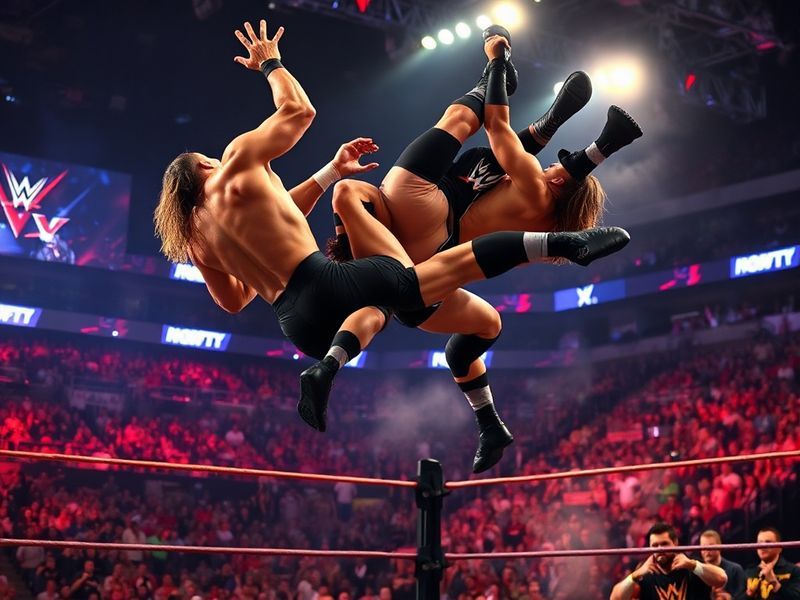
The spectacle of professional wrestling has always thrived on the raw energy of its performers. Among the most iconic tandems in WWE history was Demolition, a tag team that redefined the meaning of brute force and intimidation in the squared circle. Active primarily during the late 1980s and early 1990s, their legacy extends beyond mere statistics and championship reigns. Demolition became cultural symbols of an era when wrestling was as much about theatrics as it was about athletic performance.
What set Demolition apart was their unrelenting physicality and coordinated dominance. In an industry where larger-than-life characters often steal the spotlight, the team carved a niche by letting their actions speak louder than words. Their aggressive style and synchronized offense made them a staple of the WWE entertainment machine, drawing both adoration and criticism from fans worldwide.
The Birth of a Monstrous Tandem
Demolition was the brainchild of Bill Eadie and Barry Darsow, two wrestlers who shared a vision of creating one of the most feared tag teams in wrestling history. Eadie, already a seasoned performer under the name “Masked Superstar,” adopted the persona of Ax, the powerhouse of the duo. Darsow, previously known as “Krusher Khruschev,” became Smash, the unpredictable counterpart. Their partnership began in 1987, and it didn’t take long for them to climb the ranks.
Their gimmick was simple yet effective: two hulking figures clad in black leather and face paint, moving with coordinated brutality. The visual contrast between Ax’s stoic intensity and Smash’s erratic energy made them visually compelling. They didn’t rely on gimmicks like supernatural powers or comedic antics. Instead, they let their in-ring dominance do the talking. Fans either loved their style or found it excessive, but they could never ignore it.
A Dominant Streak That Redefined Tag Team Wrestling
Demolition’s rise to prominence was meteoric. By 1988, they had already captured the WWF Tag Team Championships, defeating the popular team of Strike Force. What followed was a record-breaking reign that lasted 478 days—the longest tag team championship reign in WWF history at the time. Their dominance was not just about winning; it was about dismantling opponents with surgical precision and overwhelming force.
Their matches became must-see events, often serving as the main event of house shows and pay-per-views. Their style resonated particularly well with audiences who craved action and intensity. Their feuds with teams like the Powers of Pain and the Hart Foundation elevated the tag team division, proving that it could be as compelling as singles competition.
One of their most memorable feuds was against the British Bulldogs, a high-flying team that contrasted sharply with Demolition’s brawling style. The matches between these two teams were clashes of ideologies—power versus agility, brute force versus technical skill. These encounters remain benchmarks for tag team wrestling and are often revisited in retrospectives and documentaries.
The Cultural Impact of Demolition in Global Wrestling
While Demolition was a product of the American wrestling scene, their influence extended far beyond the borders of the United States. In the late 1980s, professional wrestling was experiencing a global expansion, with WWF leading the charge. Demolition’s style, which emphasized power and aggression, resonated particularly well in international markets where audiences were drawn to larger-than-life characters.
In Japan, where wrestling had a strong cultural foothold, Demolition’s matches were broadcast on national television. Their dominance over local stars helped legitimize WWF’s global ambitions. Similarly, in Europe and Australia, fans embraced the team’s no-nonsense approach, which aligned with the growing appetite for more athletic and intense forms of entertainment.
Their legacy is not just confined to the ring. Demolition became part of a larger narrative about the evolution of wrestling entertainment. They represented an era when the line between sport and spectacle was intentionally blurred, paving the way for future stars who would blend athleticism with theatricality.
Controversies and Criticisms
Despite their success, Demolition was not without controversy. Critics often accused the team of relying too heavily on their size and power, arguing that their matches lacked technical sophistication. Some purists believed that their dominance stifled innovation within the tag team division, as other teams struggled to gain traction against them.
There were also behind-the-scenes issues. Reports later surfaced about tension between the two members, particularly as their dominance waned in the early 1990s. The physical toll of their style, combined with the pressures of maintaining their gimmick, led to discussions about the sustainability of such an extreme approach to wrestling.
Nevertheless, these challenges did little to diminish their legacy. In fact, they added layers to the Demolition story, transforming it from a simple tale of victory into one of perseverance and adaptation.
Demolition’s Enduring Influence on Modern Wrestling
Decades after their last match, Demolition’s influence can still be felt in modern wrestling. Tag teams like The Shield and The New Day have cited them as inspiration, particularly in how they blend power with personality. The emphasis on coordinated offense and psychological intimidation remains a cornerstone of tag team wrestling.
Beyond the ring, Demolition’s legacy is evident in the way wrestling promotions market their stars. The idea that a team can be defined by its physical dominance and synchronized style has become a blueprint for success. Even in today’s era of high-flying and technical wrestling, there remains a place for the powerhouse tag team.
Their story also serves as a reminder of the cyclical nature of wrestling. Teams rise, dominate, and eventually fade, only to be remembered as legends. Demolition’s journey encapsulates this perfectly, offering lessons in resilience, adaptation, and the power of a compelling gimmick.
Lessons from Demolition’s Legacy
For aspiring wrestlers and promoters, Demolition’s career offers several key takeaways:
- Character consistency: Their gimmick was consistent across every match, making them instantly recognizable and memorable.
- Adaptability: Despite their dominance, they evolved their style to stay relevant, even experimenting with new personas and storylines.
- Cultural relevance: Their appeal transcended borders, proving that wrestling could be a global phenomenon when presented effectively.
- Physical storytelling: Their matches told a story through action, using power and coordination to convey dominance and control.
These elements are as relevant today as they were in the late 1980s. In an era where wrestling fans are spoiled for choice, the principles that defined Demolition’s success remain a guide for creating compelling content.
A Final Reflection on Demolition’s Place in Wrestling History
Demolition may no longer be active in the ring, but their legacy endures. They were more than just a tag team; they were architects of an era. Their matches were spectacles of power and coordination, and their story was one of perseverance and reinvention.
In the broader context of wrestling entertainment, Demolition represents a time when the industry was bold, unapologetic, and unafraid to push boundaries. They were a reflection of the cultural moment—a time when excess and intensity were celebrated, and when wrestling was at its most theatrical.
As new generations of fans discover the magic of wrestling, Demolition’s matches remain timeless. They serve as a reminder that wrestling is not just about athleticism; it’s about storytelling, character, and the power of a well-executed gimmick. Their legacy is a testament to the enduring appeal of professional wrestling and its ability to captivate audiences across generations.
For those who witnessed their rise, Demolition will always be remembered as pioneers. For those who are discovering their legacy today, they represent a golden era of sports entertainment—one defined by power, passion, and unrelenting intensity.