Washington Commanders: A Legacy in Transition and Global Impact
“`html
The Washington Commanders: A Global Perspective on America’s Capital Team
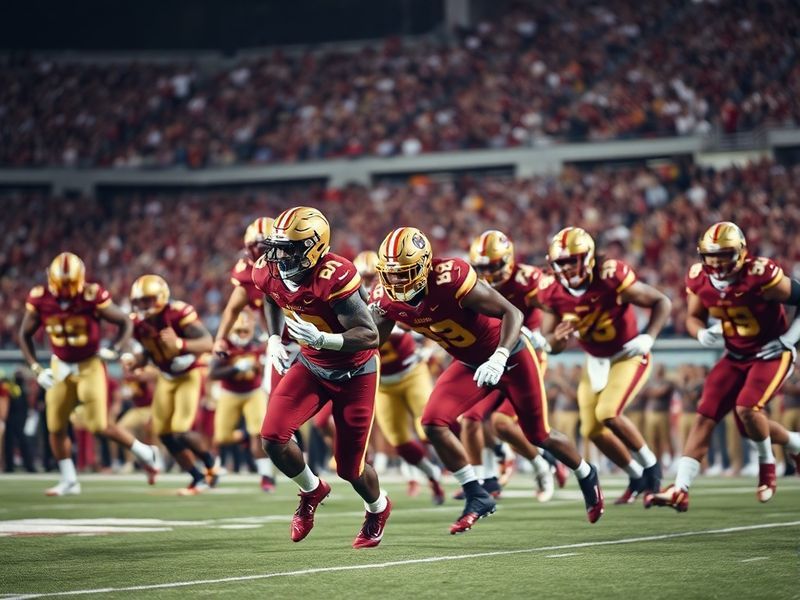
The Washington Commanders, formerly known as the Redskins until 2020, stand as one of the NFL’s most storied franchises. Based in the nation’s capital, the team carries a legacy that spans over nine decades. Its history reflects broader themes in American culture, including identity, progress, and the evolving relationship between sports and society.
From their early days as the Boston Braves in 1932 to their relocation to Washington, D.C. in 1937, the franchise has mirrored the growth of professional football itself. The team’s name change in 2020 marked a pivotal moment—not just for the organization, but for leagues and franchises worldwide grappling with issues of cultural sensitivity and inclusivity.
The Commanders in Global Context: How an NFL Team Reflects Broader Trends
American football, though uniquely popular in the United States, has grown into a global sport. The NFL actively promotes the game internationally through games in London, Mexico City, and Germany. In this context, the Washington Commanders serve as a cultural ambassador for the league.
Internationally, the team’s branding and messaging are often scrutinized through different cultural lenses. While American audiences debate team names and mascots, global fans may focus more on the on-field product or the NFL’s broader expansion efforts. This dual perspective highlights how sports entities operate within multiple cultural frameworks simultaneously.
For example, in countries like the UK, where American football is growing, the Commanders may be seen first as a competitive team, second as a symbol of NFL globalization. This shift in perception underscores how sports franchises transcend their local origins to become part of a global conversation.
A Legacy of Performance and Controversy
The Commanders have experienced both triumph and turmoil. They won Super Bowl XXII in 1988 and XXVI in 1992 under coach Joe Gibbs. These victories cemented their place in NFL history and brought pride to the nation’s capital. Yet, the franchise has also faced challenges—from ownership disputes to controversies surrounding its former name.
The team’s history is marked by moments that reflect broader societal changes. The name change in 2020 followed years of activism and public pressure, signaling a shift in how professional sports leagues respond to social issues. This decision placed the Commanders at the forefront of a movement that saw other teams—such as the Cleveland Indians and Edmonton Eskimos—reassess their identities.
Ownership transitions have also shaped the team’s trajectory. The late Daniel Snyder’s tenure was marred by controversy, culminating in his decision to sell the franchise in 2023. The new ownership group, led by Josh Harris, represents a new era—one that carries both expectations and opportunities for renewal.
Key Moments in Commanders History
- 1937: Relocation from Boston to Washington, D.C.
- 1972: First Super Bowl appearance (lost to Miami Dolphins)
- 1987: Players’ strike; replacement team wins three games
- 1988: Victory in Super Bowl XXII with Doug Williams as MVP
- 1991: Another Super Bowl win in XXVI
- 2020: Name change from Redskins to Commanders
- 2023: Sale of the franchise to new ownership led by Josh Harris
The Commanders in the Modern Media Landscape
In today’s media environment, sports teams are not just defined by their performance—they are shaped by narratives in news cycles, social media, and fan discourse. The Commanders have found themselves at the center of these dynamics, particularly during periods of ownership transition and branding changes.
Social media platforms amplify both the team’s successes and its controversies. A single viral moment—whether a viral meme or a public relations misstep—can shape global perceptions overnight. The Commanders’ social media strategy, therefore, plays a crucial role in managing their image across diverse audiences.
Internationally, digital platforms have made it easier for global fans to engage with the team. Whether through streaming games on platforms like Sports or following English-language content, fans from Tokyo to Toronto can feel connected to the Commanders. This accessibility has contributed to the team’s growing international fanbase.
What’s Next for the Washington Commanders?
Under new ownership, the Commanders are positioned for a fresh start. The Harris group has emphasized a commitment to community engagement, transparency, and competitive excellence. These priorities reflect broader trends in modern sports ownership, where fan trust and social responsibility are increasingly valued.
The team’s future will likely be defined by several key factors:
- On-field performance: Building a roster capable of returning to playoff contention.
- Brand evolution: Balancing tradition with modern expectations in identity and messaging.
- Global expansion: Leveraging the NFL’s international growth to strengthen the team’s presence abroad.
- Fan engagement: Rebuilding trust with local and global supporters through authentic interactions.
As the Commanders navigate this new chapter, their story continues to reflect larger themes in sports and society. They are more than a football team—they are a reflection of Washington, D.C.’s identity, America’s evolving cultural conversations, and the global reach of the NFL.
“The Commanders’ journey illustrates how sports franchises must adapt—not only to changes in the game, but to the expectations of a diverse and connected world.”
Conclusion
The Washington Commanders embody the complexities of modern sports: a legacy of achievement shadowed by controversy, a local identity intertwined with global narratives, and a franchise in transition. As the team moves forward under new leadership, its success will depend not only on victories on the field, but on its ability to engage with fans, communities, and cultures around the world.
In an era where sports teams are increasingly scrutinized for their social impact, the Commanders offer a case study in resilience and reinvention. Their story is far from over—and neither is the conversation about what it means to represent a city, a league, and a global audience.