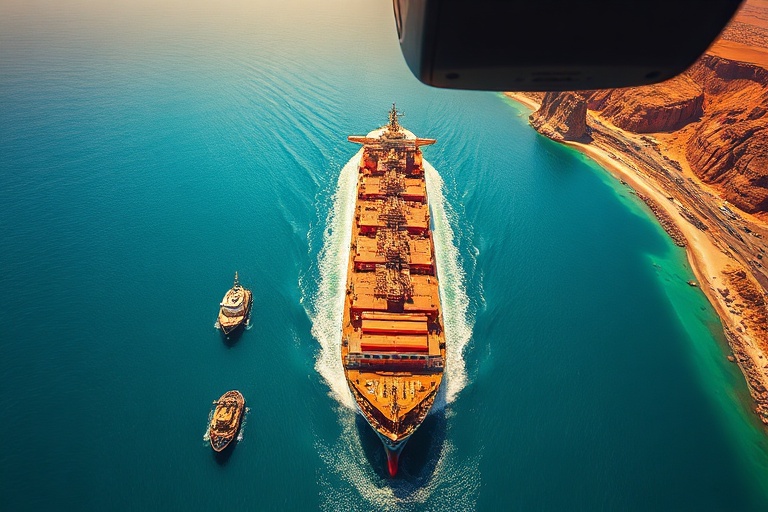
The Strait of Hormuz isn’t just another narrow waterway cutting through the earth’s crust—it’s the circulatory system of the global oil economy. Tucked between Iran and Oman, this 21-mile-wide passage connects the Persian Gulf to the Gulf of Oman and, ultimately, the Indian Ocean. Every day, massive oil tankers navigate its waters, carrying millions of barrels that power nations from Asia to Europe.
But this chokepoint isn’t just a logistical marvel—it’s a flashpoint of geopolitical tension. The Strait of Hormuz has repeatedly emerged as a pressure point in international relations, where military posturing, sanctions, and regional conflicts converge with the uninterrupted flow of energy supplies. Understanding its role means examining geography, economics, and diplomacy—all intertwined in a high-stakes balancing act.
The Strategic Importance of the Strait of Hormuz
The numbers tell a compelling story. According to the U.S. Energy Information Administration, about 20% of the world’s oil supply passes through the Strait of Hormuz each day—roughly 21 million barrels. That’s more than all the oil produced by the United States in a month. The strait serves as the primary export route for four major oil producers: Saudi Arabia, Iran, Iraq, and the United Arab Emirates. Without safe passage, global oil markets would face severe disruptions.
This concentration of energy infrastructure creates a paradox: the strait is both indispensable and vulnerable. A closure—whether through military blockade, sabotage, or political decision—would send oil prices soaring and trigger energy crises across multiple continents. The 1980s saw temporary disruptions during the Iran-Iraq War, while more recent incidents, including attacks on tankers in 2019, have underscored the fragility of this critical route.
Oil tankers aren’t the only ships using the strait. Liquefied natural gas (LNG) carriers also depend on it, especially as Qatar, the world’s largest LNG exporter, relies entirely on the Strait of Hormuz for shipments to Asia. The strait is, in effect, the narrow door through which vast energy wealth must flow to reach the global market.
Who Depends on the Strait?
- Saudi Arabia: Exports nearly all its oil through the strait.
- Iran: Despite sanctions, still ships oil via tankers under limited waivers or illicit networks.
- Iraq: Most of its oil exports travel through the strait via pipelines ending in Basra and Ceyhan.
- United Arab Emirates: While it has built pipelines to bypass the strait, a significant portion of oil still passes through.
- Qatar: Exports 99% of its LNG through the Strait of Hormuz.
- Kuwait: Nearly all its oil exports go through the strait.
Geopolitical Flashpoints and Recent Incidents
The Strait of Hormuz has become a stage for power plays. Iran, in particular, has used its geographic advantage as leverage. In 2018, after the U.S. withdrew from the Iran nuclear deal and reimposed sanctions, Iran threatened to close the strait—a move that would have triggered a global oil crisis. While Iran never fully closed it, the threat alone caused market jitters and highlighted the strait’s vulnerability.
Then came the 2019 tanker attacks. In May and June, four commercial vessels—including two Saudi oil tankers—were damaged in suspected attacks near the strait. The U.S. blamed Iran, which denied involvement but celebrated the incident as a show of force. Satellite images revealed limpet mines attached to the hulls, a signature method associated with Iranian operatives. The attacks sent oil prices up 4% in a single day and prompted the U.S. to deploy an aircraft carrier strike group to the region.
Later that same year, Iran seized the British-flagged tanker Stena Impero in retaliation for the UK’s detention of an Iranian oil tanker off Gibraltar. The vessel was held for over two months, further escalating maritime tensions. These events demonstrated how quickly commercial shipping can become entangled in broader political conflicts.
The Role of International Navies
To protect shipping lanes, multiple nations maintain a military presence in the region. The U.S. Fifth Fleet, based in Bahrain, patrols the waters and escorts tankers through the strait. The UK launched its Operation Sentinel in 2019 to protect British-flagged ships. France, Japan, and Australia have also contributed naval assets. These operations, while stabilizing, risk escalation—especially if miscommunication occurs between rival fleets.
A 2021 drone attack on an Israeli-linked tanker in the Gulf of Oman, attributed to Iran, killed two crew members. The incident occurred just outside the strait but reinforced the message: even indirect attacks can disrupt the flow of oil and destabilize markets.
Can the Strait Be Bypassed?
In response to these risks, several countries have invested in alternative routes. Saudi Arabia built the East-West Pipeline in the 1980s, allowing oil to bypass the strait and reach the Red Sea port of Yanbu. The UAE completed the Habshan-Fujairah pipeline in 2012, enabling exports to bypass Hormuz entirely. These pipelines reduce—but don’t eliminate—dependence on the strait.
Iraq has also explored options. After the 2003 war, it rehabilitated the Iraq-Turkey pipeline, which runs north through Kurdistan, but sabotage and political instability have limited its reliability. Still, these alternatives offer a buffer. If the strait were closed, global markets would not collapse overnight—but prices would surge, and buyers would scramble for scarce supplies.
Qatar’s LNG industry faces a unique challenge. Unlike oil, LNG cannot be easily rerouted. That’s why Qatar is expanding its fleet of very large gas carriers (VLGCs) and exploring floating LNG terminals in the Indian Ocean. Still, any disruption could severely impact Asian energy security, especially for countries like Japan and South Korea.
The Future: Tensions, Technology, and Trade
Looking ahead, the Strait of Hormuz remains a flashpoint. Iran continues to develop its ballistic missile and drone capabilities, which could be used to threaten shipping. Meanwhile, the U.S. maintains a strong naval presence, creating a delicate balance. Diplomacy is fragile, and missteps could lead to unintended escalation.
Technology offers some solutions. Drones, satellites, and AI-driven maritime surveillance are being deployed to monitor the strait in real time. Companies like oil majors and shipping firms are investing in cybersecurity and route diversification to reduce risk. Insurance premiums for tankers transiting the strait have risen, reflecting the growing threat environment.
Yet, the human factor remains critical. Crews on oil tankers—many from developing nations—face not only the dangers of piracy and collision but also the psychological toll of operating in a war zone. Fatigue, isolation, and geopolitical stress compound the risks of an already hazardous profession.
What Could Trigger a Crisis?
- Military escalation: A direct conflict between Iran and the U.S. or its allies could lead to a blockade or attacks on tankers.
- Sabotage: Drones, mines, or cyberattacks targeting key infrastructure in or near the strait.
- Sanctions tightening: If the U.S. further restricts Iran’s oil exports, Tehran may retaliate by disrupting shipping.
- Accidental escalation: A naval standoff or misidentified vessel could spiral out of control.
- Climate-related disruptions: While less likely, extreme weather or rising sea levels could affect navigation.
Conclusion: A Chokepoint That Demands Attention
The Strait of Hormuz is more than a geographic feature—it’s a symbol of how energy, politics, and security intersect in the modern world. Its continued operation is not guaranteed. As global demand for oil and gas grows, especially in Asia, the strait’s importance will only increase. That makes it a prime target for state actors seeking leverage.
For now, the world relies on a fragile equilibrium: military deterrence, diplomatic caution, and economic interdependence. But history shows that such balances are temporary. The next incident—whether a drone strike, a naval clash, or a sudden policy shift—could test the system once again.
As nations invest in alternative routes and technologies, the Strait of Hormuz will remain a focal point of energy security. It’s a reminder that even in a world shifting toward renewables, oil still rules the waves—and the fate of millions depends on safe passage through its narrow waters.