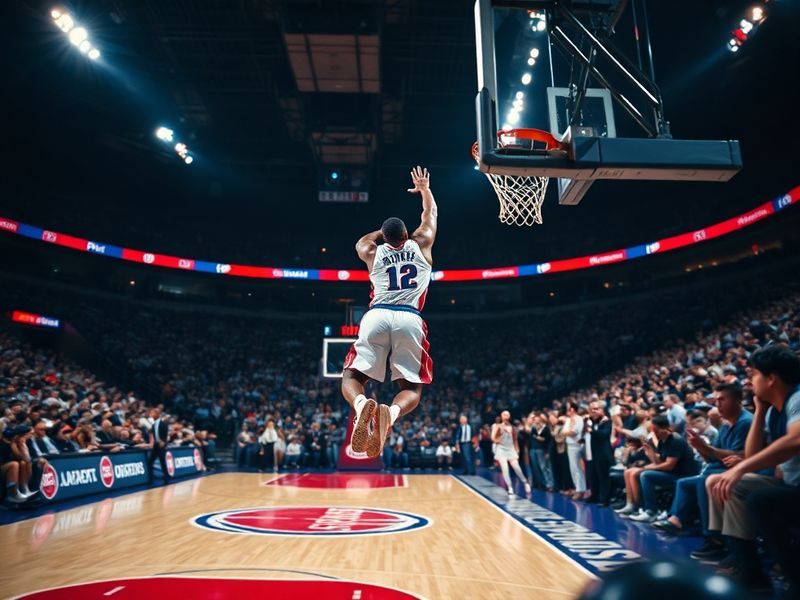
The Detroit Pistons have long been a team defined by inconsistency, but recent seasons have pushed them into uncharted territory. Once a franchise with championship pedigree, Detroit now finds itself rebuilding with a roster of young talent and a coaching staff tasked with reshaping a culture. The Pistons game isn’t just about wins and losses anymore—it’s about development, identity, and the long road back to relevance in the NBA.
This season, the Pistons have shown flashes of promise despite a losing record. Cade Cunningham continues to develop into a franchise cornerstone, while Jaden Ivey and Jalen Duren provide athleticism and defensive intensity. Yet, inconsistency and poor shooting nights still derail their progress. The question remains: Can this young core grow together fast enough to change the narrative?
Rebuilding Mode: A Fresh Start in Detroit
After years of mediocrity and failed trades, the Pistons officially entered rebuild mode in 2021 with the arrival of general manager Troy Weaver. The strategy was clear: accumulate draft capital, develop young players, and build from within. That approach led to the selection of Cade Cunningham in the 2021 NBA Draft, a player with generational size and playmaking ability.
Yet rebuilding in the NBA is never linear. The Pistons have cycled through coaches, roster moves, and injury setbacks. In 2023, they hired coach Monty Williams, a proven leader with championship experience, to instill a winning culture. Williams brought structure and accountability, but the Pistons still ranked near the bottom in offensive efficiency.
What stands out is the team’s commitment to youth development. The roster features six players under 23, including promising guards Killian Hayes and Ausar Thompson. Despite their youth, they rank among the league’s best in pace and transition scoring. Detroit is playing fast, but they’re also among the least efficient teams in half-court sets.
Key Areas of Improvement
- Shooting Efficiency: The Pistons rank 29th in three-point shooting, a critical weakness in today’s NBA.
- Defensive Consistency: While Duren provides rim protection, the team struggles with perimeter defense and rotations.
- Playmaking: Cunningham leads the team in assists, but the second unit often lacks structured ball movement.
- Leadership: Veteran presence is limited, forcing young players to step into leadership roles earlier than expected.
Improvement in these areas could turn the Pistons from a rebuilding project into a playoff contender within the next two seasons.
The Cade Cunningham Effect: Franchise Player or System Overload?
Cade Cunningham entered the NBA with immense hype as a do-it-all forward with size, shooting, and court vision. Through three seasons, he’s shown flashes of brilliance—career-high 24.1 points per game in 2023–24—but also moments of inconsistency. His shot selection and turnover issues remain concerns as he adjusts to the lead guard role.
What’s often overlooked is Cunningham’s growth as a leader. Despite the Pistons’ struggles, he’s emerged as the face of the franchise, taking on more playmaking responsibilities and showing resilience in close games. His chemistry with Jaden Ivey has improved, creating a dynamic backcourt duo for the future.
Yet, the question lingers: Is Cunningham better suited as a primary creator or a secondary playmaker? If Detroit surrounds him with better shooters and defenders, his impact could skyrocket. If not, he risks becoming a player whose talent outpaces his team’s ability to maximize it.
Culture Shift: From Tanking to Competing
One of the most underrated aspects of the Pistons’ rebuild is the cultural transformation. Under Monty Williams, the team has emphasized accountability, professionalism, and competitive toughness. Players like Ausar Thompson and Jalen Duren have embraced the grind, showing up in the weight room and film sessions.
This shift extends beyond the court. The Pistons have invested in player development staff, analytics, and sports science to optimize performance. The goal isn’t just to win games—it’s to build a sustainable system where talent and effort converge.
Still, culture alone doesn’t win basketball games. The Pistons need to translate their work ethic into on-court results. Their recent 4-1 homestand against playoff teams proved they’re capable of competing, but road wins remain elusive. The challenge now is sustaining that effort over an 82-game season.
What’s Next for the Pistons?
The Pistons’ future hinges on three critical factors: player development, front-office decisions, and roster construction. With multiple draft picks in the next two years, Detroit has the flexibility to acquire more young talent or make calculated trades for veterans.
The most likely path? A slow climb through the Eastern Conference standings, with occasional bursts of competitiveness. A playoff appearance in 2025 wouldn’t be surprising, but a deep postseason run remains years away.
For fans, the Pistons game is a mix of frustration and hope. The rebuild isn’t over, but the foundation is being laid. The question isn’t whether Detroit will return to prominence—it’s how soon.
Looking Ahead: Potential Scenarios
- Best-Case: Cunningham, Ivey, and Duren mature into All-Stars, and Detroit becomes a consistent playoff team by 2026.
- Realistic: The Pistons remain a fringe playoff contender, picking up key free agents or draft assets to accelerate their timeline.
- Worst-Case: Injuries or poor development stall progress, forcing another rebuild before the core reaches its prime.
Regardless of the path, the Pistons’ journey offers a fascinating case study in modern NBA rebuilding. With the right moves, Detroit could become a model for how to turn a struggling franchise into a perennial contender.
For now, the Pistons game remains a work in progress—but one worth watching.
To follow the latest Pistons news and analysis, visit our Sports and Analysis sections.