Michael Waltz is a name that resonates across military circles, policy think tanks, and international relations forums. A former U.S. Army Special Forces officer, Waltz has transitioned from combat zones to the halls of power, where his insights on global security shape today’s geopolitical landscape. His journey reflects the evolving intersection of military expertise and civilian leadership in an era where traditional warfare increasingly overlaps with cyber threats and hybrid conflicts.
Born in 1974, Waltz’s early life was marked by discipline and service. His father, a decorated Vietnam veteran, instilled in him a commitment to duty that would define his career. After graduating from the Virginia Military Institute, Waltz commissioned as an officer in the U.S. Army. His operational experience spans Afghanistan, Iraq, and other global hotspots, where he led Special Forces teams in some of the most complex environments of the post-9/11 era.
Military Career and Operational Expertise
Waltz’s military service is distinguished by his roles in elite units. He served as a Special Forces officer in the 3rd Special Forces Group, where he specialized in unconventional warfare and counterterrorism. His deployments included critical missions in Afghanistan, where he advised Afghan National Army units and conducted direct-action operations against insurgent networks. These experiences provided him with firsthand knowledge of the challenges faced by modern militaries operating in asymmetric conflicts.
Beyond combat, Waltz’s contributions extended to strategic planning. He worked closely with NATO allies, bridging gaps between U.S. military doctrine and coalition operations. His ability to navigate cultural and political sensitivities in war zones became a hallmark of his leadership style. These skills would later prove invaluable as he transitioned from the battlefield to the policy arena.
A Shift to Policy: The Founding of Metis Solutions
After retiring from active duty as a Lieutenant Colonel, Waltz co-founded Metis Solutions, a defense consulting firm focused on national security and international affairs. The company’s name, derived from the Greek concept of practical wisdom, reflects Waltz’s approach to problem-solving: combining rigorous analysis with actionable solutions. Metis Solutions has become a trusted partner for government agencies, providing expertise on counterterrorism, cybersecurity, and strategic communications.
Under Waltz’s leadership, Metis Solutions has worked on projects ranging from countering violent extremism in Africa to advising on the integration of artificial intelligence in military operations. The firm’s work underscores a growing trend where former military officers leverage their operational experience to address emerging threats in an increasingly digital world. Waltz’s ability to translate complex security challenges into clear policy recommendations has earned him recognition in both government and private sectors.
Global Perspective: Waltz’s Role in International Security
Waltz’s influence extends far beyond U.S. borders. He has advised governments and international organizations on a range of issues, from counterterrorism strategies to the stabilization of conflict zones. His global perspective is shaped by a career that spanned cultures, languages, and political systems. In regions like the Middle East and Africa, where traditional military solutions often fall short, Waltz advocates for a holistic approach that combines security operations with economic development and governance reforms.
One of his most notable engagements was his work with the United Nations and African Union in addressing the rise of extremist groups in the Sahel region. Waltz emphasized the need for tailored counterterrorism strategies that account for local dynamics, including tribal affiliations, economic disparities, and historical grievances. His approach contrasts with the one-size-fits-all solutions often imposed by Western powers, highlighting the importance of cultural competence in global security operations.
Contributions to Think Tanks and Public Discourse
Waltz is also a prolific contributor to think tanks and academic journals, where he shares his insights on the future of warfare and international relations. He has written extensively on topics such as the role of private military contractors, the ethical implications of autonomous weapons, and the impact of climate change on global security. His work is frequently cited in publications like Foreign Affairs and The National Interest, cementing his reputation as a thought leader in defense policy.
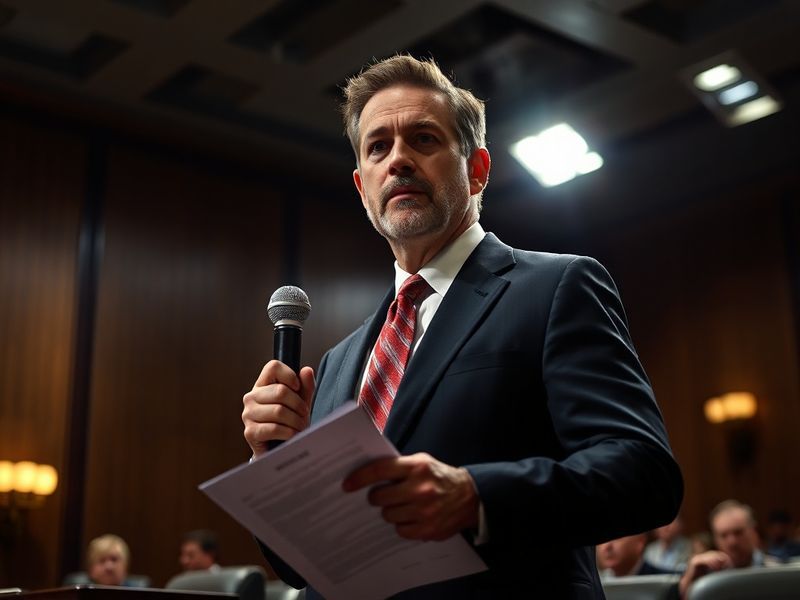
His public appearances, including testimony before the U.S. Congress and speeches at institutions like the Atlantic Council, demonstrate his ability to engage with diverse audiences. Waltz’s communication style is direct and devoid of jargon, making complex issues accessible to policymakers and the general public alike. This clarity has made him a sought-after commentator in media outlets covering national security topics.
Legacy and Future Influence
As the geopolitical landscape continues to evolve, Waltz’s career offers a blueprint for the modern warrior-diplomat. His transition from Special Forces operator to policy influencer illustrates the growing demand for leaders who can bridge the gap between military operations and civilian governance. In an era where conflicts are increasingly fought in the shadows—through cyberattacks, disinformation, and economic coercion—Waltz’s expertise is more relevant than ever.
Looking ahead, Waltz’s focus remains on addressing the root causes of instability rather than merely responding to symptoms. He advocates for policies that prioritize long-term stability over short-term gains, a philosophy that aligns with the principles of sustainable development and conflict prevention. His work with organizations like the U.S. Institute of Peace reflects this commitment, as he seeks to promote dialogue and reconciliation in divided societies.
For those interested in the intersection of military service and policy, Waltz’s career serves as both an inspiration and a case study. His ability to adapt to changing times while staying true to his core values offers lessons for aspiring leaders in defense, diplomacy, and beyond. As the world grapples with new and evolving threats, voices like Waltz’s will be critical in shaping a safer, more stable global order.
For further reading on military leadership and global security, explore our Sports and Military Leadership section or dive into our Analysis category for deeper insights into defense policy.