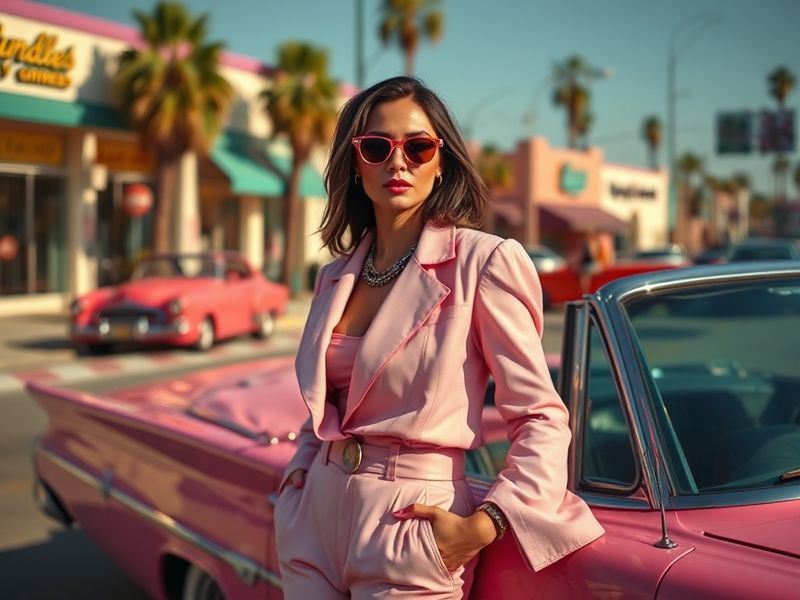
PinkPantheress has quietly but decisively reshaped the pop landscape over the past three years, blending hyperpop, UK garage, and sample-heavy production into a sound that feels both nostalgic and urgently modern. With a voice that oscillates between breathy vulnerability and sharp, rhythmic delivery, she has carved out a space that defies easy categorization. Her music isn’t just a fusion of genres—it’s a reimagining of how pop can absorb and reflect the fragmented aesthetics of the internet age.
Born in Bath, England, and raised in Kent, PinkPantheress (real name: Victoria Beverly Walker) began uploading tracks to SoundCloud in 2019 while studying at the University of Westminster. Her early releases, like Just for Me and Break It Off, caught the attention of niche music blogs and, eventually, major labels. By 2021, she had signed with Parlophone and Columbia Records, but her approach to stardom remained distinctly anti-establishment. She released music in bursts, often via TikTok, embracing the platform’s ephemeral nature as part of her artistic identity.
The Sound of a Generation: Genre-Blending Without Rules
What sets PinkPantheress apart is her refusal to be pinned down by genre conventions. Her debut mixtape, To Hell with It (2021), is a masterclass in stylistic versatility. Tracks like Pain channel the melancholic synth-pop of the 1980s, while I Must Apologise leans into UK garage’s shuffling rhythms. The album’s production—layered with skittering hi-hats, distorted vocals, and samples from everything from 2000s R&B to video game soundtracks—feels like a digital collage, mirroring the way Gen Z consumes and remixes culture.
Her follow-up, Take Me to the Moon (2023), doubled down on this approach. The EP is a love letter to the early 2000s, with tracks like Barbie World (a collaboration with Ice Spice) and Boy’s a Liar Pt. 2 (with Ice Spice and Central Cee) tapping into the hyperpop and emo rap trends that dominate TikTok. Yet, even as she chases viral trends, her music retains a sense of intimacy. Her lyrics often explore themes of heartbreak, self-doubt, and the performative nature of identity online—topics that resonate deeply with her young fanbase.
Here’s a breakdown of the key elements in her sonic palette:
- Sampling: PinkPantheress frequently lifts melodies from unexpected sources, whether it’s a 1990s eurodance track or a snippet of a video game jingle. This technique isn’t just nostalgic; it’s a commentary on how digital natives remix and repurpose the past.
- UK Garage Influences: The shuffle beats and syncopated rhythms of early 2000s UK garage appear in tracks like Just for Me and Piggyback, giving her music a danceable, euphoric quality.
- Hyperpop Aesthetics: Glitchy synths, exaggerated vocal effects, and chaotic drops feature prominently in songs like Cute, but Also (I Know What You Did Last Summer), aligning her with the hyperpop movement while keeping her sound distinct.
- Emotional Contradictions: Her music balances extreme highs and lows—euphoric production with lyrics that are often introspective or self-deprecating. This duality makes her relatable to listeners who crave both escapism and authenticity.
TikTok as an Instrument: The New Model of Artist Development
PinkPantheress’s relationship with TikTok is one of the most fascinating aspects of her career. Unlike artists who treat the platform as a mere marketing tool, she has integrated it into her creative process. Many of her songs were born as short, looping clips that she posted on TikTok before expanding them into full tracks. For example, Break It Off started as a 15-second snippet before evolving into a fully produced single.
This strategy has several advantages. First, it allows her to test ideas in real time, gauging which hooks resonate with audiences before committing to a full release. Second, it reinforces her brand as an artist who thrives in the digital realm. Her music is designed to be consumed in fragments, mirroring the way her fans interact with content online. Third, it gives her a level of creative control that’s rare in today’s industry. By building a following independently, she’s able to dictate her own terms, whether that means delaying album releases or collaborating with underground producers rather than chasing mainstream radio hits.
Her success on TikTok also highlights the platform’s evolving role in music discovery. While TikTok has long been criticized for reducing songs to 15-second hooks, PinkPantheress proves that the platform can be a launchpad for artists who understand its language. Her tracks are engineered to loop seamlessly, with catchy melodies that stick after a single listen. Yet, they also reward deeper engagement, rewarding listeners who seek out the full versions.
The Visual Identity: Aesthetic as an Extension of Sound
PinkPantheress’s visual identity is as meticulously crafted as her music. Her aesthetic is a collision of Y2K nostalgia, internet surrealism, and hyper-femme energy. Think bubblegum pinks, grainy VHS filters, and a mix of 2000s pop culture references—from Britney Spears to Tamagotchis. This aesthetic isn’t just a gimmick; it’s a deliberate choice to align her brand with the cultural touchstones of her audience.
Her music videos often embrace a lo-fi, DIY aesthetic, further blurring the line between professional and amateur. For the Take Me to the Moon visualizer, she used a simple green-screen effect with text scrolling over a starry backdrop, a nod to early internet aesthetics. Even her album covers—like the pastel-hued To Hell with It—feel like they were designed in MS Paint, reinforcing her anti-corporate, anti-glam image.
This visual consistency extends to her social media presence. Her Instagram feed is a curated mix of memes, throwback photos, and cryptic captions, all of which reinforce her persona as an artist who’s both deeply online and refreshingly unpolished. It’s a strategy that resonates with Gen Z, who value authenticity over polish and see their favorite artists as friends rather than untouchable stars.
The Future of PinkPantheress: What’s Next?
As of mid-2024, PinkPantheress remains one of the most intriguing figures in pop music. Her next project is highly anticipated, with rumors of a full-length album in the works. Given her track record, it’s likely to continue pushing boundaries, whether by experimenting with new genres, collaborating with unexpected artists, or further blurring the line between music and internet culture.
What’s clear is that she’s not just a product of the TikTok era—she’s a pioneer of it. Her ability to navigate the fragmented landscape of modern music, where algorithms dictate trends and attention spans are shorter than ever, is a testament to her adaptability. She’s also a reminder that pop music doesn’t have to be monolithic; it can be weird, nostalgic, and deeply personal all at once.
For aspiring artists, PinkPantheress offers a blueprint for building a career on your own terms. For listeners, she’s a refreshing alternative to the polished, formulaic pop that dominates mainstream radio. And for the industry, she’s a case study in how to thrive in an era where the old rules no longer apply.
One thing is certain: PinkPantheress isn’t just making music for the moment. She’s shaping the future of pop, one hyperpop loop at a time.
Where to Go Next
If you’re interested in exploring more artists who blend pop with internet culture, check out our Music category for artist spotlights and deep dives. For a broader look at the trends shaping pop music today, visit our Entertainment section.