Nuclear Submarines: The Silent Power Behind Modern Naval Strategy
“`html
Understanding Nuclear Submarines: The Silent Guardians of the Deep
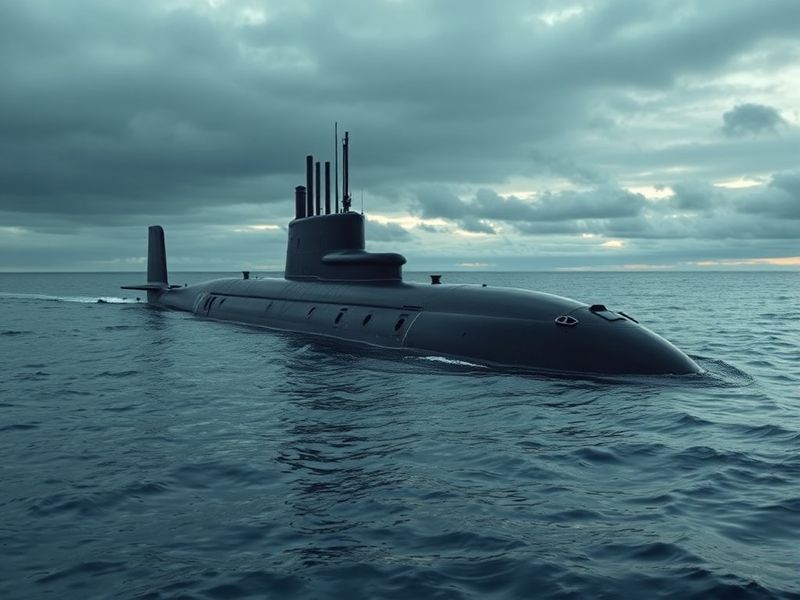
The nuclear submarine remains one of the most formidable and strategically vital assets in modern naval warfare. Unlike their diesel-electric counterparts, these vessels combine unparalleled endurance, stealth, and firepower, making them indispensable to national defense and global power projection. Their ability to operate submerged for months without surfacing for air revolutionized naval strategy in the 20th century and continues to shape military doctrine today.
Powered by nuclear reactors, these submarines eliminate the need for frequent refueling, allowing them to traverse the world’s oceans with minimal logistical support. This independence grants them a level of operational flexibility that diesel submarines—limited by battery capacity—simply cannot match. The result is a platform capable of sustained presence in contested waters, intelligence gathering, and rapid response to emerging threats.
The Evolution of Nuclear Submarine Technology
Nuclear submarine development traces its roots to the Cold War era, when the United States and the Soviet Union engaged in a high-stakes technological rivalry. The U.S. launched the USS Nautilus in 1954, the world’s first operational nuclear-powered submarine, marking a turning point in naval engineering. Its ability to break speed and endurance records demonstrated the transformative potential of nuclear propulsion.
The Soviet Union followed with the November-class submarines in the late 1950s, initiating an arms race that pushed both nations toward faster, quieter, and more heavily armed vessels. Over the decades, advancements in reactor design, sonar evasion, and weapons systems have produced modern submarines like the U.S. Virginia-class and the Russian Borei-class, each representing the pinnacle of underwater warfare technology.
Key milestones in nuclear submarine evolution include:
- Stealth Enhancements: The introduction of anechoic tiles and advanced propulsion systems reduced acoustic signatures, making detection increasingly difficult for adversaries.
- Weapons Integration: Ballistic missile submarines (SSBNs) became the backbone of nuclear deterrence, while attack submarines (SSNs) gained precision-strike capabilities with cruise missiles.
- Automation and AI: Modern subs incorporate automated systems and artificial intelligence to optimize operations, reduce crew fatigue, and enhance decision-making in real time.
- Endurance Records: Nuclear submarines have completed deployments lasting over a year without surfacing, demonstrating their unmatched operational range.
Strategic Importance and Global Implications
The presence of nuclear submarines extends far beyond military applications. These vessels serve as critical instruments of national power, enabling countries to project influence without direct confrontation. For nations like the United States, United Kingdom, France, Russia, and China, SSBNs equipped with nuclear-tipped ballistic missiles form the cornerstone of strategic deterrence, ensuring a second-strike capability that deters large-scale conflicts.
Meanwhile, fast-attack submarines (SSNs) play a dual role: they conduct surveillance, sabotage enemy communications, and protect aircraft carrier groups while remaining virtually undetectable. The ability to operate in contested waters—such as the South China Sea or the Arctic—gives nations a decisive edge in territorial disputes and geopolitical maneuvering.
The rise of China’s submarine fleet, particularly its Type 094 and Type 095 classes, underscores the shifting balance of naval power. With a growing blue-water navy, Beijing is leveraging nuclear submarines to challenge U.S. dominance in the Pacific, prompting a reevaluation of American naval strategy. Similarly, Russia’s Yasen-class submarines, equipped with hypersonic missiles, pose new threats to NATO’s eastern flank.
Beyond military applications, nuclear submarines facilitate scientific research, deep-sea exploration, and even rescue missions. Their ability to reach extreme depths and endure harsh conditions makes them invaluable for studying uncharted oceanic regions—a role that may become even more critical as climate change alters marine ecosystems.
Challenges and Ethical Considerations
Despite their advantages, nuclear submarines are not without controversy. The environmental risks associated with reactor accidents, though rare, remain a persistent concern. The Kursk disaster in 2000, where a Russian submarine sank with all hands, highlighted the catastrophic consequences of mechanical failure in these high-pressure environments. Additionally, the proliferation of nuclear-powered vessels raises questions about the spread of sensitive technology to non-nuclear states.
Ethically, the deployment of nuclear submarines raises debates about escalation risks. The presence of SSBNs in sensitive regions can provoke preemptive strikes, increasing the likelihood of accidental conflict. Policymakers must weigh the strategic benefits against the potential for miscalculation—a balance that grows more precarious in an era of great-power competition.
Economically, maintaining a nuclear submarine fleet demands substantial investment. The U.S. Navy’s Columbia-class replacement program, estimated to cost over $100 billion, reflects the financial commitment required to sustain a modern nuclear deterrent. For smaller nations, the expense of developing or acquiring such technology remains prohibitive, further entrenching the dominance of major powers.
The Future of Nuclear Submarine Warfare
The next frontier in submarine technology lies in directed-energy weapons, unmanned underwater vehicles (UUVs), and quantum computing for enhanced sonar. The U.S. Navy’s next-generation attack submarine (NGAD) program aims to integrate these innovations, ensuring that American submarines retain their technological edge.
Meanwhile, China’s push to deploy nuclear submarines in the Arctic signals a new era of under-ice operations, where melting ice caps could open previously inaccessible routes. Russia, meanwhile, continues to modernize its fleet with the Borei-A class, incorporating stealthier designs and more lethal payloads.
As geopolitical tensions rise, the role of nuclear submarines will only grow more central. Their silent, ceaseless patrols beneath the waves ensure that no major power can afford to ignore their presence. In an age where cyber warfare and hypersonic missiles dominate headlines, the submarine remains the ultimate guarantor of strategic stability—a reminder that the most potent weapons are not always the loudest.
Conclusion
Nuclear submarines represent the apex of naval engineering, blending raw power with silent efficiency. From their Cold War origins to their modern roles in deterrence and intelligence, these vessels have redefined the rules of engagement at sea. Yet their existence also demands careful stewardship, as the risks of escalation and environmental harm require constant vigilance.
As nations invest in next-generation submarines, the balance of power on the global stage will continue to shift. One thing remains certain: the silent guardians of the deep will remain at the heart of military strategy for decades to come.