The Setting and Its Significance
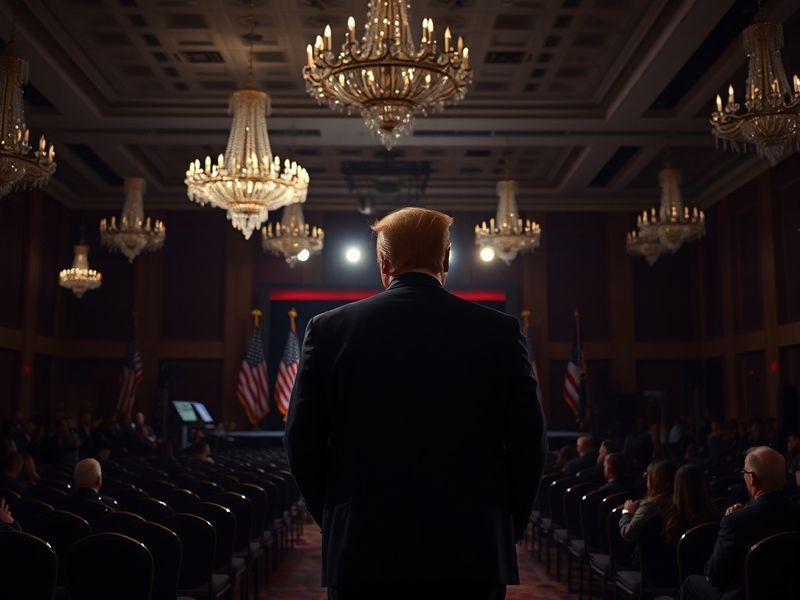
The Washington Post’s recent coverage of Donald Trump’s ballroom speech at the Mar-a-Lago resort in Palm Beach, Florida, was more than a routine political dispatch. It was a calculated examination of how Trump’s rhetoric adapts to different audiences while maintaining a consistent core message. The event, held in a lavish ballroom adorned with gold accents and crystal chandeliers, served as the perfect backdrop for Trump’s blend of populist rhetoric and establishment posturing.
The choice of location was deliberate. Mar-a-Lago, often referred to as the “Winter White House,” is a symbol of Trump’s wealth and influence. By delivering his speech there, Trump reinforced his narrative as both an outsider and a champion of elite success—a duality that has defined his political brand for decades. The Washington Post’s analysis didn’t just focus on the speech’s content but also on the symbolism of the setting, framing it as a deliberate strategy to appeal to his base while projecting power to potential opponents.
Key Takeaways from Trump’s Ballroom Address
Trump’s speech was a masterclass in political messaging, blending familiar grievances with new tactical maneuvers. Below are the most notable elements that stood out in The Washington Post’s coverage:
- Reinforcement of Election Narratives: Trump doubled down on his claims of election fraud, framing the 2020 election as “the greatest theft in the history of our country.” This aligns with his ongoing efforts to undermine the legitimacy of the Biden administration while rallying his supporters ahead of the 2024 election.
- Attacks on Political Opponents: The speech included sharp critiques of both Democrats and moderate Republicans, particularly targeting figures like President Biden and former Republican Speaker of the House Kevin McCarthy. Trump’s language was unapologetically combative, positioning himself as the sole leader capable of challenging the political establishment.
- Economic Populism: Amid rising concerns about inflation and economic instability, Trump pivoted to economic issues, promising to “bring back jobs” and “slash regulations.” His proposals, however, lacked detailed policy specifics, a recurring theme in his public addresses.
- Cultural and Social Issues: Trump invoked familiar culture-war themes, criticizing progressive policies on gender, immigration, and education. These talking points are designed to energize his base and draw clear battle lines for the upcoming election cycle.
The Washington Post noted that while Trump’s speech was heavy on familiar rhetoric, it also included subtle shifts in tone. He avoided some of his more inflammatory remarks from past events, suggesting a calculated effort to appear more presidential—at least in certain settings. Whether this is a sign of strategic refinement or mere political calculation remains a subject of debate among analysts.
Media Coverage and Broader Implications
The Washington Post’s analysis of Trump’s ballroom speech wasn’t an isolated event. It reflects a broader trend in political journalism: the dissection of how leaders adapt their messaging to different audiences. Trump’s ability to tailor his rhetoric—whether in a ballroom, a rally, or a press conference—highlights the challenges facing media outlets in covering modern political communication.
One of the most striking aspects of the coverage was how The Washington Post contextualized Trump’s speech within the larger landscape of political polarization. By focusing on the setting, tone, and audience reaction, the article provided readers with a nuanced understanding of how Trump’s messaging evolves based on the environment. This approach is crucial in an era where political leaders often speak in code, relying on dog whistles and symbolic gestures to convey their intentions.
For political analysts, Trump’s ballroom speech underscores the importance of looking beyond the words themselves. The setting, audience, and delivery all play critical roles in shaping the message’s impact. This is particularly relevant as Trump continues to dominate the Republican Party’s narrative, making it essential for media outlets to dissect his strategies with precision.
What This Means for the 2024 Election Cycle
Trump’s ballroom speech is a clear indicator that he remains the dominant force in the Republican Party, setting the tone for the 2024 election. His ability to blend populist appeals with establishment posturing gives him a unique advantage over potential rivals, both within his party and among Democrats. The Washington Post’s analysis suggests that Trump’s strategy will likely center on three key pillars:
- Undermining Democratic Legitimacy: By continuing to question the results of the 2020 election, Trump is laying the groundwork for a narrative that could delegitimize future Democratic victories. This tactic not only energizes his base but also creates a sense of perpetual conflict that benefits his political brand.
- Consolidating Power Within the GOP: Trump’s attacks on moderate Republicans signal his intent to purge the party of dissenters. His ability to influence primary elections demonstrates that his endorsement is one of the most valuable assets in Republican politics.
- Appealing to Economic Anxiety: While Trump’s economic policies remain vague, his focus on jobs, inflation, and regulation resonates with voters who feel left behind by the current administration. This messaging is designed to attract working-class voters who may not traditionally align with Republican economic policies.
For Democrats, Trump’s continued dominance presents a challenge. His ability to dominate the news cycle and shape the national conversation means that opponents must craft a response that addresses both his policy proposals and his broader narrative of grievance and victimhood. The Washington Post’s analysis serves as a reminder that Trump’s political strategy is not just about policy—it’s about controlling the narrative and maintaining a sense of perpetual motion that keeps his opponents on the defensive.
Looking Ahead: The Media’s Role in Political Coverage
The Washington Post’s coverage of Trump’s ballroom speech highlights the evolving role of media in political analysis. In an era where political leaders communicate directly with the public through social media and rallies, traditional journalism must adapt to provide deeper, more contextual coverage. This means going beyond soundbites and headlines to examine the strategies, settings, and subtext of political messaging.
For readers, this type of analysis is invaluable. It provides the tools to critically evaluate political rhetoric and understand the broader implications of a leader’s words. As Trump continues to shape the political landscape, media outlets must prioritize this kind of in-depth reporting to help the public navigate an increasingly complex information environment.
For more on political analysis and media coverage, explore related content on Dave’s Locker Politics and Analysis sections, where we break down the strategies behind today’s most influential voices.
What do you think of Trump’s ballroom speech strategy? Share your thoughts in the comments below.