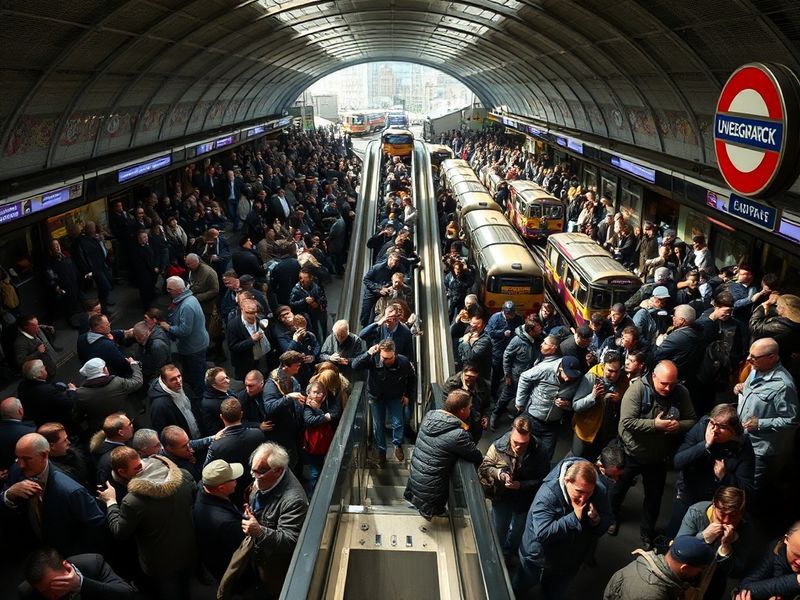
London’s public transport system is one of the most extensive in the world, yet it frequently faces disruptions that ripple through the city’s daily rhythm. Among these, Tube strikes stand out as particularly disruptive events, halting journeys for hundreds of thousands of commuters. These strikes aren’t just occasional inconveniences—they’re symptomatic of deeper issues in labor relations, infrastructure management, and urban planning. Understanding their causes, consequences, and the ways London adapts can provide insight into the challenges of running a world-class transit system.
Why Do Tube Strikes Happen?
Tube strikes in London typically stem from disputes between transport workers and management, often revolving around pay, working conditions, or job security. Transport for London (TfL), the agency responsible for the Underground, has faced financial pressures in recent years, leading to cost-cutting measures that unions argue threaten worker welfare. For example, in 2022, strikes erupted over proposed changes to pensions and redundancy terms, while earlier disputes centered on pay freezes amid rising inflation.
These conflicts aren’t isolated to London. Public transport strikes are a global issue, but the scale and frequency in London are exacerbated by the city’s sheer size and reliance on the Tube. Unlike other cities where alternatives like buses or trams might fill gaps, London’s Tube carries over 5 million passengers daily, making disruptions feel like citywide gridlock. The strikes are often organized by unions like the RMT (National Union of Rail, Maritime and Transport Workers) or ASLEF (Associated Society of Locomotive Engineers and Firemen), which represent Tube drivers and other staff. Their demands frequently include better wages, safer staffing levels, and improved pension schemes—issues that resonate with workers in other sectors as well.
Common Causes of Tube Strikes
- Pay disputes: Workers argue for wage increases to match inflation or industry standards.
- Job cuts: TfL’s cost-cutting measures often involve reducing staff, which unions oppose.
- Pension reforms: Changes to retirement benefits can spark strikes, as seen in past disputes.
- Health and safety concerns: Issues like overcrowding or inadequate protective gear may lead to walkouts.
- Contract disputes: Outsourcing or privatization efforts can trigger labor action.
The Ripple Effect: How Strikes Disrupt London
When Tube services grind to a halt, the impact isn’t limited to commuters. Businesses suffer as employees struggle to reach work, leading to lost productivity. Retailers in central London report drops in foot traffic during strikes, while delivery services face delays. Schools may close or operate on reduced schedules, leaving parents scrambling for childcare. Even healthcare services can be affected, as staff who rely on the Tube to get to hospitals face delays or cancellations.
The economic cost is substantial. A 2017 report by the Centre for Economics and Business Research estimated that a single Tube strike could cost London’s economy up to £100 million. This figure includes lost wages, reduced retail sales, and the financial burden on small businesses. For a city where the Tube is the lifeblood of daily life, even a 24-hour strike can leave a lasting mark. Commuters often turn to alternatives like buses, cycling, or ride-sharing, but these options are rarely sufficient to absorb the displaced passengers. The congestion on roads worsens, and air quality temporarily improves as fewer cars idle in traffic—though the long-term environmental impact is negligible.
Beyond the economic toll, strikes also take a psychological toll on Londoners. The uncertainty of whether services will run can lead to stress and frustration. Many commuters develop coping strategies, such as leaving home earlier or working from home when possible. However, for essential workers—like nurses, police officers, or teachers—there’s no such luxury. Their ability to do their jobs hinges on a reliable transport system, and strikes force them into difficult decisions about childcare, sleep, or even whether to report to work at all.
How London Adapts: Preparing for and Surviving Strikes
Londoners are no strangers to strikes, and over time, both the city and its residents have developed strategies to mitigate the chaos. TfL often provides updates through its website and app, warning commuters of disruptions and suggesting alternative routes. During strike days, the agency may increase bus frequencies or extend operating hours on certain lines to absorb some of the demand. However, these measures are rarely enough to fully compensate for the loss of Tube services.
For commuters, preparation is key. Many rely on apps like Citymapper or Google Maps to plan their journeys around strike dates, while others turn to cycling or walking for shorter distances. Cycling in London has surged in recent years, partly due to its reliability during transport strikes. Santander Cycles (commonly known as Boris Bikes) often see increased usage during these periods, though the availability of bikes can become scarce. Some commuters even resort to less conventional methods, like hiring electric scooters or using ride-hailing services, though these options can be expensive for regular use.
Employers also play a role in adapting to strikes. Many businesses in London now offer flexible working arrangements, allowing employees to work from home on strike days. This not only helps workers avoid the chaos of the Tube but also reduces the strain on the transport system. Some companies even provide subsidies for alternative transport, such as taxi vouchers or bike repairs. However, these solutions aren’t accessible to everyone, particularly those in lower-income brackets who may lack the resources to adapt.
Tips for Commuters During Tube Strikes
- Check for updates: Use TfL’s website or app for real-time service information and alternative routes.
- Plan ahead: If possible, adjust your work hours to avoid peak travel times or work from home.
- Explore alternatives: Consider buses, cycling, or walking for shorter distances. Some commuters combine modes, like cycling to a bus stop.
- Budget for extras: If you must use ride-hailing services or taxis, set aside extra funds for these unexpected expenses.
- Stay informed: Follow local news outlets for updates on strike durations and any changes to services.
The Future of London’s Tube: Can Strikes Be Avoided?
Preventing Tube strikes entirely may be unrealistic, given the inherent tensions between labor and management. However, there are steps that could reduce their frequency and impact. One approach is improving labor relations through better communication and negotiation. TfL and union leaders could prioritize long-term agreements that address workers’ concerns while ensuring financial sustainability for the transport system. For example, phased pay increases tied to inflation or profit-sharing models could reduce the need for strikes over wages.
Investing in infrastructure could also play a role. A more reliable and expanded transport network might alleviate some of the pressure on workers and commuters alike. Projects like the Elizabeth Line have already shown how new routes can ease congestion on existing lines, but delays and cost overruns have plagued other initiatives. Faster, more transparent project delivery could help restore public confidence in TfL’s ability to manage its services effectively.
Another potential solution is technological innovation. Automating certain aspects of Tube operations, such as ticketing or train scheduling, could reduce the need for human labor in some areas. However, this approach is contentious, as it could lead to job losses and further alienate unions. A balanced approach might involve using technology to improve working conditions—such as better monitoring of staffing levels or real-time safety alerts—rather than replacing workers outright.
Ultimately, the future of London’s Tube—and the strikes that disrupt it—will depend on finding a balance between the needs of workers, the demands of commuters, and the financial realities of running a vast transport network. While strikes may never disappear entirely, proactive measures could make them less frequent and less disruptive. For now, Londoners will continue to adapt, finding new ways to navigate the chaos, one strike at a time.
As the city grows and changes, so too will the challenges of its transport system. But with careful planning and collaboration, there’s hope that London’s Tube can become a model of resilience rather than a symbol of disruption.