United Arab Emirates: How a Desert Nation Became a Global Powerhouse
“`html
United Arab Emirates: A Modern Marvel of Progress and Tradition
The United Arab Emirates (UAE) stands as a testament to what visionary leadership and strategic planning can achieve in just a few decades. From its humble beginnings as a collection of desert sheikhdoms, the UAE has transformed into a global hub for commerce, tourism, and innovation. This small Gulf nation has redefined its identity while preserving its rich cultural heritage, creating a unique blend of tradition and modernity that continues to captivate the world.
The Origins and Evolution of the UAE
The UAE was officially formed on December 2, 1971, when six of the seven emirates—Abu Dhabi, Dubai, Sharjah, Ajman, Umm Al Quwain, and Fujairah—united under a federal constitution. The seventh emirate, Ras Al Khaimah, joined the federation in 1972, solidifying the nation’s foundation. The late Sheikh Zayed bin Sultan Al Nahyan, the first president of the UAE, played a pivotal role in this unification, steering the country toward stability and prosperity.
Before its formation, the region was known for pearl diving, fishing, and trade along ancient maritime routes. The discovery of oil in the 1950s and 1960s provided the financial impetus for development, but it was the foresight of its leaders that diversified the economy beyond hydrocarbons. Today, sectors like tourism, finance, and technology contribute significantly to the UAE’s GDP, reducing its dependence on oil revenues.
Key Milestones in UAE History
- 1971: Formation of the UAE under Sheikh Zayed’s leadership.
- 1980s: Rapid infrastructure development, including the construction of highways, schools, and hospitals.
- 2002: Dubai’s launch of the Palm Islands and Burj Al Arab, redefining luxury and architectural ambition.
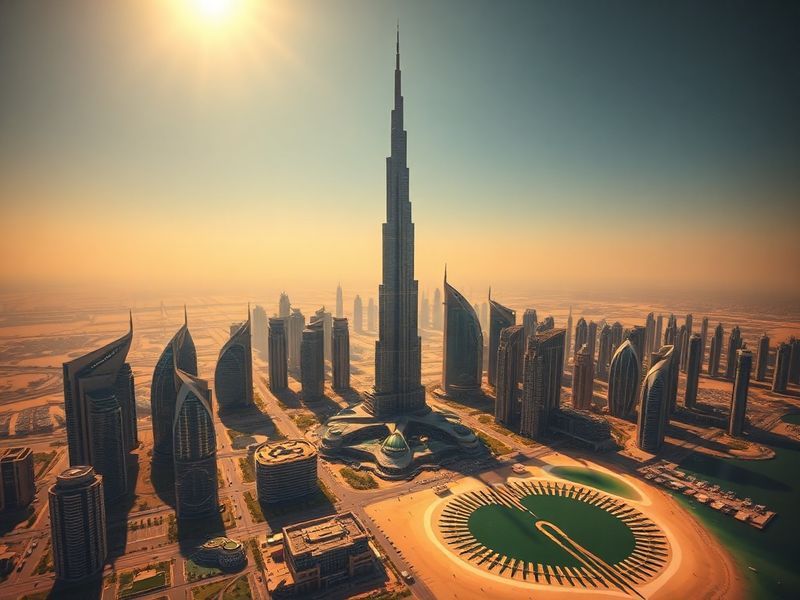
- 2010: The Burj Khalifa, the world’s tallest building, opens in Dubai.
- 2020: The UAE becomes the first Arab nation to launch a Mars mission, Hope Probe.
- 2023: Introduction of long-term residency visas, including the Golden Visa, to attract global talent.
Economic Diversification: Beyond Oil
The UAE’s economy has evolved far beyond its oil-dependent past. While oil remains a significant revenue source—accounting for about 30% of GDP—the country has aggressively pursued diversification. Tourism, particularly in Dubai and Abu Dhabi, has become a cornerstone of this strategy. Landmarks like the Louvre Abu Dhabi and the Burj Khalifa draw millions of visitors annually, contributing billions to the economy.
The financial sector has also flourished, with Dubai positioning itself as a global financial center. The financial hubs in Dubai, such as the Dubai International Financial Centre (DIFC), host multinational corporations and offer tax incentives to attract businesses. Meanwhile, Abu Dhabi has invested heavily in renewable energy, with Masdar City emerging as a model for sustainable urban living.
Another area of growth is logistics and trade. The UAE’s strategic location between Europe, Asia, and Africa has made it a critical player in global supply chains. The Jebel Ali Port in Dubai is one of the busiest in the world, while the country’s free zones, such as the Dubai Multi Commodities Centre (DMCC), facilitate international trade with minimal bureaucracy.
Cultural Heritage and Modern Innovations
Despite its rapid modernization, the UAE remains deeply rooted in its cultural heritage. Traditional Emirati customs, such as hospitality, falconry, and camel racing, are still celebrated today. The country’s leadership has made concerted efforts to preserve its history, including the restoration of historic sites like Al Fahidi Fort in Dubai, which now houses the Dubai Museum.
However, the UAE is also at the forefront of cultural innovation. The annual UAE Innovation Month showcases the nation’s commitment to fostering creativity and entrepreneurship. Events like the Dubai Design Week and Abu Dhabi Art bring together global artists and designers, blending local traditions with contemporary art.
The country’s approach to entertainment reflects this balance as well. While it embraces global trends—such as hosting major sporting events like the FIFA Club World Cup and the Formula 1 Grand Prix—it also prioritizes family-friendly attractions. Theme parks like Ferrari World and Warner Bros. World cater to diverse audiences, ensuring that tourism remains inclusive.
Preserving Tradition in a Modern Society
- Heritage Villages: Open-air museums in Dubai and Sharjah that showcase traditional Emirati life, including wind towers, souks, and Bedouin tents.
- Cultural Festivals: Events like the Sharjah Biennial and the Abu Dhabi Festival celebrate Arab and Islamic art, music, and literature.
- Dress Code: While modern fashion is widely accepted, traditional attire like the kandura (for men) and abaya (for women) remains common, especially in government and business settings.
- Cuisine: Emirati cuisine, featuring dishes like machboos (spiced rice with meat) and luqaimat (sweet dumplings), is preserved in restaurants and cooking workshops across the country.
Challenges and Future Prospects
Despite its successes, the UAE faces challenges that require careful navigation. One of the most pressing is sustainability. The country’s rapid development has put significant strain on its natural resources, particularly water. The UAE has responded with ambitious initiatives, such as the Water Security Strategy 2036, which aims to reduce water demand and increase recycling.
Another challenge is workforce diversity. The UAE relies heavily on expatriate labor, with over 80% of its population comprised of foreign nationals. While this has fueled economic growth, it also raises questions about labor rights and integration. The government has introduced reforms, such as the Wage Protection System, to ensure fair treatment of workers, but challenges remain.
The UAE’s foreign policy is another area of focus. The country has positioned itself as a mediator in regional conflicts, playing a key role in brokering agreements in Yemen and Libya. Its diplomatic efforts extend globally, with strong ties to both Western nations and emerging markets in Asia and Africa.
Looking ahead, the UAE’s future appears bright. The country’s technology sector is poised for growth, with investments in artificial intelligence, blockchain, and space exploration. The recent normalization of relations with Israel through the Abraham Accords has also opened new economic and political opportunities.
Vision 2031: The Road Ahead
The UAE’s leadership has laid out a clear roadmap for the future through initiatives like Operation 300bn, which aims to double the contribution of the industrial sector to GDP by 2031. Other key projects include:
- Etihad Rail: A national railway network that will connect the UAE’s major cities and ports, enhancing logistics and reducing carbon emissions.
- UAE Space Program: Plans to establish a lunar colony by 2040 and continue missions to Mars.
- Green Energy: Expansion of solar and nuclear energy projects, including the Barakah Nuclear Power Plant in Abu Dhabi.
- Smart Cities: Development of AI-driven cities like NEOM’s Oxagon, a futuristic industrial city powered by renewable energy.
The UAE’s journey from a desert sheikhdom to a global powerhouse is a story of resilience, ambition, and adaptability. As it continues to innovate and diversify, the country serves as a model for other nations seeking to balance tradition with progress. With its unwavering commitment to sustainability, technology, and cultural preservation, the UAE is not just shaping its own future—it is redefining what is possible for the world.