Why London’s Tube Strikes Reveal Deeper Urban Tensions
“`html
Tube Strikes: A London Tradition with Global Echoes
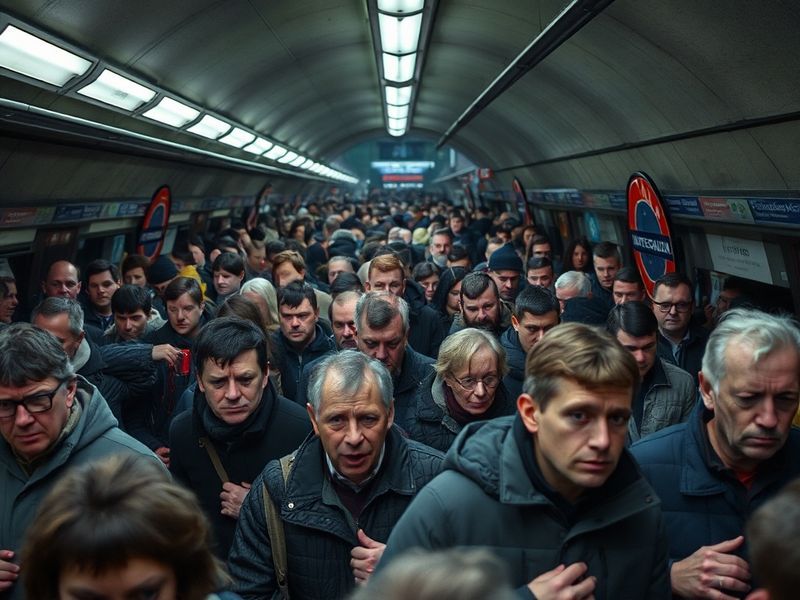
London’s Underground—commonly called the Tube—is more than a transit system. It’s the city’s circulatory system, pumping millions of passengers daily through the veins of one of the world’s most dynamic metropolises. Yet, when the Tube grinds to a halt during strikes, the city doesn’t just pause; it reconfigures. These walkouts, often triggered by disputes over pay, working conditions, or pension reforms, reveal the deep tensions between labor rights and public service continuity. While strikes have long been a feature of London’s urban rhythm, their cultural and economic ripple effects extend far beyond the British capital.
Across the globe, public transit strikes are a recurring spectacle in cities from Paris to New York, São Paulo to Tokyo. Each event exposes the vulnerabilities of urban infrastructure and the delicate balance between worker demands and civic convenience. But in London, where the Tube is both a symbol of progress and a target of frustration, strikes take on a particular significance. They’re not just labor actions; they’re social barometers, reflecting broader public sentiment about austerity, inequality, and the role of public services in modern society.
The Anatomy of a Tube Strike: Causes and Consequences
Tube strikes rarely occur in isolation. They are the culmination of protracted negotiations between unions like the National Union of Rail, Maritime and Transport Workers (RMT) and Transport for London (TfL), the agency responsible for the Underground. Disputes typically center on wages, which unions argue have stagnated amid rising costs of living, and job security, particularly concerning the introduction of new technology that may reduce the need for staff.
The consequences of a strike are immediate and far-reaching. Commuters face sudden disruptions, forcing them to seek alternative routes—often at significant personal cost. According to a 2023 report by the Greater London Authority, a single 48-hour strike can cost the city’s economy up to £100 million in lost productivity. Small businesses, especially those near major stations like Oxford Circus or King’s Cross, report sharp drops in foot traffic during strikes, while parents juggling childcare and shift workers scramble to adjust schedules.
Beyond the economic toll, strikes also strain public patience. Social media becomes a battleground of competing narratives—commuters venting frustration while unions highlight systemic issues. The 2012 Tube strikes, for instance, sparked a national debate about austerity and public sector pay, with then-Prime Minister David Cameron condemning the walkouts as “self-defeating.” Yet, for many workers, the strikes were a last resort after years of real-terms pay cuts.
A Global Perspective: How Other Cities Handle Transit Strikes
London is not alone in its struggle with transit strikes, but its approach—and the scale of its system—sets it apart. In Paris, strikes on the Métro are so frequent that they’ve become a cultural touchstone, even inspiring films and literature. The French tradition of grève (strike) is deeply embedded in labor culture, where walkouts are seen as a legitimate tool for workers to assert their rights. Unlike London, where strikes often last a day or two, Parisian transit strikes can drag on for weeks, paralyzing the city and testing public resilience.
In New York, the Metropolitan Transportation Authority (MTA) has faced its share of labor disputes, though strikes are rare thanks to a legal prohibition on public transit walkouts. The last major MTA strike occurred in 2005, when 35,000 workers walked out for three days, costing the city an estimated $400 million per day. The strike was resolved after the governor threatened to fine workers $1 million per day, highlighting the legal and financial stakes involved in such actions.
Meanwhile, in São Paulo, Brazil’s largest city, transit strikes are a regular disruption, particularly during election years when politicians often intervene to placate voters. The city’s bus and metro systems, operated by private companies under public contracts, are frequently targeted by strikes over fare hikes or working conditions. In 2013, a strike by bus drivers led to violent protests and looting, underscoring the volatile mix of public anger and economic hardship.
What unites these cities is a common challenge: balancing the rights of workers with the needs of the public. In London, this tension is amplified by the Tube’s status as a UNESCO World Heritage Site, limiting the scope for major infrastructure changes without cultural and political backlash.
The Human Cost: Voices from the Platform
To understand the true impact of Tube strikes, one must listen to those who endure them. For Sarah, a nurse at a central London hospital, a strike means a two-hour detour via three buses to avoid the closed Central Line. “I’ve missed shifts because of this,” she says. “It’s not just an inconvenience; it’s a risk to patient care.” Her story is echoed by thousands of essential workers who cannot afford to work from home.
For James, a small business owner in Camden, strikes are a recurring nightmare. “During the last big strike, my footfall dropped by 40%,” he recalls. “Tourists stayed away, locals worked from home, and even regulars couldn’t get to me.” James relies on the Tube to bring customers to his café, and each strike chips away at his margins.
Then there are the informal workers—street vendors, performers, and gig economy drivers—who depend on the Tube’s crowds to make a living. A strike doesn’t just disrupt their commute; it cuts off their livelihood. In 2018, a strike during the festive season left many street sellers in Covent Garden with empty stalls, their holiday earnings vanished overnight.
These personal stories reveal a paradox: while Tube strikes are labor actions, their ripple effects disproportionately affect those who can least afford disruption. It’s a reminder that public transit is not just a utility; it’s an equalizer—or, in times of strike, a divider.
Looking Ahead: Can London Avoid the Next Strike?
The future of Tube strikes in London hinges on several factors. First is the financial health of TfL, which has grappled with budget shortfalls exacerbated by the pandemic and declining fare revenues. Without sustainable funding, TfL may continue to face pressure to cut costs, potentially reigniting labor disputes. Second is the role of technology. Automation and digital ticketing could reduce the need for staff, but unions argue this will erode jobs and service quality. Finally, there’s the question of public tolerance. As strikes become more frequent, frustration grows, but so too does awareness of the issues driving them.
One potential solution lies in the “strike ballot” system, where unions must secure a majority vote from members before calling a strike. This measure, introduced in the UK in 2016, has reduced the number of walkouts but has not eliminated them. Another approach is binding arbitration, where an independent body mediates disputes to prevent prolonged conflicts. However, neither solution addresses the underlying tensions between labor rights and public service efficiency.
For now, London’s Tube strikes remain an inescapable reality—a reminder that even in the 21st century, the fight for fair work and reliable services is far from over. As the city evolves, so too will the strategies of its workers and the responses of its leaders. But one thing is certain: when the Tube stops, London listens.
For those seeking alternatives during strikes, TfL offers a range of options, from cycling to carpooling. Explore more about sustainable transport here. To understand how strikes impact other sectors, including sports events that rely on timely commutes, visit our dedicated section.
—