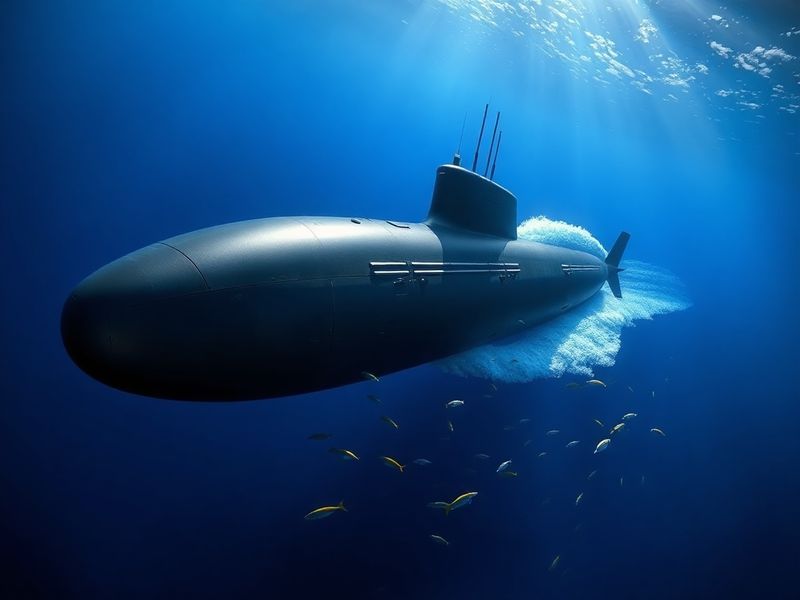
Underwater Exploration: The Enduring Legacy of Submarines
The submarine remains one of humanity’s most remarkable engineering achievements, blending stealth, endurance, and scientific curiosity into a single vessel. From their origins in naval warfare to their modern roles in deep-sea research, submarines have reshaped how humans interact with the ocean’s depths. These vessels operate in an environment where pressure, darkness, and isolation demand precision and innovation at every turn. Their history reflects broader themes of human ambition, technological progress, and the relentless pursuit of the unknown.
Submarines are not merely tools of defense or exploration; they are symbols of human ingenuity. The ability to traverse the underwater world has opened doors to discoveries that would otherwise remain hidden beneath the waves. Whether charting uncharted trenches or conducting covert military operations, submarines serve multiple critical functions. Their design and technology continue to evolve, ensuring their relevance in an era of rapid scientific and geopolitical change.
The Evolution of Submarine Technology
The concept of underwater travel dates back centuries, but practical submarines emerged in the late 19th and early 20th centuries. Early designs, such as the Turtle used during the American Revolutionary War, were rudimentary yet groundbreaking. By the 1900s, advancements in metallurgy and propulsion allowed submarines to become viable weapons of war. The German U-boats of World War I and the nuclear-powered submarines of the Cold War era marked pivotal turning points in submarine development.
Modern submarines owe much to the innovations of the 20th century. Nuclear propulsion, introduced with the USS Nautilus in 1954, revolutionized underwater travel by eliminating the need for surfacing to recharge batteries. This breakthrough enabled submarines to remain submerged for months, drastically increasing their operational range and stealth. Advances in sonar, stealth coatings, and automation have further refined their capabilities, making them nearly undetectable in hostile environments.
Today, submarines are categorized into two primary types: military and civilian. Military submarines focus on strategic deterrence, intelligence gathering, and special operations, while civilian submarines support scientific research, deep-sea exploration, and even tourism. The James Cameron-designed Deepsea Challenger, which reached the Mariana Trench’s Challenger Deep in 2012, exemplifies the civilian sector’s contributions to underwater discovery.
Military Submarines: Silent Guardians of the Deep
Navies worldwide rely on submarines as a cornerstone of their strategic capabilities. Their stealth allows them to conduct surveillance, protect shipping lanes, and launch precision strikes without detection. Ballistic missile submarines (SSBNs), such as the U.S. Ohio-class, serve as a critical component of nuclear deterrence, ensuring a second-strike capability even after a surprise attack. Attack submarines (SSNs), like the Virginia-class, focus on anti-submarine warfare, intelligence gathering, and special forces insertion.
One of the most significant advantages of military submarines is their ability to operate undetected. Their quiet propulsion systems, advanced acoustic dampening, and minimal electromagnetic signatures make them nearly invisible to enemy sensors. This stealth is particularly valuable in contested regions, where submarines can monitor adversary movements or conduct covert operations without risking detection. The ability to remain submerged for extended periods also provides a tactical edge in surveillance and interdiction missions.
However, the strategic value of submarines comes with challenges. The high cost of construction, maintenance, and crew training demands substantial investment. Additionally, the psychological toll on submariners—who endure prolonged isolation in a high-pressure environment—requires careful consideration. Despite these challenges, submarines remain indispensable to modern naval doctrine, offering unmatched operational flexibility and deterrence power.
Civilian Submarines: Exploring the Ocean’s Final Frontier
Beyond their military applications, submarines play a vital role in civilian scientific research and exploration. The ocean covers over 70% of the Earth’s surface, yet more than 80% of it remains unexplored. Submersibles and deep-sea submarines provide the means to study this vast, uncharted territory, revealing insights into marine ecosystems, geological formations, and even the origins of life.
Scientific missions often focus on extreme environments, such as hydrothermal vents, deep-sea trenches, and polar ice shelves. These regions host unique organisms adapted to high pressure, low temperatures, and complete darkness. Discoveries in these areas have led to breakthroughs in biology, chemistry, and climate science. For example, the discovery of extremophiles—organisms thriving in extreme conditions—has expanded our understanding of the potential for life on other planets.
Tourism also benefits from civilian submarines, particularly in regions like the Caribbean and the Red Sea. Companies such as Atlantis Submarines offer passengers the chance to observe coral reefs, shipwrecks, and marine life from a clear acrylic dome. These excursions not only generate economic value but also foster public interest in marine conservation. By making the underwater world accessible, these submarines inspire the next generation of oceanographers and environmental advocates.
The Future of Submarines: Challenges and Opportunities
The next frontier for submarine technology lies in addressing environmental, operational, and ethical challenges. One pressing issue is the environmental impact of military submarines, particularly their dependence on nuclear propulsion. While nuclear submarines produce no greenhouse gas emissions during operation, their fuel rods and decommissioning processes require careful management to prevent radioactive contamination. Research into alternative propulsion systems, such as hydrogen fuel cells or bio-inspired propulsion, could mitigate these concerns.
Operational challenges also loom large. The increasing sophistication of anti-submarine warfare (ASW) technologies—such as advanced sonar arrays and autonomous underwater vehicles (AUVs)—poses a threat to traditional submarine stealth. Navies must invest in next-generation stealth materials, artificial intelligence-driven navigation, and cybersecurity to maintain their edge. Additionally, the growing use of unmanned underwater vehicles (UUVs) for surveillance and mine countermeasures is reshaping submarine doctrine, requiring new strategies for integration and coordination.
Ethical considerations further complicate the submarine’s role in the 21st century. The potential for submarines to be used in covert cyber warfare or espionage raises questions about accountability and international law. The 2010 sinking of the South Korean warship Cheonan by a suspected North Korean torpedo highlighted the geopolitical tensions surrounding submarine operations. As nations expand their underwater capabilities, establishing clear norms and treaties will be essential to prevent escalation and ensure stability.
The future of submarines will likely be shaped by collaboration between military, scientific, and commercial sectors. Joint missions, such as those conducted by the NOAA and naval research institutions, demonstrate the potential for shared resources and expertise. By fostering innovation and responsible stewardship, submarines can continue to unlock the mysteries of the deep while safeguarding global security.
Conclusion: The Submarine’s Enduring Significance
From their humble beginnings as experimental vessels to their current status as technological marvels, submarines have consistently pushed the boundaries of human achievement. They embody the intersection of science, strategy, and exploration, serving critical roles in both war and peace. As technology advances, submarines will undoubtedly evolve, addressing new challenges while uncovering deeper mysteries of the ocean.
The legacy of submarines extends beyond their mechanical and operational prowess. They represent humanity’s unyielding curiosity and determination to conquer even the most inhospitable environments. Whether patrolling the depths in silence or illuminating the abyss with scientific inquiry, submarines remain vital to our understanding of the planet and our place within it. Their story is far from over, and the next chapter promises to be as compelling as those that came before.