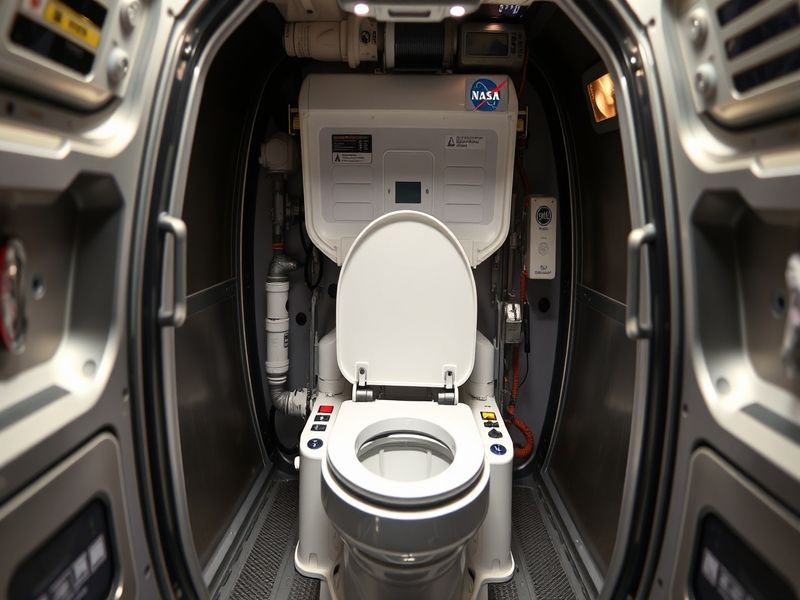
NASA’s Artemis 2 Toilet: How Astronauts Will Handle Space Bathroom Needs
The Artemis 2 mission represents a pivotal moment in space exploration, as NASA prepares to send humans beyond low Earth orbit for the first time since 1972. While much attention focuses on the Orion spacecraft’s advanced systems and the crew’s training, one particular innovation has captured public curiosity: the mission’s space toilet. Known officially as the Universal Waste Management System (UWMS), this compact but sophisticated device addresses a fundamental challenge of long-duration spaceflight.
Unlike the Apollo missions that relied on plastic bags and the Space Shuttle’s more advanced (but still rudimentary) facilities, Artemis 2’s toilet incorporates decades of engineering improvements. The system weighs about 45 pounds and occupies roughly the space of a standard household bathroom, though every cubic inch is optimized for microgravity conditions. For a mission lasting up to 10 days, reliable waste management isn’t just about comfort—it’s critical for mission success and crew health.
The Design Challenges Behind a Space Toilet
Designing a toilet for microgravity presents unique engineering hurdles. On Earth, gravity handles most of the work, but in space, waste doesn’t simply fall away. The Artemis 2 toilet employs a 3D-printed titanium fan separation system that creates airflow strong enough to pull waste away from the body, even in zero gravity. This airflow also helps prevent waste from escaping into the cabin, a problem that plagued earlier missions.
The system features two main components: a urine collection system and a fecal waste container. Urine is processed through a distillation system that recovers water for drinking—a necessity on long missions where every drop counts. Fecal waste is compacted and stored in sealed containers that will be jettisoned before re-entry. The toilet’s design also accommodates both male and female anatomy, with a specially shaped funnel for urine collection that prevents spills.
NASA conducted extensive testing with the UWMS aboard the International Space Station (ISS) before certifying it for Artemis missions. Astronauts provided valuable feedback, noting improvements in comfort and ease of use compared to previous systems. The toilet’s seat is heated—a small comfort in the otherwise sterile environment of a spacecraft—and the entire unit is designed to be as quiet as possible, a feature appreciated during the long hours of spaceflight.
How the Toilet Fits Into the Bigger Artemis Mission
Artemis 2 isn’t just a test flight; it’s a proving ground for the systems that will enable humans to return to the Moon and eventually journey to Mars. The UWMS plays a crucial role in demonstrating that long-term human spaceflight is feasible. While the mission won’t land on the lunar surface, the Orion spacecraft will carry the toilet system to validate its performance in deep space conditions.
The toilet’s inclusion reflects NASA’s emphasis on crew well-being as a priority. Previous missions showed that inadequate waste management systems could lead to health issues and reduced crew efficiency. By addressing this basic human need, NASA ensures that astronauts can focus on their primary objectives: operating the spacecraft, conducting experiments, and preparing for future lunar landings.
For the four astronauts aboard Artemis 2—three Americans and one Canadian—the toilet system represents one of many small but essential technologies that make the mission possible. It’s a reminder that space exploration isn’t just about grand achievements; it’s also about solving the everyday problems that arise when humans venture beyond Earth.
Public Interest and the Future of Space Toilets
The UWMS has sparked unexpected public fascination, with NASA even releasing a humorous “how-to” video explaining its use. The agency’s social media engagement around the topic highlights how space technology can capture imaginations when presented in relatable terms. This humanizing aspect of spaceflight may play a role in generating public support for future missions.
Looking ahead, NASA is already planning upgrades to the UWMS for longer-duration missions. Engineers are exploring ways to improve efficiency, reduce water usage, and even develop systems that can recycle waste into useful materials. Such innovations could have applications beyond space exploration, potentially benefiting waste management systems on Earth.
The Artemis program represents more than a return to the Moon; it’s a step toward establishing a sustainable human presence in space. Reliable life support systems like the UWMS are foundational to this vision. As NASA prepares for Artemis 3—the mission that will land the first woman and the next man on the lunar surface—the lessons learned from Artemis 2’s toilet system will inform every aspect of future exploration.
What’s Next for Space Toilet Technology
The success of the UWMS on Artemis 2 could pave the way for even more advanced waste management systems on future missions. NASA has already begun collaborating with commercial partners to develop next-generation toilets that could support crewed missions to Mars. These systems may incorporate advances in artificial intelligence to optimize waste processing and even generate energy from biological waste.
For now, the Artemis 2 toilet stands as a testament to human ingenuity in solving complex problems. It’s a reminder that space exploration requires attention to both the extraordinary and the ordinary. As we look toward a future where humans live and work in space for extended periods, innovations like the UWMS will be essential.
For those interested in learning more about NASA’s Artemis program and the technologies that make it possible, visit our Science category for in-depth coverage of space exploration developments.
You can also explore our Technology section for articles about how engineering marvels like the UWMS are pushing the boundaries of what’s possible in spaceflight.
Key Takeaways About the Artemis 2 Toilet System
- The Universal Waste Management System (UWMS) is a compact, 45-pound toilet designed for microgravity conditions.
- It uses a fan separation system to manage waste in zero gravity, preventing contamination of the spacecraft.
- The system recovers water from urine and stores fecal waste in sealed containers for disposal.
- NASA conducted extensive testing aboard the ISS before certifying the UWMS for Artemis missions.
- The toilet’s success is crucial for validating long-duration human spaceflight capabilities.