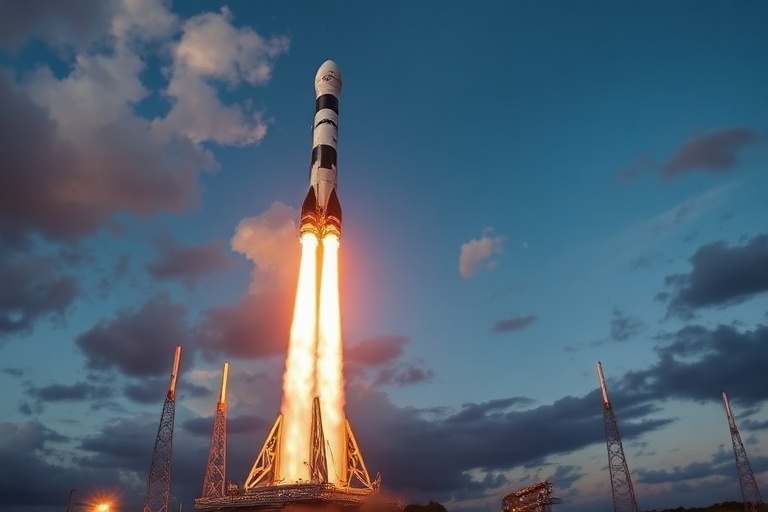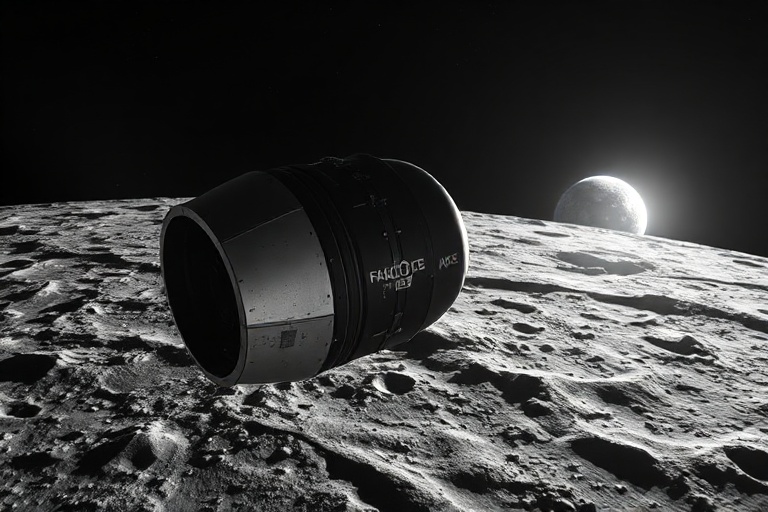
The collision of a SpaceX Falcon 9 rocket stage with the Moon in March 2022 was an unexpected event that captured the attention of astronomers, space agencies, and the public alike. Unlike typical mission outcomes, this incident involved a discarded rocket booster that had spent years orbiting Earth before drifting into a chaotic trajectory toward the lunar surface. The incident raised questions about space debris management, the long-term sustainability of lunar exploration, and the responsibilities of private companies in deep-space operations.
What makes this event particularly noteworthy is its rarity. Lunar impacts by human-made objects are uncommon, and most spacecraft are carefully deorbited or sent into heliocentric orbits to avoid such outcomes. The Falcon 9’s collision, however, was unintentional—a byproduct of orbital mechanics and the limitations of current space traffic monitoring systems. Researchers have since used the event to study the Moon’s surface composition and the effects of high-velocity impacts on celestial bodies.
The Science Behind the Collision
The Falcon 9 rocket stage, part of a 2015 mission that deployed the Deep Space Climate Observatory (DSCOVR), was left in a highly elliptical Earth orbit after completing its primary objective. Over time, gravitational perturbations from the Earth, Moon, and Sun altered its trajectory, pushing it into a path that intersected with the Moon’s orbit. On March 4, 2022, the rocket stage impacted the lunar surface near the Hertzsprung Crater at approximately 5,800 mph (9,300 km/h).
NASA’s Lunar Reconnaissance Orbiter (LRO) later identified the crash site, providing scientists with a rare opportunity to observe a fresh impact crater. The collision excavated material from beneath the Moon’s surface, offering insights into lunar geology. Researchers believe the impact exposed subsurface layers that could reveal clues about the Moon’s volcanic history and composition. This data is invaluable for future missions, including NASA’s Artemis program, which aims to return humans to the Moon.
The event also highlighted the importance of tracking space debris. The Falcon 9 stage was not actively monitored by any space agency once it was deemed non-functional. Its erratic orbit made it difficult to predict, and by the time its collision course was confirmed, it was too late to alter its path. This underscores the need for improved tracking systems, particularly as more private companies and nations launch missions into deep space.
Implications for Space Debris and Lunar Exploration
The collision has reignited discussions about space debris and its growing threat to both Earth and lunar missions. With over 27,000 pieces of orbital debris currently tracked by NASA, the risk of collisions in Earth’s orbit is well-documented. However, the Moon presents a different set of challenges. Unlike Earth, the Moon lacks an atmosphere to burn up incoming debris, meaning even small objects can reach the surface at high velocities. The Falcon 9 incident serves as a reminder that space debris is not just an Earth-centric problem—it’s a solar system-wide issue.
Private companies like SpaceX are increasingly involved in lunar missions, from delivering payloads to planning crewed landings. While these advancements are exciting, they also raise concerns about accountability. The Outer Space Treaty of 1967, which governs international space law, places responsibility for space objects on the launching state or entity. However, the treaty does not address the long-term management of debris once a mission is complete. As more actors enter the lunar arena, clear guidelines will be necessary to prevent future collisions.
One potential solution is the adoption of best practices for end-of-life disposal of spacecraft. For missions bound for the Moon or beyond, agencies and companies could be required to either deorbit the spacecraft into the Sun or Earth’s atmosphere or place it in a stable orbit away from the Moon. The European Space Agency (ESA) has already proposed guidelines for lunar mission planning, including debris mitigation strategies. These measures could become standard as lunar traffic increases.
Lessons for Future Missions
The Falcon 9 lunar collision has become a case study in the unintended consequences of space exploration. While the incident caused no immediate harm, it serves as a cautionary tale for future missions. Here are key takeaways:
- Enhanced Tracking: Improved monitoring of defunct spacecraft and upper stages is critical, especially as missions extend beyond Earth’s orbit. Current systems, such as the U.S. Space Surveillance Network, focus primarily on low Earth orbit, leaving gaps in tracking for lunar-bound objects.
- International Collaboration: Space debris is a global issue that requires coordinated efforts. Organizations like the United Nations Office for Outer Space Affairs (UNOOSA) could facilitate discussions on debris management and lunar traffic regulations.
- Private Sector Responsibility: Companies like SpaceX, which are pioneering commercial spaceflight, must prioritize sustainability in their mission planning. This includes designing spacecraft with end-of-life disposal in mind and adhering to international guidelines.
- Scientific Opportunities: Unexpected events like the Falcon 9 impact can yield valuable scientific data. Future missions could intentionally target specific lunar regions to study the effects of impacts and the composition of subsurface materials.
The collision also underscores the need for transparency. While SpaceX confirmed the rocket stage’s impact through independent tracking, the event was not widely publicized until after it occurred. Greater communication between private companies, space agencies, and the public could help mitigate concerns and foster trust in lunar exploration efforts.
What’s Next for Lunar Exploration?
Despite the concerns raised by the Falcon 9 incident, the future of lunar exploration remains bright. NASA’s Artemis program is just one of several initiatives aiming to establish a sustainable human presence on the Moon. Private companies are also playing a larger role, with SpaceX’s Starship and other landers planned for upcoming missions. These efforts could pave the way for lunar bases, scientific research stations, and even commercial ventures like mining.
However, the risk of debris collisions must be addressed to ensure the safety of these missions. As more spacecraft venture to the Moon, the likelihood of accidental impacts will increase. This makes it essential to develop robust tracking systems, establish clear regulations, and prioritize sustainability in mission design. The Falcon 9 collision is a reminder that space exploration is not just about reaching new frontiers—it’s also about preserving the environments we explore.
For now, scientists will continue studying the impact site using data from the Lunar Reconnaissance Orbiter and other instruments. The findings could inform everything from lunar geology to the design of future spacecraft. Meanwhile, policymakers and industry leaders will need to collaborate on solutions to prevent similar incidents in the future. The Moon is no longer just a destination; it’s a shared resource that requires careful stewardship.