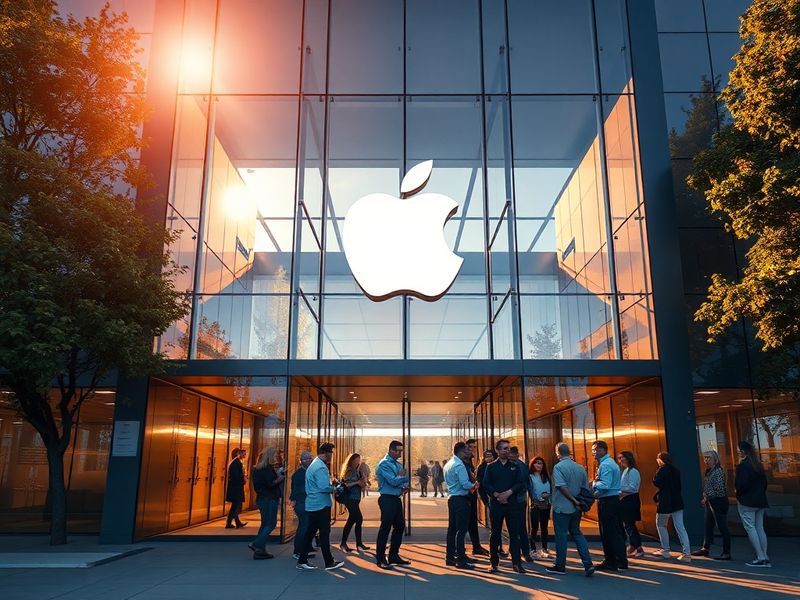
Apple Inc. has evolved from a niche tech company into a financial colossus, shaping global markets and consumer behavior. Its stock, listed as AAPL on the Nasdaq, has become a barometer for both the technology sector and the broader economy. Over the past decade, Apple’s stock has delivered remarkable returns, rewarding long-term investors while influencing investment strategies worldwide.
The Rise of Apple Stock: Key Milestones
Apple’s stock journey is punctuated by strategic shifts and groundbreaking products. In 2014, the company’s market capitalization surpassed $700 billion, a milestone that underscored its dominance. The introduction of the iPhone 6 in 2014 catalyzed a surge in stock value, as investors anticipated record sales in emerging markets like China and India.
By 2018, Apple became the first publicly traded company to reach a $1 trillion valuation. This achievement was not merely symbolic; it reflected the company’s ability to monetize innovation, particularly through its services sector. Subscriptions for Apple Music, iCloud, and the App Store created recurring revenue streams that stabilized investor confidence.
The stock’s trajectory took another leap in 2020 when Apple announced its transition to in-house silicon. The M1 chip, unveiled that year, demonstrated the company’s vertical integration capabilities. Investors rewarded this move by pushing the stock past the $2 trillion mark, a testament to Apple’s ability to redefine industry standards.
Global Markets and Apple’s Stock Appeal
Apple’s stock is a cornerstone of global investment portfolios. Institutional investors, sovereign wealth funds, and retail traders alike consider it a core holding. The company’s presence in nearly every country amplifies its influence. In Europe, for example, Apple’s stock is a top holding in indices like the Euro Stoxx 50, reflecting its role as a European economic bellwether.
In Asia, Apple’s stock is particularly volatile due to geopolitical tensions and regulatory scrutiny. The Chinese market, responsible for nearly 20% of Apple’s revenue, has seen fluctuations tied to trade policies and consumer sentiment. Despite these challenges, Apple maintains a strong foothold, with services like Apple Pay gaining traction in markets where cashless transactions are becoming the norm.
In emerging economies, Apple’s stock is often viewed as a proxy for technological progress. Countries like India and Brazil, where smartphone penetration is rising, see Apple as a symbol of premium consumerism. While iPhones remain out of reach for many, the aspirational value of the brand drives investment interest in AAPL.
Investor Sentiment: What Drives Apple’s Stock
Several factors shape investor sentiment toward Apple stock. Product innovation remains the primary driver. Each new iPhone release, paired with services like Apple TV+ or Apple Fitness+, generates anticipation that translates into stock movements. However, innovation alone is not enough to sustain growth.
Financial performance is equally critical. Apple’s quarterly earnings reports are scrutinized for revenue growth, profit margins, and guidance. Investors pay close attention to the services segment, which now accounts for over 20% of total revenue. This diversification has insulated the company from the cyclical nature of hardware sales.
Macroeconomic factors also play a role. Interest rates, inflation, and currency fluctuations impact Apple’s profitability. For instance, a strong U.S. dollar can reduce overseas earnings when converted back to dollars, affecting net income. Conversely, trade tariffs or supply chain disruptions can lead to short-term volatility.
The Role of Share Buybacks and Dividends
Apple’s capital return program is a significant factor in its stock appeal. The company has returned over $500 billion to shareholders through buybacks and dividends since 2012. This strategy not only boosts earnings per share but also signals financial strength to the market.
Share buybacks reduce the number of outstanding shares, making each remaining share more valuable. Dividends, meanwhile, attract income-focused investors. Apple’s dividend yield, though modest compared to utilities or real estate investment trusts, is reliable and has grown consistently over the years.
These initiatives have cultivated a loyal shareholder base. Long-term investors, including Warren Buffett’s Berkshire Hathaway, view Apple as a core holding. The company’s ability to generate cash flow—even during economic downturns—reinforces its reputation as a defensive stock.
Cultural and Technological Impact
Apple’s influence extends beyond finance into culture and technology. The iPhone, in particular, has redefined how people communicate, work, and entertain themselves. In countries like South Korea and Japan, where smartphone adoption is near-universal, Apple’s stock is closely tied to societal trends.
The rise of the creator economy has further cemented Apple’s cultural footprint. Platforms like the App Store and Apple Music empower musicians, developers, and content creators worldwide. This ecosystem not only drives revenue but also fosters a sense of community among Apple users.
In Europe, Apple has become a symbol of digital sovereignty. Governments and regulators often look to Apple as a model for balancing innovation with privacy. The company’s stance on encryption and data protection has made it a counterpoint to tech giants with more permissive policies.
Challenges and Controversies
Despite its success, Apple faces persistent challenges. Antitrust concerns in the U.S. and Europe threaten to disrupt its business model. Regulators are scrutinizing the App Store’s revenue-sharing practices, which could impact profitability. Meanwhile, supply chain issues, such as those stemming from COVID-19 lockdowns in China, have exposed vulnerabilities in Apple’s just-in-time manufacturing model.
Competition from Chinese brands like Huawei and Xiaomi has intensified, particularly in price-sensitive markets. These companies offer comparable technology at lower prices, pressuring Apple’s market share in regions like Southeast Asia and Africa.
Apple’s environmental initiatives also draw mixed reactions. While the company has committed to carbon neutrality, critics argue that its recycling programs and material sourcing practices fall short of true sustainability. These controversies occasionally weigh on investor sentiment, particularly among ESG-focused funds.
What’s Next for Apple Stock?
The future of Apple stock hinges on its ability to innovate and adapt. The company’s push into augmented reality (AR) and virtual reality (VR) with the Vision Pro headset represents a bold bet on the next computing platform. If successful, this could unlock new revenue streams and redefine the company’s growth trajectory.
Another growth avenue is healthcare. Apple’s expansion into health monitoring, with features like the ECG app and blood oxygen tracking, positions it at the intersection of technology and wellness. Regulatory approvals and partnerships with medical institutions could turn this into a major revenue driver.
Investors will also watch Apple’s expansion into new markets. Africa, with its young and growing population, presents a significant opportunity. The company’s recent investments in local manufacturing and digital services aim to capture this potential.
However, execution risk remains high. Apple’s ability to maintain its premium brand image while expanding into lower-cost markets will be critical. Balancing innovation with accessibility will determine whether the stock can continue its upward trajectory.
Investor Strategies for AAPL
For investors considering Apple stock, a balanced approach is advisable. Long-term holders may benefit from the company’s consistent dividend growth and buybacks. However, short-term traders should monitor product cycles, regulatory developments, and macroeconomic trends.
Diversification is also key. While Apple is a dominant force, it is not immune to market downturns. A well-rounded portfolio should include exposure to other sectors, such as Technology or Finance, to mitigate risk.
Finally, staying informed about global events is essential. Geopolitical tensions, trade policies, and currency fluctuations can all impact Apple’s stock performance. Investors should keep an eye on earnings calls, analyst upgrades, and industry reports to make informed decisions.
Apple’s stock is more than a financial asset; it is a reflection of global technological and cultural trends. As the company continues to evolve, its stock will remain a focal point for investors, analysts, and consumers alike. Whether through groundbreaking products, strategic expansions, or financial initiatives, Apple’s influence shows no signs of waning.