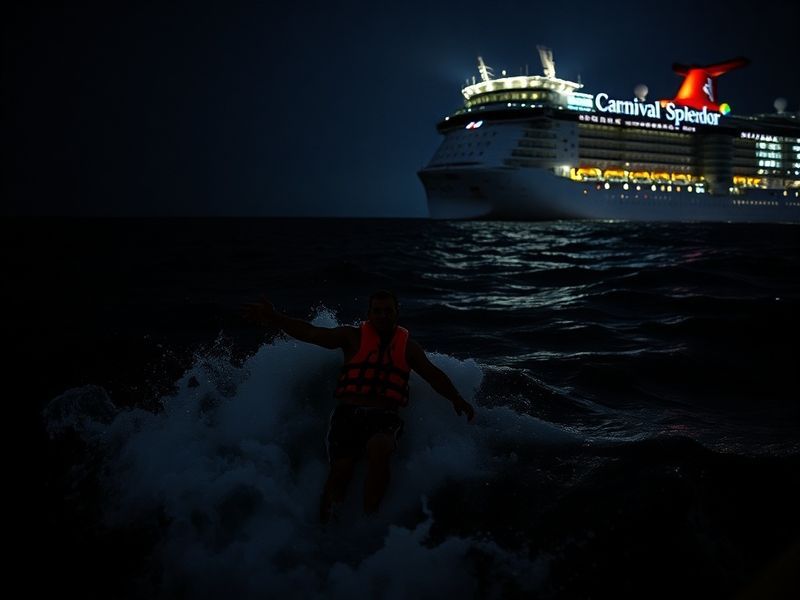
Carnival Splendor Man Overboard: Global Safety Concerns in Cruise Industry
“`html
Carnival Splendor Man Overboard: A Global Look at Maritime Safety
The disappearance of a passenger from the Carnival Splendor in 2023 has once again focused attention on the risks of ocean travel. While cruise ships remain among the safest forms of transportation, incidents involving people going overboard continue to raise serious questions about safety protocols, surveillance technology, and human behavior at sea.
This case is not isolated. Over the past decade, multiple high-profile disappearances have occurred on cruise vessels across different companies and regions. Each incident forces maritime authorities and cruise operators to reevaluate existing measures designed to prevent such tragedies. The global cruise industry, valued at over $80 billion, faces increasing scrutiny as public awareness grows and legal frameworks evolve.
The Carnival Splendor Incident: What Happened?
On a clear evening in the South Pacific, a 62-year-old male passenger was reported missing from the Carnival Splendor on March 12, 2023. The ship, carrying over 3,000 guests and 1,100 crew members, was en route from Sydney to Auckland. The alarm was raised after the man was not found during a muster drill, leading to an immediate search operation.
According to official reports from the Australian Maritime Safety Authority (AMSA), the search spanned more than 7,000 square nautical miles and lasted seven days. Despite coordinated efforts involving aircraft, vessels, and satellite imagery, no trace of the individual was recovered. Investigators concluded that he likely entered the water accidentally, possibly due to a fall or misjudgment during a nighttime stroll on an outer deck.
- No foul play was suspected.
- The ship’s security cameras were reviewed but did not capture the moment of the incident.
- The incident occurred during calm seas and fair weather.
While Carnival Corporation expressed deep sadness over the loss, critics pointed out the absence of real-time monitoring on open decks. The company later announced enhanced surveillance measures on all its ships, including thermal imaging and motion sensors in high-risk areas.
Global Trends in Overboard Incidents
Between 2010 and 2024, at least 250 people have gone overboard from cruise ships worldwide, according to data compiled by cruise safety advocates. The majority of these incidents occurred at night, often under poorly lit or unsupervised conditions. The United States leads in reported cases, followed by the Caribbean, Mediterranean, and Southeast Asia.
Notable cases include the 2017 disappearance of a 29-year-old woman from Royal Caribbean’s Harmony of the Seas during a transatlantic crossing, and the 2019 case of a 71-year-old man from MSC Grandiosa in the Mediterranean. In both instances, despite immediate search efforts, no remains were recovered.
- North America: Highest number of incidents, linked to large cruise ports in Florida and California.
- Europe: Increasing reports, particularly in the Mediterranean, where older ships with limited surveillance are still in operation.
- Asia-Pacific: Rapid growth in cruise tourism has led to more incidents, though reporting standards vary by country.
Experts attribute the rise in part to the expansion of the cruise industry into new markets, including China and India, where safety regulations may not be as stringent as in Western nations. Additionally, the increasing size of modern cruise ships—some now carrying over 6,000 passengers—has made monitoring all areas a significant challenge.
Why Do People Go Overboard?
Understanding the causes behind these incidents is crucial to prevention. While accidents and medical emergencies account for a portion of cases, intentional acts—including suicide—are also a factor. Studies suggest that nearly one-third of overboard incidents are suspected to be self-inflicted.
Common contributing factors include:
- Alcohol consumption and impaired judgment.
- Lack of barriers or railings on outer decks.
- Inadequate lighting or surveillance in high-risk zones.
- Mental health crises, often undetected by ship staff.
Psychologists and maritime safety consultants have called for improved mental health screening and support systems onboard cruise ships. Some companies have begun training crew members to recognize signs of distress and intervene before an incident occurs.
Technological and Regulatory Responses
In response to growing concerns, international maritime organizations and cruise lines have begun implementing new technologies. These include:
- AI-powered surveillance: Cameras equipped with motion detection and anomaly alerts are being installed on newer ships.
- Wearable sensors: Some cruise operators now provide guests with wearable devices that trigger alerts if they enter restricted areas or show signs of erratic movement.
- Real-time tracking: Enhanced GPS monitoring on lifeboats and man-overboard (MOB) systems allow faster response times.
Regulatory bodies such as the International Maritime Organization (IMO) have updated safety guidelines, mandating that all new cruise ships built after 2025 must include advanced MOB detection systems. Existing ships are being retrofitted where possible, though the process is slow and costly.
However, critics argue that technology alone cannot solve the problem. They emphasize the need for cultural shifts within the industry—prioritizing safety over profit, increasing transparency in incident reporting, and fostering a culture where crew members feel empowered to act on concerns.
A Call for Greater Accountability
The Carnival Splendor incident, like others before it, has reignited debates about accountability in the cruise industry. Families of victims have filed lawsuits against cruise lines, alleging negligence in safety procedures. In one case, a U.S. court ruled that a cruise company could be held liable for failing to install man-overboard alarms on older ships.
Public pressure has led to calls for mandatory international standards. Advocacy groups such as the International Cruise Victims Association are pushing for legislation that would require all ships to have real-time monitoring on all decks, regardless of age or location.
While the cruise industry remains a symbol of luxury and adventure, these incidents serve as stark reminders of the human cost behind the glamour. As ships grow larger and routes expand, the need for comprehensive safety measures has never been greater.
The loss of a single passenger is one too many. For the families affected, the ocean remains a silent witness—holding stories no one will ever hear.