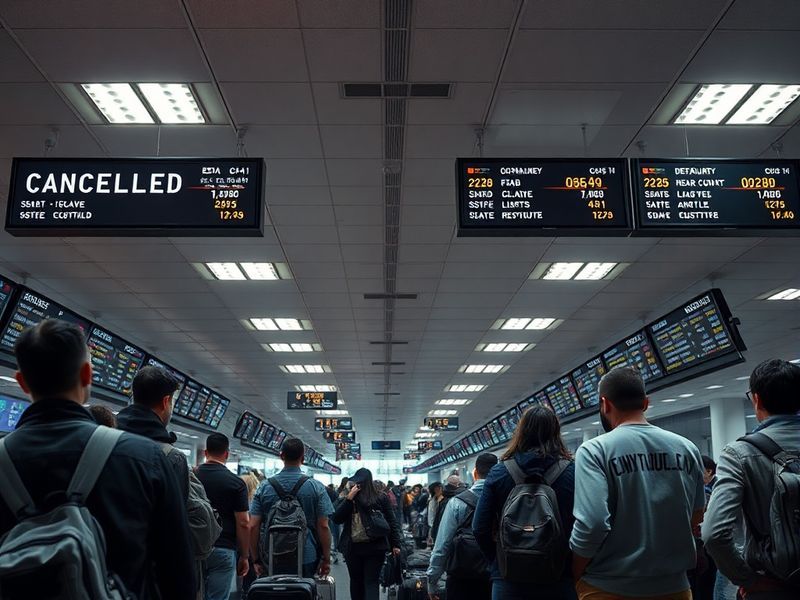
Why Flight Cancellations and Delays Are Ruining Global Travel Plans
“`html
The Ripple Effect: How Flight Cancellations and Delays Disrupt Global Travel
Flight cancellations and delays have become an inescapable part of modern air travel. Whether due to severe weather, technical issues, or operational mismanagement, these disruptions ripple far beyond airport terminals, affecting economies, personal plans, and even cultural exchanges. The issue is not confined to a single region—it is a global challenge that tests the resilience of airlines, passengers, and governments alike.
The Global Scale of Flight Disruptions
According to the International Air Transport Association (IATA), flight delays and cancellations cost the global aviation industry billions annually. In 2023 alone, airlines worldwide reported over 30 million minutes of delay, with Europe and North America experiencing the highest disruption rates. These numbers translate into lost revenue, increased operational costs, and frustrated travelers stranded in unfamiliar cities.
The problem is particularly acute in regions with aging infrastructure. In the United States, for example, the Federal Aviation Administration (FAA) has repeatedly flagged outdated air traffic control systems as a major contributor to delays. Meanwhile, in Southeast Asia, monsoon seasons and volcanic ash clouds frequently ground flights across Indonesia, the Philippines, and Malaysia, disrupting travel between continents.
Weather: The Unpredictable Wildcard
No airline can fully prepare for the unpredictability of weather. A single thunderstorm over Chicago’s O’Hare International Airport can delay hundreds of flights, creating a domino effect that lasts for days. In Europe, the travel industry has seen firsthand how winter storms in Scandinavia or summer heatwaves in Southern Europe can paralyze airports from London to Athens.
Climate change is exacerbating these challenges. Rising temperatures lead to longer runway requirements for takeoffs, while erratic weather patterns increase the frequency of turbulence and lightning strikes—both of which force airlines to ground aircraft. The aviation sector, which contributes roughly 2.5% of global carbon emissions, now faces a paradox: it must reduce its environmental impact while also adapting to a climate that is growing less predictable.
Operational Failures: When Systems Break Down
Not all delays are caused by external forces. Mechanical failures, staff shortages, and airline mismanagement also play significant roles. In 2022, a series of high-profile cancellations at European carriers revealed deep-seated issues in scheduling and crew management. One airline, for instance, grounded nearly 10,000 flights in a single month due to a combination of pilot strikes and understaffed maintenance teams.
The post-pandemic surge in travel demand has only intensified these pressures. Airlines that downsized during COVID-19 now struggle to rebuild their workforce, leading to a scramble for pilots, cabin crew, and ground staff. The result? A perfect storm of overbooked flights, exhausted employees, and passengers left in limbo.
The Human and Economic Cost
The impact of flight disruptions extends far beyond inconvenience. For business travelers, a delayed flight can mean missed contracts, lost deals, or even the collapse of international partnerships. In the business world, time is money, and the aviation industry’s inefficiencies translate directly into financial losses.
Tourism-dependent economies are equally vulnerable. Countries like Thailand, Mexico, and Greece rely heavily on air travel to sustain their hospitality industries. When flights are canceled, hotels sit empty, tour operators lose bookings, and local vendors—from taxi drivers to souvenir shops—see their incomes plummet. In 2023, Greece’s tourism sector reported a 15% drop in arrivals during peak season due to repeated strikes by air traffic controllers.
Passenger Rights and the Fight for Fair Treatment
Frustrated travelers are increasingly turning to regulatory bodies for solutions. The European Union’s Regulation 261, for example, entitles passengers to compensation for canceled or delayed flights under certain conditions. In the U.S., the Department of Transportation has enforced stricter reporting requirements for airlines, though critics argue the penalties are still too lenient.
Yet, navigating these rights is often easier said than done. Airlines frequently cite “extraordinary circumstances”—such as strikes by third-party contractors or extreme weather—as reasons to avoid compensation. Passengers, meanwhile, are left grappling with convoluted claims processes and language barriers when filing complaints abroad.
Can the Industry Adapt?
Despite the challenges, some airlines and airports are taking proactive steps to mitigate disruptions. Singapore’s Changi Airport, for instance, has invested in AI-driven predictive tools to forecast weather-related delays up to 72 hours in advance. Meanwhile, carriers like Emirates and Delta are experimenting with dynamic pricing models that adjust ticket refunds and rebooking options based on real-time conditions.
Technology also offers hope. Blockchain-based systems are being tested to streamline passenger compensation claims, while biometric check-ins aim to reduce bottlenecks at security lines. However, widespread adoption remains years away, and the human element—pilots, air traffic controllers, and ground staff—will always be the linchpin of a functional aviation system.
A Call for Systemic Change
Ultimately, the flight delay crisis is not just about individual airlines or airports—it is a systemic issue that demands coordinated action. Governments must modernize air traffic control infrastructure, airlines need to invest in workforce stability, and passengers deserve clearer, more enforceable rights. Until these changes materialize, the skies will remain a battleground of frustration, lost opportunities, and unforeseen disruptions.
For now, travelers can only adapt. Booking flexible tickets, downloading airline apps for real-time updates, and packing patience alongside their passports are small but necessary steps in an era where delays are the norm rather than the exception.