Deportation Policies Around the World: Laws, Stories, and Global Impact
“`html
Understanding Deportation: Policies, Human Stories, and Global Impact
Deportation remains one of the most contentious issues in global immigration policy. Governments worldwide enforce removal orders for a variety of reasons, from criminal convictions to violations of visa terms. Yet behind each deportation case lies a story of human displacement, economic pressure, and cultural disruption. The consequences ripple through families, communities, and even nations, shaping international relations and domestic debates alike.
This practice is not new, but its scale and visibility have expanded in recent decades due to increased migration flows and stricter enforcement policies. Countries such as the United States, Germany, and the United Kingdom have all intensified removal operations, often amid heated political discussions about national identity, security, and humanitarian responsibility. To understand the full picture, it’s essential to examine both the legal frameworks and the lived experiences of those affected.
The Legal Frameworks Behind Deportation
Deportation is rooted in national sovereignty—the principle that states have the right to control their borders and define who may reside within them. Most countries operate under a dual system: removal for criminal activity and administrative deportation for immigration violations. For example, in the United States, Immigration and Customs Enforcement (ICE) enforces removal orders issued by judges or administrative bodies. Similarly, the European Union allows member states to deport non-citizens who pose a threat or fail to meet residency requirements.
Legal thresholds vary widely. Some nations, like Canada, prioritize rehabilitation and consider the length of residency before deporting long-term residents. Others, such as Saudi Arabia, enforce strict labor laws that can lead to deportation after even minor infractions. The lack of a unified global standard creates inconsistency, leaving migrants vulnerable to sudden, life-altering decisions.
International law does impose limits. The UN Convention on the Rights of Migrant Workers protects individuals from arbitrary deportation, but enforcement remains weak. Many countries bypass these protections by classifying removals as “administrative” rather than punitive, thereby avoiding judicial oversight. This legal gray area has fueled criticism from human rights organizations, particularly when minors or asylum seekers are involved.
Human Stories: The Faces Behind the Statistics
Behind every deportation order is a person whose life is irrevocably altered. Take the case of Maria Rodriguez, a 34-year-old mother from El Salvador who had lived in the U.S. for 12 years. After a minor traffic violation led to a deportation proceeding, she was sent back to a country plagued by gang violence, leaving her children behind in foster care. Her story mirrors thousands of others caught in a system that values policy over personal stability.
Cultural assimilation plays a critical role. Many deportees struggle to reintegrate after years abroad. In Haiti, for instance, deportees from the U.S. often face stigma, limited job opportunities, and trauma from detention. In contrast, deportees returning to Mexico may find communities more receptive, though economic hardship remains a constant challenge. These disparities highlight how deportation is not just a legal process—it’s a cultural rupture.
Children are among the most vulnerable. According to UNICEF, over 5,000 migrant children were deported from the U.S. to Central America in 2022. Many had no memory of their country of origin and faced language barriers, poverty, and exploitation. Their stories reveal the generational scars left by deportation policies that prioritize enforcement over family unity.
The Global Ripple Effect: Families, Economies, and Diplomacy
Deportation reshapes families across borders. Remittances—funds sent home by migrants—often cease after deportation, destabilizing entire communities. In the Philippines, where over 10% of the population works overseas, deportations from the Middle East have led to sudden economic downturns in rural provinces. Similarly, in Morocco, deportees from Spain or France face unemployment rates three times higher than the national average.
Diplomatic tensions frequently arise when countries refuse to accept deportees. The U.S. has clashed with nations like Guatemala and Haiti over repatriation flights. In 2021, Mexico temporarily suspended some deportation flights due to COVID-19 concerns, leading to overcrowded detention centers and legal backlogs. These disputes underscore how deportation is not just a domestic issue but a flashpoint in international relations.
Economically, deportation can create labor shortages in industries reliant on migrant workers. In Germany, the deportation of seasonal agricultural workers during harvest seasons has forced farmers to abandon crops. Conversely, countries like Japan have eased deportation policies to address labor shortages in care industries, illustrating how policy shifts can respond to economic pressures.
Controversies and Ethical Dilemmas
Critics argue that deportation policies often target marginalized groups. Data from the U.S. shows that Black immigrants face deportation at nearly twice the rate of white immigrants for similar offenses. In Europe, deportations disproportionately affect Roma populations and asylum seekers from the Global South. These patterns fuel accusations of systemic bias and racism within immigration enforcement.
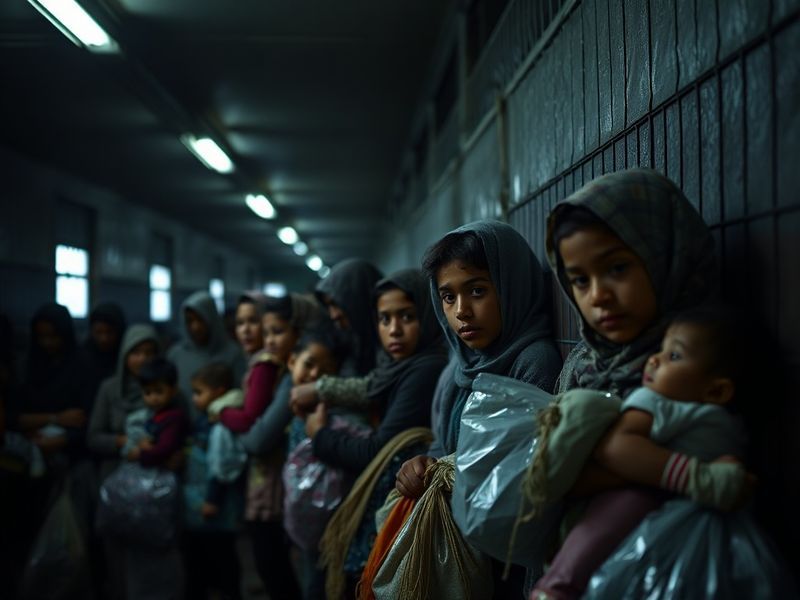
Another ethical dilemma involves the detention conditions of deportees. Reports from U.S. Customs and Border Protection facilities have documented overcrowding, inadequate medical care, and psychological abuse. In Australia, offshore detention centers on Manus Island and Nauru have faced condemnation for violating human rights standards. Such conditions raise questions about whether deportation itself is a form of punishment beyond the legal sentence.
Human rights advocates propose alternatives, such as community-based case management or temporary protected status for vulnerable groups. Countries like Portugal have decriminalized minor drug offenses, reducing deportations for non-violent crimes. These models suggest that enforcement policies can evolve without compromising national security.
A Call for Balanced Policy and Empathy
Deportation will remain a necessary tool for governments to enforce immigration laws. However, the humanitarian cost demands a more balanced approach—one that considers the long-term impact on families, economies, and international trust. Policymakers must weigh the legal necessity of removal against the moral imperative to protect human dignity.
Public opinion is shifting. A 2023 Pew Research poll found that 62% of Americans support pathways to legal status for undocumented immigrants, even as deportation numbers remain high. This reflects a growing recognition that immigration policy must balance enforcement with compassion.
For those working in immigration law, social services, or journalism—as we do here at Dave’s Locker—the challenge is clear: to report on deportation with accuracy, empathy, and a commitment to truth. The stories of those affected deserve to be told, not just as statistics, but as lived experiences that challenge us to rethink what justice and belonging truly mean.