FC Barcelona: A Crisis of Identity and the Fight to Remain Relevant
“`html
Fútbol Club Barcelona: Tradition, Turmoil, and the Future of La Blaugrana
Fútbol Club Barcelona stands as one of the most storied institutions in world sports. Founded in 1899 by Joan Gamper and a group of Swiss, English, and Catalan footballers, Barça emerged not just as a club, but as a symbol of Catalan identity. Over 125 years later, its legacy stretches far beyond trophies and stadiums. This is a story of resilience, identity, and the constant struggle to balance tradition with modern demands.
The Blaugrana Identity: A Club Rooted in Catalonia
From its earliest days, Barcelona FC was more than a football team. The club’s motto, “Més que un club” (“More than a club”), reflects its deep connection to Catalonia’s cultural and political fabric. In an era when football was dominated by British influence, Gamper and his contemporaries established a club that would become a beacon of Catalan pride—especially during the Franco dictatorship when regional identities were suppressed.
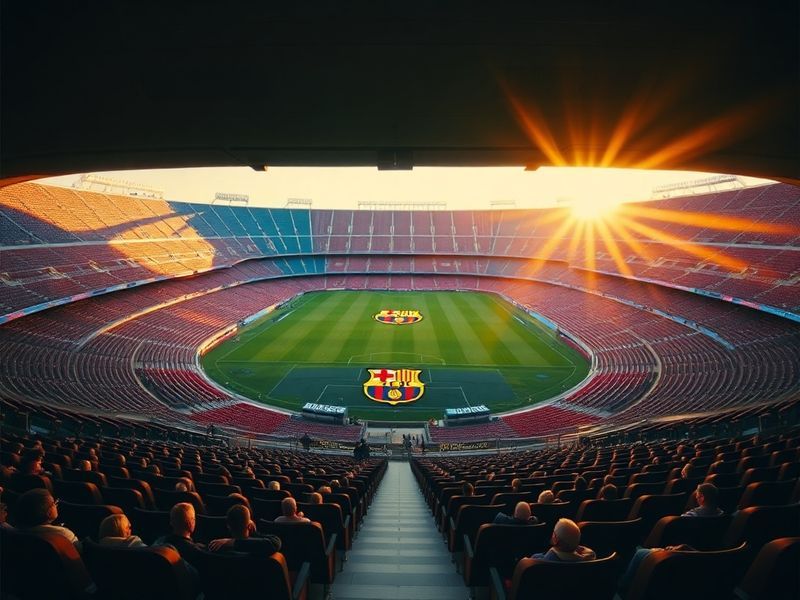
The Camp Nou, inaugurated in 1957, became the largest stadium in Europe and a fortress of Catalan spirit. Even today, the roar of 99,354 fans singing the Cant del Barça before matches remains one of football’s most powerful rituals. This anthem, composed in 1974, is sung in Catalan—a defiant act during the Franco years and a continuing statement of cultural pride.
A Legacy Built on La Masia and Global Icons
Barça’s philosophy has long been rooted in youth development. La Masia, the club’s famed academy, has produced generations of world-class players: Xavi Hernández, Andrés Iniesta, Lionel Messi, and more recently, Gavi and Lamine Yamal. These players embodied the club’s tiki-taka style—technical, possession-based football rooted in positional play and collective intelligence.
This philosophy wasn’t just successful; it redefined modern football. Under managers like Johan Cruyff, Frank Rijkaard, and Pep Guardiola, Barcelona didn’t just win titles—they changed how the game was played. The 2008–09 and 2010–11 seasons saw the club achieve the unprecedented feat of winning six trophies in a single year, including the historic 2009 Champions League and La Liga double under Guardiola.
The Financial Crisis and the Fall of the Dream
Yet the dream began to fracture. By 2022, financial mismanagement, lavish spending, and poor governance had pushed the club to the brink. A staggering €1.35 billion in debt, alongside controversial contracts and a botched transfer strategy, led to a liquidity crisis. The club’s members—socis—voted to oust president Josep Maria Bartomeu in 2020, a rare democratic uprising in a sport increasingly controlled by billionaires and state-backed entities.
Joan Laporta returned as president in 2021, inheriting a club on the edge. His administration faced immediate challenges: the departure of Lionel Messi in 2021 after his contract expired due to financial constraints, the failed attempt to sign Erling Haaland, and a transfer ban imposed by UEFA for breaching Financial Fair Play rules. The club’s attempt to join the ill-fated European Super League in 2021 further eroded trust among supporters.
The financial strain was not just a matter of balance sheets. It threatened the very model that made Barça unique: a club owned by its members, not by a single owner or sovereign wealth fund. This democratic structure, while inspiring, also made decision-making slow and consensus-driven in an era where speed and agility often decide success.
Key Challenges Facing Barcelona FC Today
- Financial Sustainability: Barça must reduce its wage bill, which once reached €600 million annually, and restructure debt without alienating its iconic players.
- Competitive Decline: After years of dominance, Barça has fallen behind Real Madrid in recent seasons, struggling for consistency in La Liga and the Champions League.
- Stadium Dilemma: The Camp Nou is undergoing a €1.5 billion renovation, but delays and rising costs have frustrated fans who want a modern, fan-friendly venue.
- Player Development Under Pressure: With La Masia producing fewer ready-made first-team stars, the club must rethink its youth strategy amid financial constraints.
- Identity vs. Modernization: Can Barça retain its soul while adopting data-driven recruitment and commercial strategies?
From Crisis to Rebirth: Can Barça Regain Its Place at the Summit?
Despite the turmoil, signs of recovery are emerging. The 2022–23 season brought a Copa del Rey title under manager Xavi Hernández, a club legend turned coach. The return of Robert Lewandowski, the emergence of young talents like Pedri and Gavi, and a renewed focus on financial prudence suggest a path forward.
Yet the road is steep. Real Madrid and Manchester City continue to set the standard for modern football, while clubs like PSG and Bayern Munich operate with far greater financial firepower. Barcelona’s ability to compete now hinges on three pillars: financial discipline, smart recruitment, and the revival of its youth academy pipeline.
There’s also the question of leadership. Laporta’s second term has been marked by both bold moves—like the controversial signing of Raphinha—and missteps. His relationship with the dressing room and the board remains fragile. Trust, once lost, is hard to rebuild.
The Broader Implications for Football
Barcelona’s struggles reflect a broader tension in modern football. Can clubs preserve their identity when financial realities demand compromise? Can democracy survive in a sport increasingly dominated by oligarchs, private equity, and state-backed projects?
Barça’s model—member-owned, community-focused—is unique in top-tier football. Its survival is not just a sporting issue, but a cultural one. If the club fails, it sends a message: the soul of football is for sale.
But if it succeeds, even partially, it offers a blueprint for clubs that value heritage over wealth, process over instant results. That’s why the world watches Barcelona—not just for the goals, but for the story behind them.
Conclusion: A Club That Defines More Than It Wins
Fútbol Club Barcelona is not merely a football club. It is a cultural institution, a symbol of resilience, and a test case for what football can—and should—be. Its current challenges are not just financial or sporting; they are existential.
Whether through the Camp Nou’s renewed roar, the rise of a new generation of culés, or a return to European glory, Barcelona’s future will be written by more than just players on the pitch. It will be written by the members, the fans, and the ideals that have defined the club for over a century.
In an era of billion-dollar transfers and algorithm-driven football, Barcelona remains a reminder that the game is still about people—and that some clubs are worth more than their trophies.
As the Catalan anthem echoes once more, the world listens—not just to the song, but to the story it carries forward.
For Barça, the dream is not dead. It’s just being rewritten.