Detention’s Global Reality: From Schoolrooms to Prisons
From Classrooms to Prisons: The Evolving Meaning of Detention
Detention occupies a unique space in public consciousness—simultaneously a symbol of discipline in childhood and a tool of control in adulthood. Its meaning shifts dramatically depending on context: in schools, it’s a punishment for late homework; in legal systems, it’s the deprivation of liberty. This duality reflects broader societal values about authority, education, and justice. Around the world, detention practices reveal as much about cultural priorities as they do about institutional power.
In many Western nations, detention in schools is often seen as a necessary evil—a way to enforce order without resorting to more severe measures. Yet in countries like Finland, where educational philosophy prioritizes student well-being over punishment, detention is rare and viewed with skepticism. The contrast underscores a fundamental question: Is detention a reflection of systemic fairness or a symptom of institutional rigidity?
The Global Landscape of School Detention
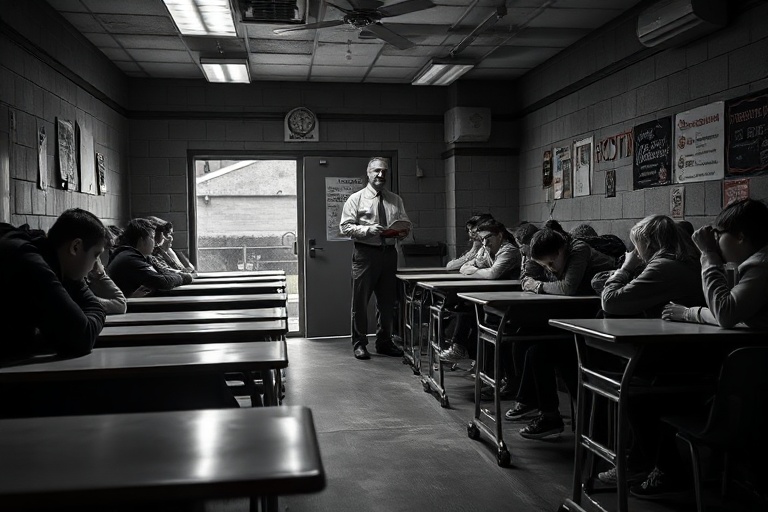
Detention policies vary widely across education systems, shaped by cultural attitudes toward discipline and childhood development. In the United States, detention is a staple of school discipline, often administered for minor infractions like tardiness or dress code violations. According to a 2022 report by the U.S. Department of Education, over 3 million students received detention annually, with disproportionate impacts on students of color and those with disabilities.
In contrast, countries like Sweden and Denmark emphasize restorative justice. Detention exists, but it’s framed as a chance for reflection rather than punishment. Students may write essays or discuss their actions with teachers, aligning with the Nordic model of fostering responsibility through dialogue. Japan presents another model, where detention is uncommon in elementary schools but used in high schools to prepare students for rigorous entrance exams. The cultural emphasis on academic pressure shapes these practices, making detention less about discipline and more about time management.
- United States: Detention as punishment; often overused for minor infractions.
- Sweden/Denmark: Detention as reflection; restorative rather than punitive.
- Japan: Detention for academic preparation; tied to exam culture.
Detention Beyond Schools: Legal and Political Dimensions
When detention extends beyond school walls, its implications grow more complex. Immigration detention centers, for instance, have become flashpoints in global debates about human rights. In Australia, offshore detention facilities on Manus Island and Nauru drew international condemnation for their harsh conditions and indefinite timelines. The policy, designed to deter asylum seekers, sparked legal challenges and public outrage, illustrating how detention can become a tool of political coercion.
In authoritarian regimes, detention often serves as a mechanism of suppression. China’s political detention system, including “re-education” camps in Xinjiang, has drawn global scrutiny for its role in silencing dissent. Similarly, Russia’s use of pre-trial detention—where suspects are held for months or years without conviction—has been criticized by human rights organizations as a form of psychological torture. These cases reveal detention not as a neutral administrative tool, but as a weapon wielded by state power.
Even in democracies, detention raises ethical dilemmas. The United Kingdom’s use of immigration detention, often without time limits, has been condemned by the UN for violating international law. Meanwhile, in the U.S., the proliferation of for-profit detention centers has fueled debates about the privatization of punishment. These systems highlight a troubling trend: detention as a profit-driven enterprise, where human lives are commodified.
Cultural Narratives: How Media Shapes Our View of Detention
Popular culture reinforces and challenges societal attitudes toward detention. Films and television often romanticize the idea of detention as a rite of passage—think of the 1985 classic Detention, where students confront supernatural forces during a Saturday lock-in. These narratives frame detention as a space of transformation, where misfits and rebels ultimately find community.
Yet this portrayal rarely aligns with reality. In documentaries like 13th, Ava DuVernay exposes how the U.S. prison system—rooted in historical detention practices like convict leasing—perpetuates cycles of oppression. The media’s role in shaping perceptions is critical: Does it normalize detention as inevitable, or does it hold institutions accountable?
Even in entertainment, detention’s portrayal varies. In South Korea’s Sweet Home, characters trapped in a building face psychological horror, reflecting societal anxieties about confinement. In contrast, Japanese anime like Detention (based on the video game) blend historical trauma with supernatural dread. These stories underscore detention’s dual nature: a space of fear and a crucible for resilience.
The Psychological Toll of Detention
Research consistently shows that detention—whether in schools or prisons—has measurable psychological effects. A 2021 study in The Journal of Youth and Adolescence found that students who received frequent detentions were more likely to exhibit anxiety and depression symptoms. The link between punishment and mental health is clear: detention doesn’t just discipline behavior; it can erode well-being.
In carceral settings, the damage is even more pronounced. Solitary confinement, a form of detention, has been linked to hallucinations, paranoia, and long-term cognitive impairment. The United Nations has classified prolonged solitary as torture, yet it remains a common practice in prisons worldwide. These findings challenge the notion that detention is an effective or humane solution.
Alternatives are emerging. Restorative justice programs, like those in Oakland, California, replace detention with community circles and conflict resolution. Early results show reduced recidivism and improved school climates. Similarly, Norway’s prison system prioritizes rehabilitation over punishment, with recidivism rates as low as 20%—a stark contrast to the U.S., where rates exceed 60%. These models suggest that detention’s psychological costs may not be inevitable.
Rethinking Detention: Toward Humane Alternatives
Detention, in all its forms, reflects a society’s values. When it’s used punitively, it reinforces hierarchies and perpetuates harm. When it’s used restoratively, it offers a chance for growth and repair. The global conversation around detention is shifting—toward accountability, toward empathy, and toward solutions that prioritize human dignity over control.
Schools and governments alike must ask: What is detention meant to achieve? If the goal is discipline, then perhaps detention’s time has passed. If the goal is justice, then alternatives must be explored. The future of detention lies not in its perpetuation, but in its redefinition.