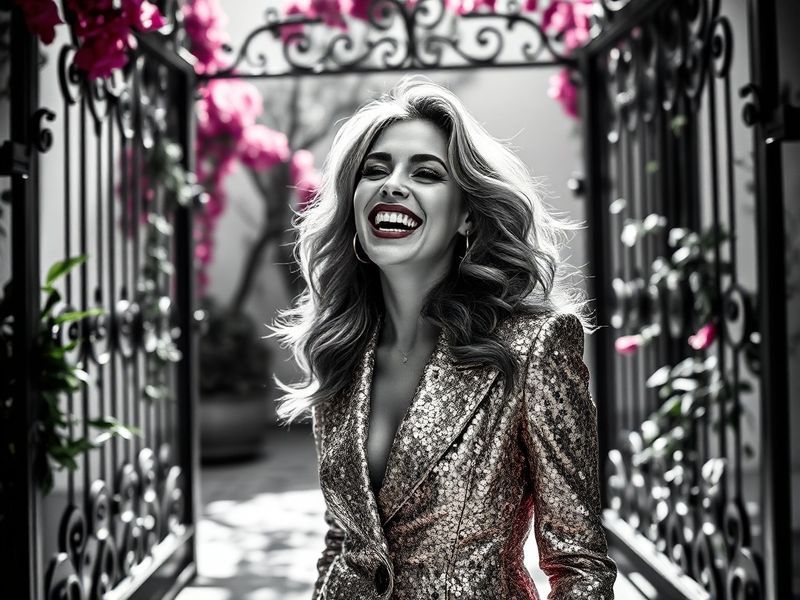
Paulina Rubio has spent over three decades crafting a legacy that transcends borders, languages, and musical trends. Born in Mexico City in 1971, she emerged from the iconic pop group Timbiriche before launching a solo career that would redefine Latin music. With a voice that blends powerhouse belting with intimate crooning, Rubio has remained a constant presence on global stages, from Mexico to Spain, the U.S., and beyond. Her ability to adapt—shifting between pop, dance, and even reggaeton—has earned her the title “La Chica Dorada” (The Golden Girl) and cemented her as a cultural icon.
Rubio’s influence extends beyond music. She has become a symbol of Latin femininity, challenging stereotypes while embracing glamour, sensuality, and unapologetic confidence. In an industry often dominated by fleeting trends, her longevity speaks to an artistry rooted in reinvention. Whether through chart-topping hits or boundary-pushing performances, she continues to shape the sound and style of Latin pop.
The Evolution of Paulina Rubio’s Sound
Rubio’s musical journey began in the 1980s with Timbiriche, a group that defined a generation of Mexican pop. By the early 1990s, she transitioned to solo work with her debut album La Chica Dorada (1992), which fused pop with Latin rhythms. Hits like “Mío” and “Te Daría Mi Vida” showcased her ability to balance catchy melodies with emotional depth.
By the late 1990s and early 2000s, Rubio embraced a more mature, sophisticated sound. Albums like Paulina (2000) and Border Girl (2002) incorporated English-language tracks, targeting international audiences. The single “Don’t Say Goodbye” became a crossover hit, earning her a spot on U.S. radio waves. This era marked her as one of the first Latin artists to successfully navigate bilingual pop.
In the 2010s, Rubio leaned into electronic and dance influences. Albums like Brava! (2011) and Deseo (2018) featured collaborations with producers like RedOne and Pitbull, blending Latin beats with EDM. Her 2023 release Pau-Latina returned to her roots, incorporating cumbia, reggaeton, and ranchera elements. This versatility ensures her music resonates across generations and genres.
Key Albums in Paulina Rubio’s Discography
- La Chica Dorada (1992) – Her debut solo album, launching her as a solo star in Mexico.
- Paulina (2000) – A global breakthrough, featuring hits like “Sexy Movimiento” and “Y Yo Sigo Aquí.”
- Border Girl (2002) – A bilingual pop masterpiece, including the English-language single “The One You Love.”
- Brava! (2011) – A dance-pop reinvention with EDM influences and club-ready anthems.
- Pau-Latina (2023) – A celebration of her Latin heritage, blending modern and traditional sounds.
Cultural Impact: More Than Just a Pop Star
Rubio’s influence extends far beyond music. As a fashion icon, she has collaborated with brands like L’Oréal, Pantene, and even launched her own makeup line. Her bold, glamorous aesthetic has made her a fixture in magazines like Vogue and People en Español, where she’s celebrated for her style as much as her voice.
In Latin America, Rubio has been a vocal advocate for women’s empowerment. She has used her platform to discuss body positivity, self-expression, and breaking societal norms. Her music often challenges traditional gender roles, with lyrics that celebrate female desire and independence. Songs like “Ni Rosas Ni Juguetes” (2010) became anthems for women reclaiming their agency.
Rubio’s cultural reach is also evident in her crossover appeal. She has performed at major international events, including the Latin Grammy Awards and the FIFA World Cup closing ceremonies. Her ability to connect with diverse audiences—from Miami’s Latin clubs to Madrid’s pop festivals—demonstrates her global relevance.
Paulina Rubio in the Digital Age
The rise of streaming and social media has allowed Rubio to connect with new generations. Her Instagram, boasting millions of followers, offers glimpses into her life, music, and advocacy. She has embraced platforms like TikTok, where her songs “Mío” and “Te Quise Tanto” have gone viral, introducing her catalog to Gen Z listeners.
Rubio has also ventured into television, serving as a coach on La Voz… México and a judge on Mexico’s Got Talent. These appearances have reinforced her status as a mentor figure, guiding emerging talent while staying relevant in an ever-changing industry.
Her recent collaborations, such as “Tranquila” with Colombian singer Manuel Turizo, highlight her ability to stay ahead of trends. By blending reggaeton and pop, she continues to evolve while maintaining her signature sound.
Paulina Rubio’s Influence on Latin Music
- Pioneering Bilingual Pop: Rubio was one of the first Latin artists to successfully crossover into English-language markets without losing her cultural identity.
- Fashion and Beauty Icon: Her collaborations with major brands have set trends in Latin beauty standards and fashion.
- Empowerment Through Music: Her lyrics often challenge gender norms, making her an icon for women’s rights and self-expression.
- Digital Savviness: Rubio has adapted to streaming and social media, ensuring her music reaches younger audiences.
A Legacy That Continues
At 52, Paulina Rubio shows no signs of slowing down. Her 2023 album Pau-Latina is a testament to her enduring creativity, blending nostalgia with modern sounds. Upcoming projects promise to further explore her artistic range, from acting to producing.
For younger artists like Karol G and Becky G, Rubio’s career serves as a blueprint for longevity. Her ability to reinvent herself while staying true to her roots offers a lesson in artistic evolution. In an industry where trends fade quickly, Rubio’s music remains timeless.
As Latin pop continues to dominate global charts, Rubio’s influence remains undeniable. She is not just a relic of the ’90s and 2000s but a living legend who continues to shape the future of Latin music. Whether on stage, on screen, or in the studio, Paulina Rubio is a force of nature—one that shows no signs of fading.