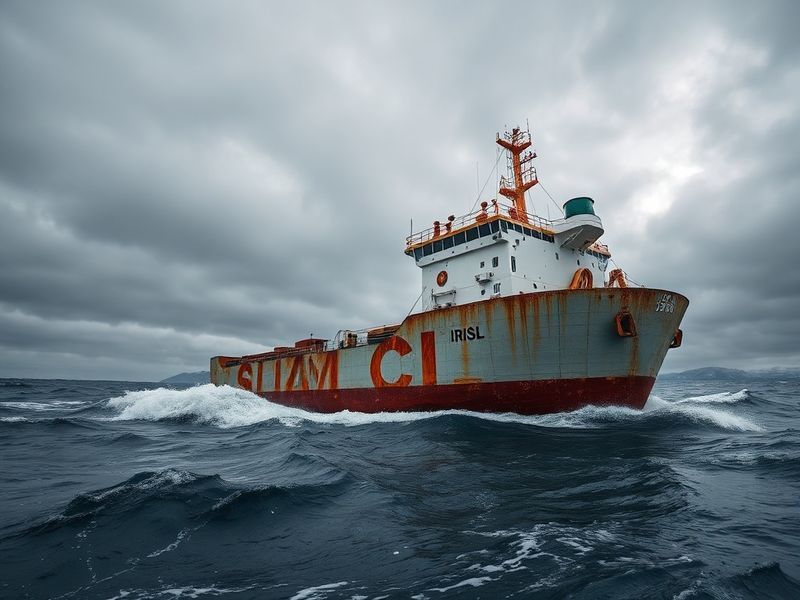
Iranian Ship Behshad: A Look at Its Global Impact and Risks
“`html
The Iranian Ship: Navigating Geopolitical Tides in Global Waters
The recent movements of an Iranian-flagged vessel have once again thrust maritime geopolitics into the spotlight. This particular ship, the Behshad, has become a focal point for discussions on regional security, international trade routes, and the delicate balance of power in the Persian Gulf and beyond. Its operations—often shrouded in secrecy—have raised eyebrows from analysts to policymakers, prompting a closer look at its role in the broader context of Middle Eastern and global maritime dynamics.
The Behshad, formerly known as the Amsterdam, is a 226-meter-long container ship that has been repurposed for intelligence-gathering and surveillance missions. Operated by Iran’s Islamic Revolutionary Guard Corps (IRGC), it has been deployed in the Red Sea, the Gulf of Aden, and the broader Indian Ocean region. Its presence has sparked debates about the militarization of civilian vessels and the implications for international shipping lanes, which are critical to global trade.
From Commercial Vessel to Strategic Asset
The transformation of the Behshad from a commercial ship to a military-adjacent asset underscores a growing trend in modern naval strategy. Iran has long relied on asymmetric tactics to counter the superior conventional forces of regional rivals and Western powers. By converting commercial vessels, Iran can project power without triggering direct confrontations that might escalate into full-scale conflict.
This strategy is not unique to Iran. Other nations, including China and Russia, have also explored the use of civilian ships for intelligence and military purposes. However, Iran’s approach is particularly notable for its integration into the IRGC’s broader doctrine of “forward defense.” The Behshad serves as a mobile platform for electronic warfare, signals intelligence (SIGINT), and even drone operations. Its ability to blend into commercial traffic makes it a particularly effective tool for monitoring and, if necessary, disrupting adversarial activities.
According to maritime analysts, the Behshad has been observed conducting surveillance on coalition naval forces, including those from the United States and its allies. Its operations often coincide with heightened tensions in the region, such as during the 2021 Israel-Hamas conflict or the ongoing Houthi attacks on shipping in the Red Sea. The ship’s dual-use nature complicates efforts by international bodies to regulate such activities, as it operates under the guise of civilian shipping while performing military functions.
A History of Maritime Tensions
The Persian Gulf and the Strait of Hormuz have long been flashpoints for geopolitical tensions. Approximately 20% of the world’s oil passes through these waters, making them a critical chokepoint for global energy supplies. Iran’s use of maritime assets like the Behshad is part of a broader strategy to assert control over these vital routes and deter external interference.
The history of maritime disputes in the region is marked by incidents such as the 2019 attacks on tankers in the Gulf of Oman, which the U.S. and its allies blamed on Iran. The Behshad’s deployment in 2021 further fueled concerns about Iran’s intentions, particularly as it began operating in close proximity to critical shipping lanes. The ship’s presence has led to increased patrols by naval forces from the U.S., UK, and other countries, raising the risk of unintended escalation.
Analysts point out that Iran’s maritime strategy is not solely about military posturing. It also serves as a means of economic leverage. By disrupting shipping or threatening to close the Strait of Hormuz, Iran can exert pressure on global oil markets and international policymakers. The Behshad, with its intelligence-gathering capabilities, enhances Iran’s ability to monitor and respond to threats in real time, further complicating the calculus for adversaries.
The Broader Implications for Global Shipping
The deployment of the Behshad has broader implications for the global shipping industry, which relies on the free flow of goods through international waters. The militarization of civilian vessels blurs the lines between commercial and military activities, creating new challenges for insurers, shipowners, and regulatory bodies.
One of the primary concerns is the potential for miscalculation or accidental confrontation. The Red Sea and the Persian Gulf are already high-risk areas due to piracy, Houthi attacks, and the presence of rival naval forces. The addition of intelligence-gathering ships like the Behshad increases the complexity of these waters, raising the likelihood of incidents that could escalate into larger conflicts.
Insurance premiums for ships operating in these regions have already begun to rise, reflecting the heightened risk environment. The maritime insurance industry is grappling with how to assess and mitigate these new threats, particularly as they relate to the use of civilian vessels for military purposes. Some experts have called for stricter regulations on the conversion of commercial ships for intelligence or military use, but enforcement remains a significant challenge.
The Role of Technology and Intelligence Gathering
The Behshad is equipped with advanced electronic warfare and SIGINT capabilities, allowing it to intercept communications, track vessels, and gather intelligence on military movements. This technology is not new, but its deployment on a civilian platform represents a shift in how naval powers leverage commercial assets for strategic purposes.
Iran’s use of such technology aligns with its broader doctrine of asymmetric warfare. By relying on unconventional methods, Iran can offset the technological and numerical advantages of its adversaries. The Behshad’s ability to operate undetected for long periods makes it a valuable asset in this regard, particularly in regions where Iran faces direct military challenges.
However, the use of civilian ships for intelligence gathering also presents risks. Civilian vessels are not typically designed to withstand military-grade cyberattacks or electronic warfare. There is a real possibility that such ships could become targets for adversarial forces, either through direct attacks or by disrupting their operations with cyber means. This raises questions about the long-term sustainability of Iran’s strategy and the potential for unintended consequences.
What’s Next for the Iranian Ship and Regional Stability?
The future of the Behshad and similar vessels will likely hinge on the evolving dynamics of the Middle East and global power structures. As tensions between Iran and its adversaries continue to simmer, the role of maritime assets in shaping these dynamics will only grow more prominent.
One possible outcome is an increase in international efforts to regulate the use of civilian ships for military purposes. The International Maritime Organization (IMO) and other bodies may seek to establish clearer guidelines for the conversion and operation of dual-use vessels. However, enforcement will remain a challenge, particularly given the lack of consensus among nations on how to address these issues.
Another potential development is the expansion of Iran’s maritime strategy to other regions. There have been reports of Iranian vessels operating in the Mediterranean and near the coast of Africa, suggesting that Tehran is looking to extend its reach. This could further complicate efforts to manage maritime security and could lead to new confrontations with regional and global powers.
The Behshad is more than just a ship—it is a symbol of the evolving nature of maritime conflict and the challenges of maintaining stability in critical waterways. Its operations highlight the need for innovative approaches to maritime security, as well as a renewed focus on diplomacy and conflict prevention in the world’s most vital shipping lanes.
Key Takeaways
- The Behshad is an Iranian-flagged ship repurposed for intelligence-gathering and surveillance, operated by the IRGC.
- Its operations reflect Iran’s broader strategy of asymmetric warfare and “forward defense.”
- The ship’s presence raises concerns about the militarization of civilian vessels and the potential for unintended escalation.
- Global shipping industries face increased risks and higher insurance premiums due to the heightened threat environment.
- The future of such vessels will depend on international regulations, regional dynamics, and the evolving nature of maritime conflict.