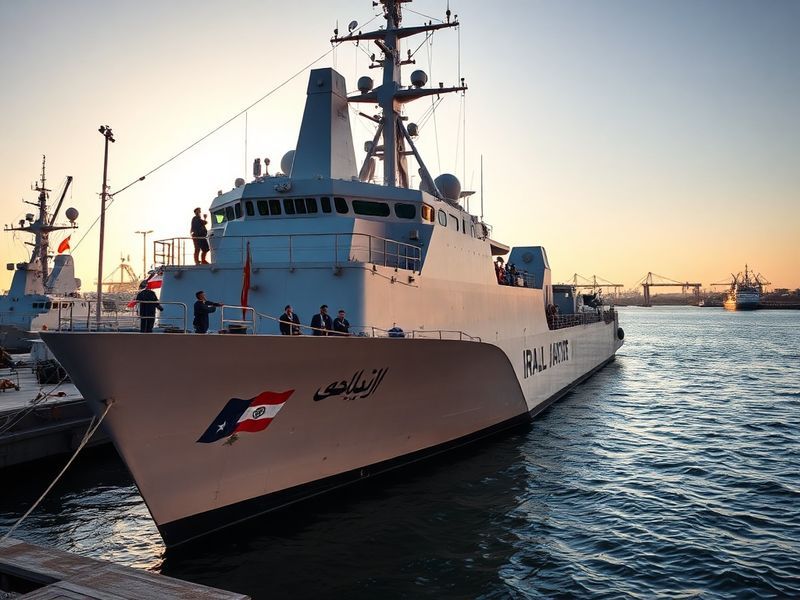
The recent movements of an Iranian-flagged vessel have drawn international attention, highlighting the complex interplay between maritime security and geopolitical strategy. This particular ship, identified as the MV Saviz, has become a focal point in discussions about Iran’s naval capabilities and its broader military posture in the region. The vessel’s prolonged presence in the Red Sea and its suspected role in supporting proxy forces have raised concerns among Western governments and regional allies.
Originally designed as a commercial cargo ship, the MV Saviz was reportedly repurposed for military use, equipped with surveillance systems and communication gear. Its deployment aligns with Iran’s strategy of maintaining a persistent naval presence outside its territorial waters, a tactic that allows Tehran to project influence without direct confrontation. The ship’s movements have been closely monitored by international observers, particularly as tensions in the Middle East continue to escalate.
Military Capabilities and Suspected Activities
The MV Saviz first entered the global spotlight in 2021 when it was targeted in a covert attack in the Red Sea. While Iran attributed the incident to an explosion caused by an accident, Western intelligence sources suggested it was a deliberate strike aimed at crippling the ship’s operational capacity. The vessel’s suspected activities include gathering intelligence, facilitating arms shipments to allied groups, and serving as a logistical hub for proxies in Yemen and other conflict zones.
Analysts believe the ship is equipped with advanced electronic warfare systems, allowing it to monitor maritime traffic and disrupt communications in the region. Its presence near critical shipping lanes, such as the Bab el-Mandeb Strait, underscores Iran’s ability to influence maritime security dynamics. The Red Sea has become a flashpoint for naval confrontations, with incidents involving drones, missiles, and sabotage operations becoming increasingly frequent.
According to a report by the News desk at Dave’s Locker, the MV Saviz’s operations reflect a broader pattern of asymmetric warfare employed by Iran. Unlike traditional naval fleets, these vessels operate in a gray zone, blending civilian and military functions to avoid direct attribution. This approach complicates efforts by international coalitions, such as the Combined Maritime Forces, to counter Iran’s maritime strategy.
Geopolitical Implications and Regional Responses
The MV Saviz’s operations have significant implications for regional stability, particularly for countries like Saudi Arabia and the United Arab Emirates. These nations have accused Iran of using civilian vessels to smuggle weapons to Houthi rebels in Yemen, a conflict that has drawn in multiple external actors. The ship’s suspected role in facilitating arms transfers has contributed to the perception of Iran as a destabilizing force in the Middle East.
In response, regional allies have strengthened their maritime security measures. The UAE, for instance, has increased patrols in the Arabian Gulf and partnered with international navies to monitor suspicious vessels. Meanwhile, Saudi Arabia has invested in advanced surveillance technologies to detect and interdict illicit shipments. These efforts aim to counter Iran’s asymmetric tactics while minimizing direct military engagement.
On the diplomatic front, the MV Saviz has become a bargaining chip in negotiations over Iran’s nuclear program. Western negotiators have linked the ship’s activities to broader concerns about Iran’s regional behavior, arguing that its maritime operations violate international norms. However, Iran has dismissed these claims, framing its naval presence as a legitimate exercise of sovereignty.
Legal and Ethical Considerations
The MV Saviz’s operations raise important questions about the legal framework governing maritime security. Under international law, commercial vessels are generally protected from attack unless they are deemed to be engaged in hostile acts. However, the repurposing of civilian ships for military purposes complicates this distinction, creating a legal gray area that adversaries can exploit.
Ethically, the use of civilian vessels for military purposes also poses challenges. By blending military and civilian functions, Iran may be attempting to shield its operations from direct retaliation. This tactic forces adversaries to weigh the risks of escalation against the potential benefits of targeting such vessels. Critics argue that this strategy undermines the principles of transparency and accountability in maritime security.
The MV Saviz’s case is not unique. Other countries, including Russia and China, have also repurposed civilian vessels for military use, blurring the lines between commercial and military activities. This trend highlights the need for updated international agreements that address the evolving nature of maritime warfare.
Future Outlook: What’s Next for the MV Saviz?
The future of the MV Saviz remains uncertain as geopolitical tensions continue to simmer in the Middle East. One possible scenario is that the ship will be withdrawn from the Red Sea, either as part of a confidence-building measure or in response to increased military pressure. Alternatively, Iran may double down on its maritime strategy, deploying additional vessels to reinforce its presence in the region.
For international observers, the MV Saviz serves as a reminder of the challenges posed by asymmetric warfare in maritime domains. Unlike traditional naval fleets, these vessels operate with plausible deniability, making them difficult to counter through conventional means. This underscores the need for innovative strategies that combine intelligence-sharing, technological innovation, and diplomatic engagement.
Regardless of the ship’s fate, its story is a microcosm of broader geopolitical dynamics in the Middle East. As Iran continues to assert its influence through unconventional means, the international community must adapt to these evolving threats. The MV Saviz may soon fade from the headlines, but its legacy will endure in the ongoing debate over maritime security and regional stability.
For more insights into global maritime security, explore our News section, where we cover the latest developments shaping the world’s oceans.