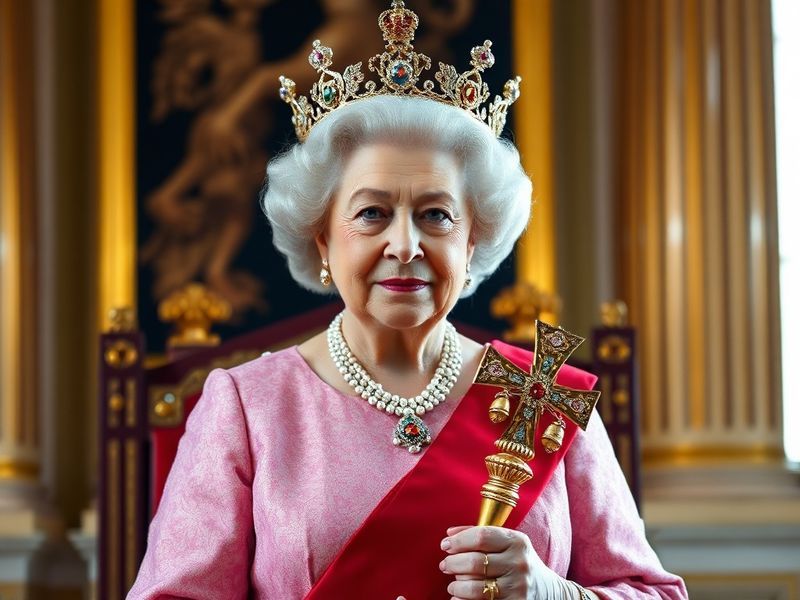
Queen Elizabeth II: How Her 70-Year Reign Shaped Britain
“`html
Queen Elizabeth II: A Reign That Defined Modern Britain
For seven decades, Queen Elizabeth II stood as the cornerstone of the British monarchy, her reign spanning pivotal moments in history while maintaining an enduring symbol of continuity. From post-war austerity to the digital age, her presence offered stability in an era of rapid change. Her death in September 2022 marked the end of an era, but the impact of her 70-year rule continues to shape the monarchy’s role in the 21st century.
The Early Years: From Princess to Heir
Born Elizabeth Alexandra Mary Windsor on April 21, 1926, she was the first child of the Duke and Duchess of York, who later became King George VI and Queen Elizabeth. Her childhood was marked by privilege but also by the upheavals of the Great Depression and World War II. As a young princess, she studied history, language, and constitutional law, preparing for a life she never expected to lead.
Her uncle, King Edward VIII, abdicated the throne in 1936 to marry Wallis Simpson, a twice-divorced American. This unexpected turn of events thrust Elizabeth’s father onto the throne as George VI, making her the heir presumptive at just 10 years old. The sudden shift forced her into the public eye long before she was ready, shaping her sense of duty early on.
Key Milestones in Her Early Life
- 1930: Birth of her sister, Princess Margaret, who would become her lifelong confidante.
- 1936: Her uncle’s abdication placed her father on the throne, making her the heir apparent.
- 1940: At 14, she delivered her first radio broadcast during World War II, addressing child evacuees.
- 1947: Married Prince Philip of Greece and Denmark, beginning a partnership that lasted 73 years.
The Coronation and the Modern Monarchy
Elizabeth II’s coronation on June 2, 1953, was a defining moment—not just for the monarchy, but for global television audiences. For the first time, a coronation was broadcast internationally, bringing the ceremony into living rooms across the world. Over 277 million viewers tuned in, cementing the monarchy’s place in the media age.
Her reign began in an era when the British Empire was unraveling. Decolonization accelerated in the 1950s and 1960s, reshaping the Commonwealth into a voluntary association of nations. Unlike her predecessors, Elizabeth II navigated this transition with diplomacy, maintaining ties with former colonies while adapting to their independence.
The monarchy itself underwent significant modernization during her reign. She oversaw the reduction of the royal household’s size, embraced technology (including the first royal website in 1997), and adapted to shifting public expectations. Her annual Christmas broadcasts, which began in 1957, became a tradition that connected her directly with the public in an increasingly secular age.
The Windsors: Scandals and Survival
No royal family is immune to controversy, and the Windsors faced their share during Elizabeth II’s reign. The 1990s, in particular, were a tumultuous decade. The fire at Windsor Castle in 1992—on the same day as a devastating earthquake in Pakistan—was a symbolic low point. The Queen responded by offering to pay income tax for the first time and opening Buckingham Palace to public tours to fund repairs.
Her children’s marriages also became tabloid fodder. The breakdown of Prince Charles and Diana Spencer’s marriage, followed by Diana’s tragic death in 1997, tested the monarchy’s public standing. Elizabeth II’s initial silence in the aftermath of Diana’s death drew criticism, but her eventual address to the nation helped restore some of the family’s tarnished image.
Yet, through it all, the Queen remained a steady figure. Her ability to weather personal and institutional crises without abdicating—unlike many European monarchs—reinforced the monarchy’s symbolic value. Even as public opinion polls fluctuated, her personal approval ratings remained remarkably high.
A Legacy Beyond the Crown
Elizabeth II’s death on September 8, 2022, at the age of 96, marked the end of a reign that saw 15 British prime ministers, from Winston Churchill to Liz Truss. Her longevity alone made her a historical constant, but her impact extended far beyond the ceremonial.
She became a unifying figure in times of national crisis, from the Falklands War in 1982 to the COVID-19 pandemic in 2020. Her message during lockdown—“We will meet again”—echoed through a nation grappling with isolation. In an era of political polarization, she remained a rare non-partisan symbol, respected across the political spectrum.
The monarchy she leaves behind is not the same institution it was in 1952. The Crown now operates under intense scrutiny, with debates about its cost, relevance, and colonial legacy ongoing. Yet, Elizabeth II’s personal discipline and sense of duty set a standard that her successors must navigate carefully.
Her greatest legacy may be the monarchy’s survival itself. In an age where institutions face erosion, the Windsors endured by adapting—without abandoning tradition. Whether through her annual Christmas messages or her quiet diplomacy with world leaders, she demonstrated that symbolism, when wielded with consistency, can hold immense power.
Five Lessons from Her Reign
- Adaptation without sacrifice: The monarchy evolved (e.g., television broadcasts, tax payments) without abandoning core traditions.
- Symbolism over policy: In an era of political upheaval, her role was to embody continuity, not ideology.
- Diplomacy in transition: She navigated decolonization with tact, maintaining Commonwealth ties without clinging to empire.
- Resilience in crisis: From personal scandals to national tragedies, she prioritized stability over reaction.
- Media savviness: She embraced new technologies (TV, internet) while maintaining a carefully curated public image.
The monarchy’s future remains uncertain, but Elizabeth II’s reign offers a masterclass in how tradition and modernity can coexist. For better or worse, she defined what it means to be a constitutional monarch in the modern world.
As the world moves forward, her legacy will be debated—her links to colonialism scrutinized, her personal choices questioned—but her place in history as a pillar of stability is undeniable. The crown she wore for 70 years was not just a piece of jewelry; it was a symbol of endurance in an era of relentless change.
For those interested in the intersection of tradition and modernity, explore how other institutions have evolved in our Culture section. For deeper analysis on leadership in times of crisis, visit our Analysis category.