The night sky has always been a canvas for human imagination, but few celestial events have captivated civilizations quite like the conjunction of Venus and the Moon. This rare alignment, where the brightest planet and our lunar satellite appear close together, has been interpreted as an omen, a symbol of divine power, and even a marker for agricultural cycles across different cultures.
While modern astronomy explains this phenomenon through orbital mechanics, its cultural and historical significance remains profound. From ancient Mesopotamia to modern-day astrology, the Venus-Moon conjunction has left an indelible mark on human tradition, art, and even scientific discovery.
The Astronomical Reality Behind the Spectacle
In purely scientific terms, a Venus-Moon conjunction occurs when both celestial bodies share the same right ascension or ecliptic longitude as seen from Earth. This alignment is not rare—it happens roughly once a month—but the visual impact varies depending on their positions.
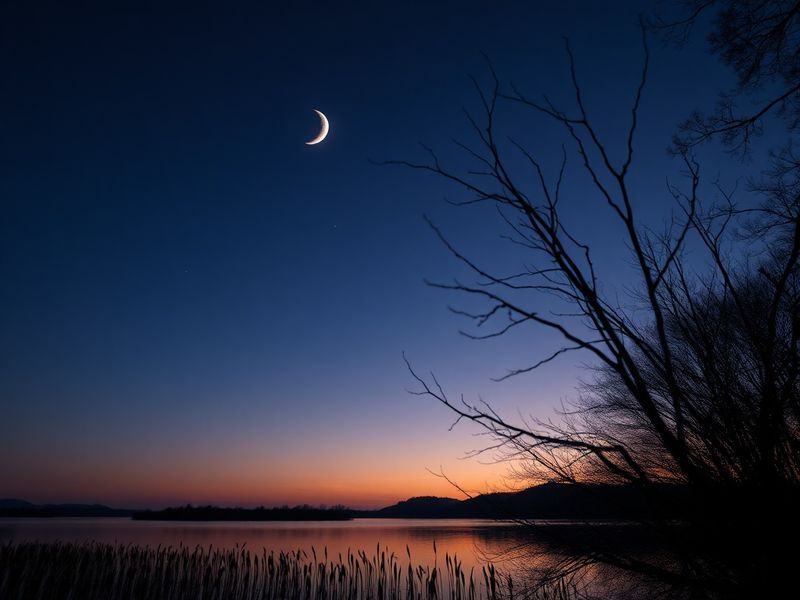
The brightness of Venus, often the third-brightest object in the sky after the Sun and Moon, makes these conjunctions particularly striking. When the crescent Moon appears near Venus, the contrast creates a stunning visual effect, especially in twilight hours. Observatories worldwide frequently document these events, offering both amateur stargazers and professional astronomers a chance to witness cosmic geometry in action.
NASA’s Jet Propulsion Laboratory maintains an extensive database of celestial events, including past and future Venus-Moon conjunctions. For those interested in tracking these occurrences, their Solar System Exploration page provides precise timings and visibility details for different locations.
A Global Tapestry of Myths and Meanings
Long before telescopes revealed the true nature of these alignments, ancient civilizations wove stories around the Venus-Moon conjunction. In Mesopotamian culture, the planet Venus was associated with the goddess Ishtar, while the Moon represented Sin, the lunar deity. Their convergence was seen as a moment of divine harmony, often interpreted as a favorable omen for rulers and empires.
In Hindu tradition, Venus (known as Shukra) governs knowledge, love, and prosperity. When paired with the Moon (Chandra), it was believed to amplify these qualities, making such conjunctions auspicious for rituals and decision-making. Temples across India still mark these celestial events with special ceremonies.
The Maya civilization, renowned for their astronomical precision, tracked Venus extensively. While their primary focus was on Venus as the morning and evening star, records suggest they also noted its interactions with the Moon. Some scholars believe these observations influenced their complex calendar systems, linking celestial events to agricultural and ceremonial cycles.
- Mesopotamia: Divine harmony between Ishtar (Venus) and Sin (Moon)
- Hinduism: Amplification of love and knowledge through Shukra (Venus) and Chandra (Moon)
- Maya Civilization: Possible influence on calendar systems and agricultural planning
- Ancient China: Symbol of imperial favor and cosmic balance
The Artistic and Literary Legacy
The visual allure of the Venus-Moon conjunction has inspired artists, poets, and musicians for centuries. Renaissance painters often depicted celestial alignments in religious and mythological works, using them as metaphors for divine intervention or celestial love stories. One notable example is the 15th-century fresco The Allegory of Music in the Palazzo Schifanoia, where Venus and the Moon appear together, symbolizing harmony and inspiration.
In literature, the conjunction frequently appears as a pivotal moment in fantastical or romantic narratives. Shakespeare’s A Midsummer Night’s Dream subtly references celestial alignments, while modern science fiction writers often use such events to mark turning points in galactic explorations or interdimensional travel.
Music, too, has been shaped by these cosmic pairings. Composer Gustav Holst’s The Planets suite includes a movement dedicated to Venus, “The Bringer of Peace,” which evokes the serene beauty of the planet’s glow. While not explicitly about the Moon, the piece captures the ethereal quality of celestial conjunctions that has fascinated musicians for generations.
Modern Observations and Cultural Revival
Today, the Venus-Moon conjunction remains a beloved event among amateur astronomers and social media enthusiasts. Platforms like Instagram and Twitter light up with photographs of these alignments, often accompanied by poetic captions or astrological interpretations. The phenomenon has also seen a resurgence in interest among younger generations, thanks to accessible astronomy apps and documentaries like The Universe on the History Channel.
Astrologers, too, continue to assign significance to these events. While mainstream astronomy dismisses many astrological claims, the cultural embrace of celestial symbolism persists. For some, the Venus-Moon conjunction represents a time of heightened intuition, romance, or creative inspiration. Others see it as a reminder of humanity’s enduring connection to the cosmos.
Educational initiatives, such as those promoted by Astronomy Magazine, encourage public engagement with these events. Workshops, stargazing parties, and online forums provide opportunities for people to learn about orbital mechanics while appreciating the aesthetic and cultural dimensions of such phenomena.
Why These Conjunctions Still Matter
In an age dominated by digital distractions, the Venus-Moon conjunction offers a moment of pause—a chance to look upward and reconnect with the vastness of the universe. It bridges the gap between ancient wonder and modern curiosity, reminding us that the same sky that guided early civilizations continues to inspire awe today.
For scientists, these events are opportunities to study atmospheric conditions, light pollution, and planetary visibility. For artists, they are a muse. For cultures worldwide, they are a thread connecting past and present. Whether viewed through a telescope, a smartphone lens, or the naked eye, the Venus-Moon conjunction endures as a testament to humanity’s enduring fascination with the cosmos.
As we continue to explore the mysteries of space, perhaps the greatest lesson lies not in the data or the myths, but in the shared experience of looking up and finding meaning in the light.