Venus Moon Conjunctions: How to See Earth’s Brightest Planet Pair with the Moon
“`html
Venus Moon: The Mysteries of Our Neighbor’s Twilight Sky
For centuries, the evening and morning skies have been graced by the presence of Venus, often called the “Morning Star” or “Evening Star” depending on its position relative to the Sun. Yet one of the most intriguing phenomena associated with Venus is its relationship with Earth’s Moon—a celestial dance that has fascinated astronomers, poets, and dreamers alike. While Venus and the Moon are distinct objects, their occasional alignments in the twilight sky create a visual spectacle that transcends mere observation, inviting deeper reflection on the mechanics of our solar system.
The term “Venus Moon” is not an official astronomical classification but rather a poetic and observational reference to the rare moments when the crescent Moon and Venus appear in close proximity in the sky. These conjunctions are fleeting yet spectacular, offering both casual stargazers and seasoned astronomers a chance to witness the beauty of orbital mechanics in real time. Understanding these events requires looking beyond the spectacle to the science that governs their occurrence.
The Science Behind Venus and the Moon’s Dance
Venus orbits the Sun inside Earth’s orbit, which means it never strays too far from the Sun in our sky. The Moon, meanwhile, orbits Earth and completes a full cycle roughly every 29.5 days. When the Moon is in its waxing or waning crescent phase, it often appears near Venus in the evening or morning twilight. This alignment is purely a line-of-sight phenomenon—an optical illusion where two unrelated celestial bodies appear close together from our vantage point on Earth.
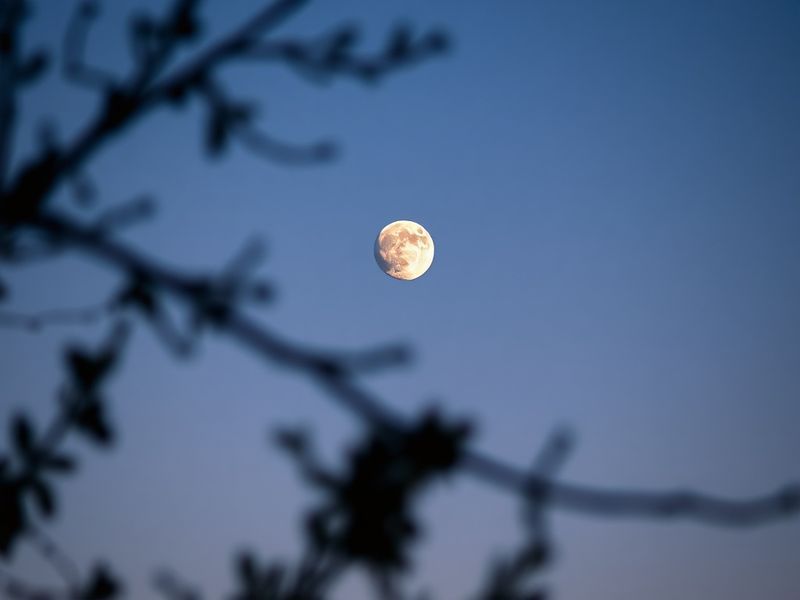
The gravitational interactions between Venus, the Moon, and Earth are negligible in terms of visible effects, but their combined presence in the sky has inspired countless myths and scientific inquiries. During these conjunctions, Venus often appears as a brilliant white point of light, while the Moon’s crescent adds a soft, silvery glow. The contrast between the two—one a planet, the other a satellite—highlights the diversity of objects within our solar system.
Observing these events requires timing and clear skies. Venus is the brightest planet visible from Earth, outshining even the brightest stars. When paired with a thin crescent Moon, the scene becomes one of the most photogenic in astronomy. Astrophotographers often capture these moments, creating images that blend science with art.
Historical and Cultural Significance
Long before telescopes revealed the true nature of Venus and the Moon, ancient civilizations marveled at their appearances. The Babylonians tracked Venus’s movements as early as 1600 BCE, associating it with the goddess Ishtar. Meanwhile, cultures worldwide integrated the Moon into their mythologies, from the Greek goddess Selene to the Chinese lunar deity Chang’e. The occasional pairing of these two luminaries in the sky was often interpreted as an omen or a divine message.
In Islamic tradition, the crescent Moon and Venus symbolize guidance and spirituality. The Ottoman Empire famously adopted the crescent Moon as a symbol, though its association with Venus is less direct. In Western art, depictions of the “Evening Star” near the Moon have appeared in paintings and literature, often symbolizing love, beauty, or transience. The 19th-century poet John Keats wrote of “Venus, the star of love and light,” evoking imagery that aligns with these celestial pairings.
Even today, the sight of Venus beside the Moon continues to inspire. Social media often lights up with amateur astronomers sharing their photos of these events, proving that the allure of the night sky remains undiminished in an era of digital distraction. For many, these moments serve as a reminder of humanity’s enduring connection to the cosmos.
How to Observe Venus Moon Conjunctions
Witnessing a Venus Moon conjunction is easier than many people think. Since Venus is so bright, it’s often visible even in light-polluted urban areas, provided the sky is clear. The best time to observe is during twilight, either just after sunset in the western sky or just before sunrise in the east, depending on whether Venus is in its “Evening Star” or “Morning Star” phase.
To maximize your chances, check astronomical calendars or apps like Stellarium or SkyView. These tools provide precise dates and times for conjunctions based on your location. For example, in 2023, Venus and the Moon appeared close together in early November, delighting skywatchers worldwide. Similar events occur roughly once a month, though the exact timing varies.
For those interested in photographing the event, a DSLR camera with a tripod and a telephoto lens (200mm or longer) works best. Even a smartphone with night mode can capture the scene, though the results may lack the detail of a dedicated camera. Experiment with exposure settings to balance the brightness of Venus and the subtle glow of the Moon’s crescent.
If you’re new to stargazing, consider joining a local astronomy club or visiting an observatory during a public viewing night. Many organizations host events specifically for conjunctions, offering telescopes and expert guidance. These gatherings provide an opportunity to learn more about Venus, the Moon, and other celestial phenomena while connecting with fellow enthusiasts.
Beyond the Spectacle: What These Events Teach Us
While Venus Moon conjunctions are visually stunning, they also serve as a gateway to understanding larger astronomical principles. Studying these events helps illustrate concepts like orbital resonance, celestial mechanics, and the scale of our solar system. For instance, the fact that Venus never appears too far from the Sun in our sky is a direct result of its orbit lying inside Earth’s. Similarly, the Moon’s phases are a consequence of its position relative to Earth and the Sun.
These conjunctions also highlight the importance of dark skies in preserving our connection to the natural world. In an era where light pollution obscures the stars for many urban dwellers, events like Venus Moon pairings encourage people to look up and rediscover the night sky. Organizations like the International Dark-Sky Association advocate for reducing light pollution, emphasizing how it impacts both astronomy and wildlife.
Moreover, the study of Venus itself offers valuable insights into planetary science. Venus is often called Earth’s “sister planet” due to its similar size and composition, yet its extreme greenhouse effect makes it a cautionary tale about climate change. Missions like NASA’s Magellan probe and the upcoming European Space Agency’s EnVision mission aim to unravel Venus’s mysteries, including its runaway greenhouse effect and volcanic activity. Observing Venus in the sky reminds us of the broader story of planetary evolution.
Ultimately, the fascination with Venus Moon conjunctions lies in their ability to blend beauty with science. They are a reminder that the universe is not just a distant abstraction but a dynamic, ever-changing canvas visible from our own backyards. Whether you’re an astronomer, a photographer, or simply someone who appreciates the wonders of the night sky, these moments offer a chance to pause and look upward.
As technology advances, our understanding of these events will deepen. Future telescopes and space missions may reveal even more about Venus and the Moon, but their occasional dance in the twilight sky will likely continue to captivate humanity for generations to come. For now, mark your calendars, set a reminder, and prepare to witness one of the solar system’s most elegant shows.