For over six decades, the James Bond franchise has remained one of cinema’s most enduring symbols of sophistication, danger, and escapism. With 25 official films produced by Eon Productions, the series has evolved from Cold War thrillers to globe-trotting adventures, consistently redefining itself while maintaining the core elements that define the character: a dashing secret agent, high-stakes missions, and a signature blend of style and suspense. Few franchises have matched Bond’s cultural staying power, cementing its place in film history.
The franchise’s longevity is a testament to its ability to adapt. While the early films—starring Sean Connery—established the template with gritty espionage and charismatic villainy, later entries expanded the scope, incorporating science fiction, action spectacle, and even self-aware humor. Each era has reflected the tastes and concerns of its time, whether through the gritty realism of Daniel Craig’s tenure or the over-the-top glamour of the Pierce Brosnan years. Bond’s ability to endure speaks to the universal appeal of its themes: the thrill of danger, the allure of luxury, and the triumph of wit over brute force.
The Evolution of 007: From Connery to Craig
The character of James Bond was born in Ian Fleming’s 1953 novel Casino Royale, but it was Sean Connery’s portrayal in Dr. No (1962) that immortalized the role on screen. Connery’s Bond was a perfect blend of charm, ruthlessness, and physicality—a man who could seduce a woman, outwit a villain, and still make it look effortless. His tenure, which included classics like From Russia with Love (1963) and Goldfinger (1964), set the standard for the franchise’s tone: stylish, suspenseful, and laced with dark humor.
The 1970s and 1980s saw Bond pass to Roger Moore, whose lighter, more comedic take on the character—seen in films like The Spy Who Loved Me (1977) and A View to a Kill (1985)—reflected the era’s shift toward spectacle. Moore’s Bond leaned into the absurd, with gadgets, one-liners, and over-the-top villains like Christopher Walken’s Max Zorin. While some purists lamented the departure from realism, Moore’s films remain beloved for their unapologetic fun.
Timothy Dalton briefly revived Bond’s darker edge in the late 1980s with The Living Daylights (1987) and Licence to Kill (1989), but it was Pierce Brosnan who brought a modern sheen to the role in the 1990s. Films like GoldenEye (1995) and The World Is Not Enough (1999) updated Bond for a post-Cold War world, blending high-tech action with a renewed sense of glamour. Brosnan’s Bond was a transitional figure, bridging the gap between tradition and the franchise’s next evolution.
Daniel Craig’s arrival in Casino Royale (2006) marked a seismic shift. By grounding Bond in a grittier, more grounded reality—complete with emotional vulnerability and brutal fight scenes—Craig redefined the character for a new generation. His tenure, which concluded with No Time to Die (2021), delivered some of the franchise’s most critically acclaimed entries, proving that Bond could thrive without the traditional gadgets or quips. Craig’s Bond was a man haunted by loss, duty, and the weight of his own legend.
The Formula That Defines Bond
The James Bond formula is deceptively simple: a charismatic hero, a globe-trotting adventure, a seductive femme fatale, and a villain with a grandiose scheme. Yet within this framework lies endless variation. The franchise’s enduring appeal lies in its balance of consistency and innovation. Every film follows a familiar structure—Bond arrives in a new location, seduces a woman, thwarts a villain’s plan, and escapes in a high-speed finale—yet the execution changes with each entry.
One of the franchise’s most consistent elements is its villains. From iconic antagonists like Goldfinger (1964) and Blofeld (seen across multiple films) to more nuanced foes like Silva in Skyfall (2012), Bond’s adversaries are often as memorable as the hero himself. These villains are frequently characterized by their eccentricity, wealth, and larger-than-life ambitions, whether it’s stealing a nuclear submarine or unleashing a deadly virus. Their plans often hinge on Bond’s failure, making their defeat all the more satisfying.
The Bond girls—ranging from allies to antagonists—have also played a crucial role in the franchise’s mythology. Characters like Honey Ryder in Dr. No (1962) and Vesper Lynd in Casino Royale (2006) challenge and complement Bond’s mission. While some have criticized the franchise’s treatment of women as sexualized objects, later films like Skyfall and Spectre (2015) introduced more complex female characters, such as M and Madeleine Swann, who drive the narrative forward.
Another defining feature of Bond films is their iconic set pieces. From the bobsled chase in Goldfinger to the crane fight in Skyfall, these sequences are often the highlight of each film. They showcase Bond’s resourcefulness, the franchise’s commitment to practical effects, and a sense of spectacle that few other series can match. These moments are carefully choreographed to balance thrills with style, ensuring they leave a lasting impression.
Bond’s Signature Elements: Gadgets, Cars, and Music
No discussion of Bond would be complete without mentioning the franchise’s most iconic trademarks. Q Branch, Bond’s quartermaster, has supplied him with an arsenal of high-tech gadgets over the years, from exploding pens to invisible cars. While some entries—particularly Moore’s era—leaned heavily into gadgetry, later films like Casino Royale and Quantum of Solace (2008) minimized them in favor of realism. Still, the gadgets remain a beloved part of the Bond mystique.
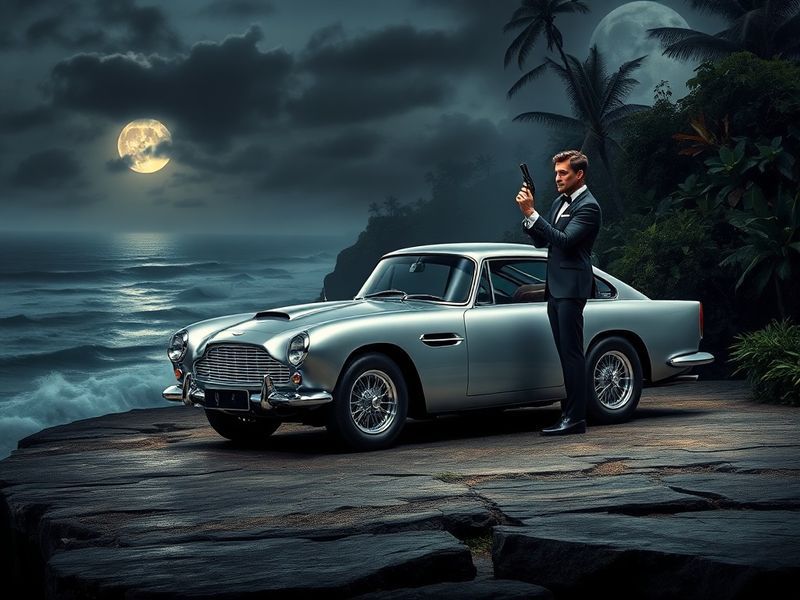
Bond’s cars are equally legendary. The Aston Martin DB5, first seen in Goldfinger, is perhaps the most famous, with its machine guns, ejector seat, and bulletproof shield. Other notable vehicles include the Lotus Esprit submarine car from The Spy Who Loved Me and the BMW Z8 from The World Is Not Enough. These cars are more than just transportation; they’re symbols of Bond’s status and ingenuity.
Music has also played a pivotal role in the franchise’s identity. The theme song, performed by artists ranging from Shirley Bassey to Adele, has become as iconic as Bond himself. Bassey’s Goldfinger theme is one of the most recognizable in cinema history, while Adele’s Skyfall (2012) won an Academy Award. The scores, composed by legends like John Barry and Thomas Newman, enhance the films’ emotional and suspenseful moments, making the music an inseparable part of the Bond experience.
Bond’s Cultural Impact and Legacy
The influence of James Bond extends far beyond the silver screen. The character has shaped fashion, inspiring everything from tailored suits to the tuxedo’s status as a symbol of sophistication. Brands like Omega (whose watches Bond wears) and Tom Ford (which outfitted Craig’s Bond) have seen sales surge thanks to their association with 007. Even the phrase “shaken, not stirred” has entered the cultural lexicon, illustrating Bond’s linguistic footprint.
Bond has also been a barometer for changing attitudes toward masculinity, espionage, and geopolitics. Early films reflected Cold War anxieties, while later entries grappled with themes like terrorism, cyber warfare, and environmental destruction. The franchise’s ability to tackle these issues—albeit often in a stylized way—has kept it relevant across generations. For example, Skyfall explored themes of aging and legacy, while No Time to Die delved into Bond’s mortality and the cost of his lifestyle.
The franchise’s impact on popular culture is undeniable. Bond has inspired countless parodies, homages, and tributes, from Austin Powers to Deadpool. He has also spawned a vast array of merchandise, from action figures to video games, cementing his status as a global icon. The Bond phenomenon is not just about films; it’s a multimedia empire that continues to grow.
Where Does Bond Go From Here?
With Daniel Craig’s exit from the role, the future of Bond remains a topic of intense speculation. The search for the next 007 has been closely watched, with names like Idris Elba, Tom Hardy, and Aaron Taylor-Johnson frequently mentioned. Whoever takes on the role will face the challenge of living up to Craig’s reinvention while carving out their own identity for the character.
The franchise is also navigating a rapidly changing entertainment landscape. With streaming platforms dominating the market, Bond’s traditional theatrical releases may need to adapt. The success of No Time to Die, which grossed over $770 million worldwide despite the pandemic, suggests that audiences still crave the Bond experience in theaters. However, future films may experiment with hybrid release models or shorter windows between theatrical and streaming.
Another question looming over the franchise is its relevance in an era where espionage is increasingly digital and less glamorous. Can Bond thrive in a world of hackers and drone strikes, or will he need to evolve further to stay compelling? The answer may lie in embracing new storytelling techniques, such as incorporating more diverse perspectives or exploring the moral complexities of modern espionage.
Regardless of how Bond evolves, one thing is certain: the franchise’s legacy is secure. From its humble beginnings in Fleming’s novels to its current status as a global phenomenon, James Bond has proven to be more than just a