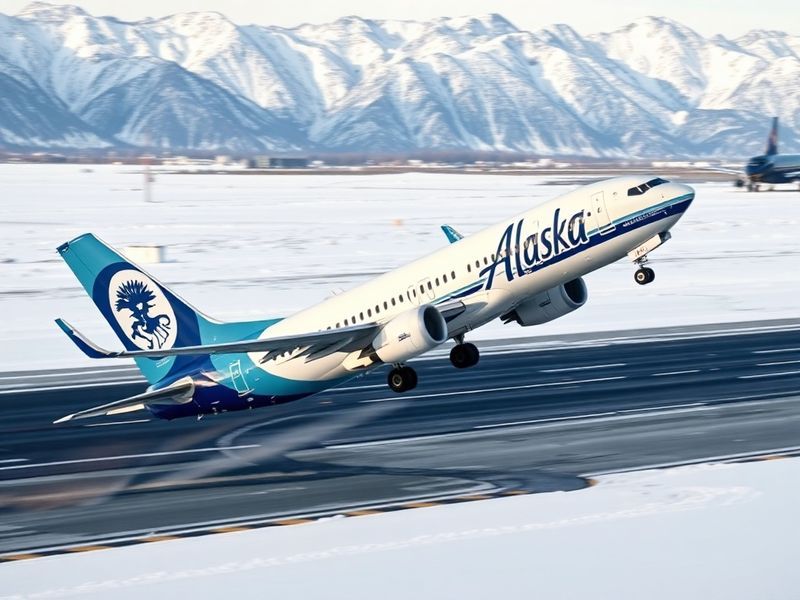
Alaska Airlines: History, Service, and Future Plans Explained
“`html
Alaska Airlines: A Legacy of Innovation and Regional Leadership
Alaska Airlines has long stood as a symbol of reliability in the Pacific Northwest and beyond. Founded in 1932 as McGee Airways, the airline began with a single three-passenger, single-engine aircraft. Over the decades, it evolved into a major U.S. carrier known for its customer service, operational efficiency, and commitment to sustainability. Today, Alaska Airlines operates a fleet of over 300 aircraft, serving more than 115 destinations across the United States, Canada, Mexico, and Costa Rica.
The airline’s rise from a small Alaskan bush carrier to a respected national airline reflects strategic growth and adaptability. It merged with several regional carriers, including Horizon Air and Virgin America, expanding its network and modernizing its fleet. Alaska Airlines is also recognized for pioneering the use of satellite-based navigation, which improved flight safety and efficiency decades before GPS became standard in aviation.
The Culture of Customer Service
Customer experience remains at the heart of Alaska Airlines’ identity. The airline has consistently ranked at the top of industry surveys for on-time performance and customer satisfaction. Its Mileage Plan loyalty program is frequently praised for its flexibility and value, offering members the ability to redeem rewards across multiple airline partners, including American Airlines, British Airways, and Qantas.
In 2019, Alaska Airlines introduced a new cabin experience across its fleet, featuring updated interiors, larger overhead bins, and enhanced Wi-Fi connectivity. This refresh was part of a broader effort to modernize the passenger experience, especially on longer domestic routes. The airline also emphasizes employee engagement, fostering a culture where staff are empowered to resolve customer issues on the spot—often with small gestures like handwritten notes or complementary snacks.
Alaska Airlines’ commitment to hospitality extends to its community initiatives. The airline partners with local organizations across its network, supporting food banks, disaster relief efforts, and educational programs. During the COVID-19 pandemic, the airline pivoted to transport medical supplies and repatriate stranded travelers, reinforcing its role as a responsible corporate citizen.
Operational Excellence and Fleet Modernization
One of Alaska Airlines’ defining strengths is its operational reliability. In 2023, the airline achieved the highest on-time performance among U.S. carriers for the second consecutive year, according to the U.S. Department of Transportation. This consistency is attributed to a combination of disciplined scheduling, advanced maintenance practices, and a younger, more fuel-efficient fleet.
The airline has aggressively phased out older aircraft in favor of Boeing 737 MAX models, which offer up to 20% better fuel efficiency than their predecessors. As of 2024, Alaska Airlines operates one of the youngest fleets in the U.S., with an average aircraft age of just 8.5 years. This modernization not only reduces operating costs but also aligns with the airline’s sustainability goals.
In 2021, Alaska Airlines became the first U.S. airline to commit to net-zero carbon emissions by 2040. To achieve this, the company is investing in sustainable aviation fuels (SAF), electric ground equipment, and carbon offset programs. The airline has partnered with biofuel producers to power select flights with SAF, reducing lifecycle emissions by up to 80%. These efforts position Alaska Airlines as a leader in environmental stewardship within the aviation industry.
Challenges and Strategic Responses
Like all airlines, Alaska Airlines has faced significant challenges in recent years. The COVID-19 pandemic led to a 60% drop in passenger traffic in 2020, forcing the airline to furlough employees and seek government aid. Recovery has been steady but uneven, with leisure travel rebounding faster than business travel. The airline has responded by adjusting its route network, focusing on high-demand leisure destinations in Hawaii, Mexico, and the Caribbean.
Labor relations have also been a point of focus. In 2022, the airline reached a tentative agreement with its flight attendants after years of negotiations, averting a potential strike. The contract included wage increases and improved scheduling flexibility, reflecting the airline’s commitment to fair labor practices. Maintaining positive relationships with its unions remains critical to operational stability.
Competition in the Pacific Northwest is another ongoing challenge. Delta Air Lines and Southwest Airlines have expanded their presence in Seattle, where Alaska Airlines holds a dominant 50% market share. To counter this, Alaska has strengthened its partnership with American Airlines, offering expanded codeshare agreements and integrated loyalty benefits. This collaboration allows passengers to book seamless connections across both airlines’ networks.
Innovation and the Future
Looking ahead, Alaska Airlines is investing in technology and innovation to enhance both the passenger experience and operational efficiency. The airline is testing biometric check-in systems at select airports, allowing travelers to board using facial recognition instead of boarding passes. It is also exploring the use of artificial intelligence to optimize fuel consumption and route planning.
The airline’s partnership with Boeing to develop the 737-10, the largest variant of the MAX family, underscores its long-term commitment to single-aisle aircraft. The 737-10 will provide additional capacity for domestic routes, supporting growth in Alaska’s core markets. Delivery of these aircraft is expected to begin in 2025.
Alaska Airlines also remains focused on expanding its presence in underserved markets. In 2023, it launched new routes to Boise, Idaho, and Spokane, Washington, strengthening its network in the Pacific Northwest. Internationally, the airline is eyeing opportunities in Central America and potentially Asia, where demand for leisure travel continues to grow.
Key Takeaways
- Legacy and Growth: From a small Alaskan bush carrier to a national airline, Alaska Airlines has grown through strategic mergers and fleet modernization.
- Customer-Centric Approach: High customer satisfaction scores and a flexible loyalty program reinforce the airline’s reputation for service.
- Sustainability Leadership: Alaska Airlines is a pioneer in sustainable aviation fuels and has committed to net-zero carbon emissions by 2040.
- Operational Resilience: Despite challenges like the pandemic and labor disputes, the airline has maintained strong on-time performance and financial stability.
As Alaska Airlines continues to evolve, it balances tradition with innovation. Its deep ties to the Pacific Northwest, commitment to environmental responsibility, and focus on customer service set it apart in a highly competitive industry. With a modern fleet and a clear strategic vision, the airline is well-positioned for the future.
For travelers seeking a reliable and customer-focused airline, Alaska Airlines remains a top choice—whether flying across the state of Alaska or across the country.
Explore more about airline partnerships and travel trends on Dave’s Locker Travel section.