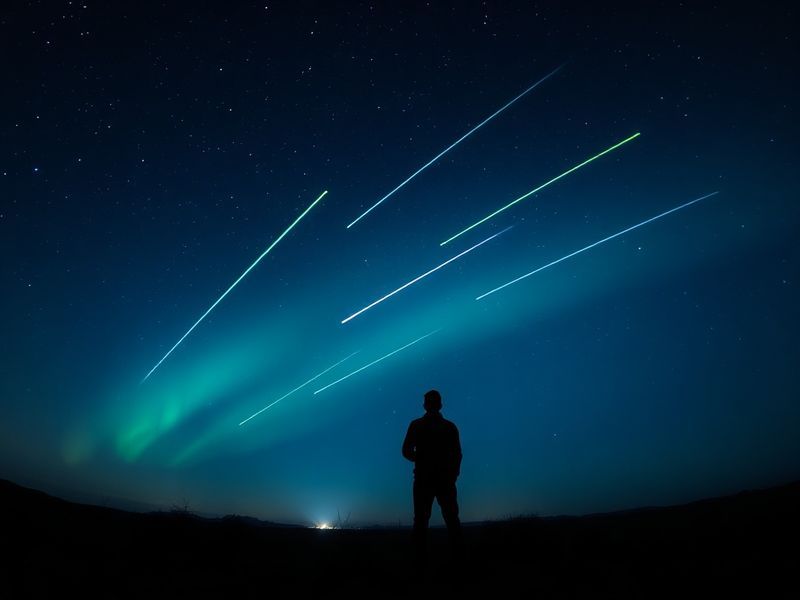
The Lyrids meteor shower, an annual celestial event, offers skywatchers around the world a chance to witness one of nature’s most dazzling displays. Visible each April, this meteor shower has been observed for over 2,700 years, making it one of the oldest known meteor showers in recorded history. Unlike more modern phenomena that capture fleeting attention, the Lyrids have endured as a consistent spectacle, drawing cultures from ancient China to modern-day stargazers into its orbit.
The Lyrids peak around April 22 each year, though activity can be seen in the nights leading up to and following the peak. During this time, observers may witness anywhere from 10 to 20 meteors per hour under ideal conditions. While the Lyrids are not as intense as the Perseids or Geminids, their occasional bright fireballs and historical significance set them apart as a must-see event for both amateur astronomers and casual viewers.
The Origins of the Lyrids: Tracing a Comet’s Legacy
The Lyrids originate from the comet C/1861 G1 Thatcher, a long-period comet that orbits the sun once every 415 years. Discovered in 1861 by amateur astronomer A.E. Thatcher, this comet leaves behind a trail of dust and debris as it travels through the solar system. When Earth passes through this debris field each April, the particles burn up in our atmosphere, creating the streaks of light we recognize as meteors.
Unlike some meteor showers tied to comets with shorter orbital periods, the Lyrids’ parent comet takes centuries to complete its journey. This rarity adds to the shower’s mystique, as each appearance of the Lyrids is a fleeting encounter with a visitor from the outer solar system. The comet’s last close approach to Earth was in 1861, and it won’t return until the year 2276, making the annual Lyrids meteor shower a unique opportunity to connect with a distant cosmic traveler.
A Brief History of the Lyrids in Human Culture
The Lyrids have been documented across civilizations, often woven into myths and cultural traditions. One of the earliest recorded observations comes from ancient China in 687 BCE, where historians noted “stars fell like rain” during the shower’s peak. This poetic description reflects how early societies interpreted meteor showers as omens or celestial messages.
In medieval Europe, the Lyrids were sometimes associated with religious festivals. The timing of the shower’s peak in mid-April often coincided with Easter celebrations, leading some to link the two events. This connection between celestial events and religious observances highlights how humans have long sought meaning in the patterns of the night sky.
Even today, the Lyrids continue to inspire awe. In Japan, the shower is sometimes called the “April fireworks,” while in the United States, astronomy clubs host public viewing events to share the experience with communities. The global reach of the Lyrids underscores humanity’s enduring fascination with the cosmos and our quest to understand the universe.
How to Observe the Lyrids: Tips for the Best Viewing Experience
Watching the Lyrids meteor shower requires minimal equipment—just a clear sky and a bit of patience. However, a few key strategies can enhance the experience. Here’s how to make the most of this annual event:
- Timing is everything: The Lyrids peak around April 22, but the best viewing window is typically between midnight and dawn. This is when the radiant point (the area of the sky where meteors appear to originate) is highest in the sky.
- Find a dark sky: Light pollution from cities can significantly reduce visibility. Head to a rural area or a designated dark-sky park for the best results.
- Let your eyes adjust: Avoid looking at bright screens or lights for at least 20 minutes before observing. This allows your eyes to adapt to the darkness, making fainter meteors more visible.
- Dress for the occasion: April nights can be chilly, especially in northern latitudes. Bring blankets, warm clothing, and perhaps a thermos of hot cocoa to stay comfortable.
- Be patient: Meteor showers are unpredictable. While the Lyrids average 10-20 meteors per hour, there can be lulls followed by sudden bursts of activity.
For those unable to travel to a dark-sky location, many astronomy organizations host live streams of the Lyrids. These virtual viewing parties allow enthusiasts to share the experience in real time, fostering a sense of global connection through the shared wonder of the night sky.
The Science Behind the Spectacle: What Makes the Lyrids Unique
The Lyrids are classified as a medium-strength meteor shower, but their occasional outbursts make them particularly intriguing for scientists. Unlike consistent showers like the Perseids, the Lyrids can produce sudden increases in activity, with rates occasionally exceeding 100 meteors per hour. These outbursts are thought to be caused by denser clumps of debris left behind by comet Thatcher during its past orbits.
Another distinguishing feature of the Lyrids is the brightness of their meteors. While most meteors burn up at altitudes between 50 and 70 miles, the Lyrids occasionally produce fireballs—meteors as bright as Venus or even the moon. These brilliant streaks are caused by larger particles from the comet’s debris trail, which create more intense ionization as they enter Earth’s atmosphere.
Researchers study the Lyrids to better understand the structure of comet Thatcher’s debris trail and how it evolves over time. By analyzing the meteors’ trajectories, speeds, and compositions, scientists can glean insights into the comet’s history and the dynamics of our solar system. The Lyrids serve as a reminder that even fleeting cosmic events can yield valuable scientific data.
Photographing the Lyrids: Capturing the Magic
For those with a passion for astrophotography, the Lyrids offer a rewarding challenge. Capturing meteors on camera requires patience, the right equipment, and a bit of luck. Here are some tips to help you get started:
- Use a tripod: A sturdy tripod is essential for long-exposure shots. Even slight movements can blur the faint trails of meteors.
- Choose the right lens: A wide-angle lens (14-24mm) allows you to capture a broad section of the sky, increasing your chances of catching a meteor.
- Set a high ISO: Start with an ISO of 1600-3200 to capture faint meteors. Adjust based on your camera’s performance and the level of light pollution.
- Use a fast aperture: A lens with an aperture of f/2.8 or wider will let in more light, helping you capture the subtle details of meteor trails.
- Take multiple exposures: Set your camera to take continuous shots with a 20-30 second exposure time. This increases your chances of capturing a meteor during the exposure.
- Edit carefully: Stacking multiple images can enhance the visibility of faint meteors, but be mindful of noise and artifacts introduced by long exposures.
Many photographers also incorporate foreground elements, such as landscapes or silhouettes of trees, to add depth and context to their images. The result is a stunning blend of natural beauty and cosmic wonder, a testament to the enduring allure of the Lyrids.
A Global Phenomenon: How Different Cultures Celebrate the Lyrids
The Lyrids meteor shower is not just an astronomical event; it’s a cultural touchstone that has inspired traditions, stories, and rituals across the globe. From ancient stargazing practices to modern-day festivals, the Lyrids have left an indelible mark on human history.
In Greece, the Lyrids are sometimes linked to the myth of Orpheus, the legendary musician who charmed the gods with his lyre. According to some interpretations, the meteors represent the scattered notes of Orpheus’s lyre, a celestial echo of his earthly music. This mythological connection adds a layer of poetic beauty to the shower, transforming it from a mere natural event into a story of artistry and loss.
In Native American traditions, the Lyrids are often associated with renewal and transformation. Some tribes view the meteors as spirits ascending to the heavens, carrying messages between the earthly and spiritual realms. These interpretations reflect a deep reverence for the natural world and its cycles, a theme that resonates with the Lyrids’ annual return.
In modern times, communities around the world have embraced the Lyrids as an opportunity for celebration. In Chile, the annual “Fiesta de las Estrellas” (Festival of the Stars) coincides with the Lyrids’ peak, featuring music, food, and stargazing events. Meanwhile, in the United Kingdom, astronomy clubs host public viewing parties in some of the country’s darkest sky regions, such as the Isle of Skye and Northumberland National Park.
The Lyrids also hold significance in contemporary art and literature. Poets and writers have long drawn inspiration from meteor showers, using them as metaphors for fleeting beauty, transience, and the mysteries of the universe. The Lyrids, with their ancient lineage and occasional brilliance, serve as a perfect muse for exploring humanity’s relationship with the cosmos.
Conclusion: A Timeless Connection to the Cosmos
The Lyrids meteor shower is more than just a celestial event—it’s a bridge between past and present, science and mythology, and cultures across the globe. For millennia, humanity has looked to the night sky and found meaning in its patterns, whether as omens, stories, or scientific puzzles. The Lyrids, with their long history and occasional surprises, embody this timeless connection.
As we prepare to witness the Lyrids each April, we are participating in a tradition that spans generations. Whether you’re an amateur astronomer tracking meteors, a photographer capturing their fleeting beauty, or simply someone who pauses to gaze at the stars, the Lyrids offer a moment of reflection and wonder. In a world that often feels fast-paced and