Trump’s Relationship with CNBC: A Window into Media Power and Political Messaging
Few figures have reshaped the intersection of politics and media quite like Donald Trump. His presidency and subsequent political career have been marked by a uniquely combative yet symbiotic relationship with major financial news networks, particularly CNBC. This dynamic is not just a matter of political strategy; it reflects broader shifts in how leaders communicate with global audiences in an era of fragmented media ecosystems.
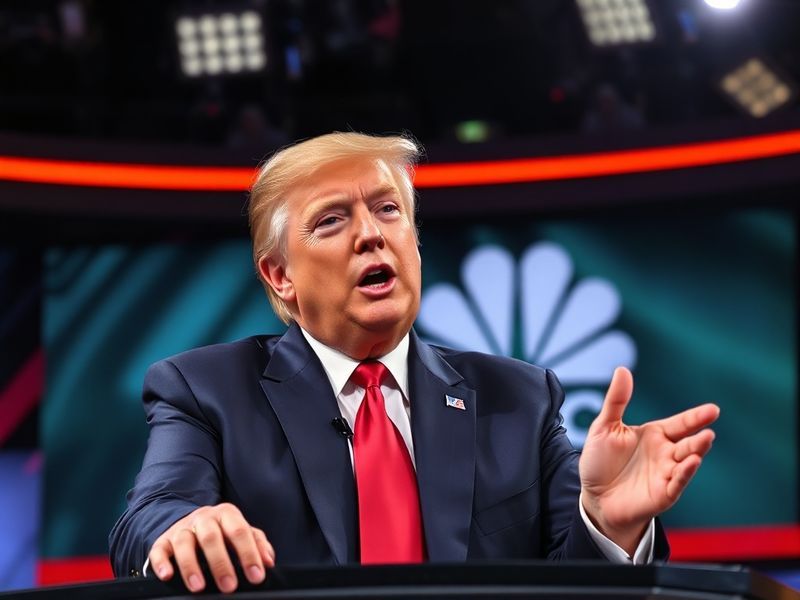
The former U.S. president’s appearances on CNBC—whether in interviews, town halls, or paid segments—have consistently drawn significant attention. These interactions often transcend traditional news coverage, blending policy discussions with personal branding and media spectacle. For CNBC, hosting Trump has meant elevated ratings and global reach, especially during key election cycles and policy debates. Yet, the network’s role in amplifying his voice has also sparked debate about journalistic balance, corporate incentives, and the evolving nature of political communication.
The Evolution of Trump’s Media Strategy: From Cable to Digital
Trump’s media strategy has evolved dramatically since the early days of his 2016 campaign. Initially relying on cable news channels like Fox News and CNN for exposure, he quickly recognized the value of reaching audiences beyond traditional conservative media. CNBC, with its focus on business and economic news, became an unexpected but crucial platform for him to frame policy discussions in terms of financial impact and American competitiveness.
His appearances on CNBC were often structured around economic themes—tax cuts, deregulation, trade wars—topics that allowed him to present himself not just as a political figure, but as a dealmaker and businessman. This approach resonated particularly with CNBC’s global audience, which includes investors, policymakers, and financial professionals who wield influence far beyond U.S. borders.
By 2020 and beyond, Trump’s media strategy expanded further into digital and alternative platforms. Yet, his presence on CNBC remained a key component of his outreach, demonstrating how legacy business media still commands authority in shaping economic narratives worldwide.
CNBC’s Dual Role: Newsroom or Platform?
CNBC occupies a unique position in the media landscape. As a 24-hour business news network, it is expected to provide analytical, fact-based reporting on markets and economics. However, when high-profile political figures like Trump appear, the line between journalism and platform blurs. The network’s decision to host Trump—often for extended segments—has led to criticism from some quarters about whether it prioritizes ratings and engagement over editorial neutrality.
During his presidency, Trump frequently used CNBC to bypass traditional press conferences and deliver messages directly to investors and business leaders. This strategy aligned with his broader approach to media, which favored unfiltered access over traditional gatekeeping. For CNBC, the trade-off was clear: hosting Trump meant increased viewership and digital engagement, but also drew accusations of normalizing inflammatory rhetoric under the guise of economic commentary.
Analysts have noted that CNBC’s coverage of Trump often emphasized market reactions to his statements—such as tweets about tariffs or Federal Reserve policy—rather than deeper scrutiny of policy impacts. This focus reinforced the network’s identity as a financial barometer while raising questions about whether business media should engage more critically with political figures whose words move global markets.
The Global Impact: How Trump on CNBC Shapes International Perception
Trump’s appearances on CNBC were not confined to American audiences. With a global viewership of over 400 million households across 180 countries, CNBC played a pivotal role in shaping international perceptions of his policies. Foreign governments, investors, and diplomats closely monitored his interviews, often interpreting them as signals of U.S. policy direction.
For example, during tense trade negotiations with China, Trump’s CNBC interviews were scrutinized for hints about tariff timelines or negotiation stances. Similarly, his remarks on monetary policy or energy regulation had ripple effects on global markets, from European equities to Asian commodity prices.
This global reach also meant that Trump’s messaging on CNBC was carefully crafted for international audiences. He frequently framed U.S. economic policies as beneficial not just to Americans, but to global partners, positioning himself as a champion of free markets—despite his protectionist rhetoric. While this strategy helped maintain a veneer of consistency, it also highlighted the complex role of financial media in mediating political narratives across cultures.
Lessons for the Future: Media, Power, and Accountability
Trump’s relationship with CNBC offers several lessons about the evolving dynamics between politics, media, and power. First, it underscores how traditional business media retain significant influence in shaping economic narratives, even in an era dominated by social platforms. Second, it raises important questions about journalistic responsibility when hosting figures whose statements can move markets and influence geopolitics.
As media organizations navigate the challenges of the 21st century—balancing audience growth, editorial integrity, and corporate interests—Trump’s CNBC appearances serve as a case study. They show how a single figure can leverage media platforms to amplify their message, while also exposing the tensions between engagement and accountability.
Looking ahead, networks like CNBC may need to rethink their editorial strategies when dealing with political figures who blur the line between policy and performance. Whether through stricter interview protocols, fact-checking integration, or clearer distinctions between news and commentary, the goal should be to preserve credibility without sacrificing relevance.
A Closer Look at Key Moments
Several Trump-CNBC interactions have stood out over the years, each revealing different aspects of their relationship:
- 2017: Post-Election Economic Outlook – Trump’s first major CNBC interview after taking office focused on tax reform and deregulation, setting the tone for his economic agenda.
- 2019: Trade War Rhetoric – His warnings about China and threats of tariffs dominated segments, influencing global supply chain discussions.
- 2020: Pandemic Pressures – Trump’s interviews during COVID-19 often centered on economic recovery, drawing both support and criticism for his policy framing.
- 2024: Campaign Messaging – As he returned to the campaign trail, his CNBC appearances became more overtly political, blending economic promises with partisan appeals.
These moments illustrate how Trump used CNBC not just as a venue for interviews, but as a stage to reinforce his brand and policy priorities—often with measurable impact on markets and public discourse.
Conclusion: Beyond the Soundbites
The Trump-CNBC dynamic is more than a series of viral moments or ratings spikes. It reflects deeper transformations in how power is mediated, consumed, and contested in the 21st century. For journalists, it poses a challenge: to cover figures who thrive on spectacle without becoming complicit in their narratives. For audiences, it demands a more critical lens—one that questions not just what is said, but why and by whom.
As political communication continues to evolve, the lessons from Trump’s relationship with CNBC will remain relevant. They remind us that in a globalized media landscape, the line between news and performance is increasingly fluid—and that those who navigate it must do so with care.