NFL Draft Mock Drafts: How Scouts Shape Future Champions
“`html
NFL Draft Mock Drafts: How Scouts Shape Future Champions
Every spring, NFL teams prepare for one of the most consequential events of the year: the NFL Draft. While the actual draft lasts just three days, the preparation begins months earlier. Among the most scrutinized tools in this process are NFL draft mock drafts, which offer fans, analysts, and even teams a glimpse into how the first round might unfold.
These mock drafts blend statistical analysis, player evaluations, and team needs into a single projection. They’re more than just speculation—they’re a critical part of draft strategy. For fans, they’re a way to engage with the draft before the real thing. For analysts, they’re a chance to showcase expertise. And for teams? They’re a blueprint, however flexible, for building a champion.
The Mechanics Behind Mock Drafts: How They’re Built
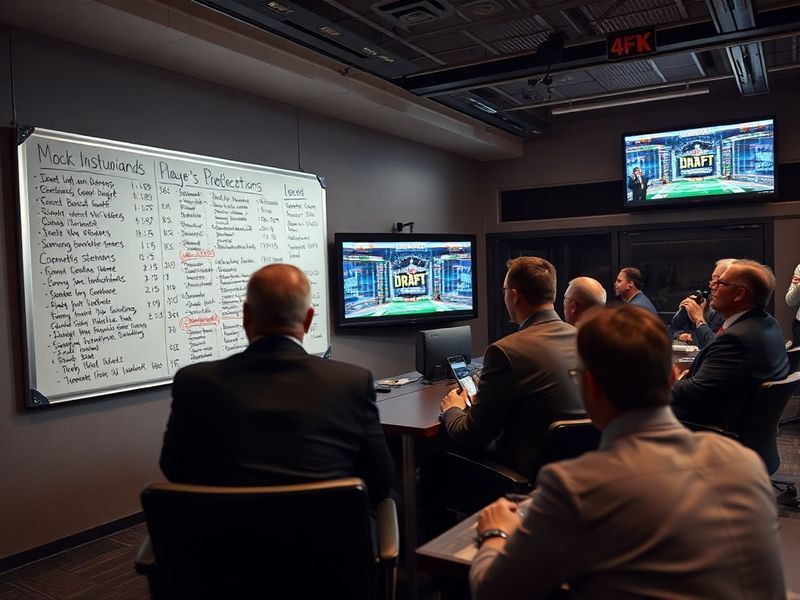
Mock drafts aren’t created in a vacuum. They’re the result of deep research, insider reports, and predictive modeling. Analysts begin by studying team needs, which are often ranked by positional scarcity and roster gaps. A team with a weak offensive line, for example, may be projected to prioritize a tackle or guard early, regardless of overall talent.
Player evaluations are another cornerstone. Scouts assess not just physical traits—speed, strength, agility—but also intangibles like football IQ, work ethic, and leadership. These evaluations are then cross-referenced with team histories. Does a franchise tend to draft defensive players early? Has a coach shown a preference for mobile quarterbacks? These patterns influence projections.
Finally, trade scenarios add a layer of unpredictability. Mock drafts often incorporate the possibility of trades, especially when teams have multiple picks or are looking to move up or down. Analysts weigh trade value charts, recent draft-day deals, and team cap situations to project potential swaps.
Key Factors Analysts Consider
- Team Needs: Even the most talented player won’t be drafted by a team that doesn’t have a role for them.
- Player Talent vs. Draft Position: Elite prospects often defy positional value, forcing teams to bend their usual draft rules.
- Coaching Philosophies: Some coaches favor certain schemes or positions, which can override traditional draft trends.
- Medical Reports: Injuries or medical red flags can drastically alter a player’s draft stock.
Why Mock Drafts Matter Beyond Fan Engagement
While mock drafts are often treated as entertainment for fans, they serve a more strategic purpose for teams. General managers and scouting departments use them as a starting point, not a final answer. They help identify trends, such as which positions are rising or falling in value, and allow teams to prepare for various scenarios.
For example, if multiple mock drafts project a quarterback to be selected in the top five, teams may begin planning for that possibility weeks in advance. They might scout potential trade partners or evaluate backup plans at other positions. Mock drafts also help teams identify undervalued players who might slip due to positional bias or media narratives.
The rise of advanced analytics has further refined mock drafts. Teams now use data-driven models to predict draft outcomes based on historical trends, player performance metrics, and even social media sentiment. These tools don’t replace human judgment, but they add a layer of precision to projections.
The Evolution of Mock Drafts: From Newspapers to Big Data
Mock drafts have been a staple of NFL draft coverage for decades. In the pre-internet era, they were a niche product, shared in newspapers and magazines. Analysts like Mel Kiper Jr. and Todd McShay built their reputations on accurate projections, turning mock drafts into a cottage industry.
Today, mock drafts are a 24/7 phenomenon. Websites like Dave’s Locker NFL Draft section publish updated mock drafts daily, incorporating the latest news, combine results, and pro day performances. Social media has amplified their reach, with analysts like Ian Rapoport and Adam Schefter breaking news that instantly reshapes projections.
The digital age has also democratized mock drafts. Fans no longer rely solely on professional analysts; they can now create their own mock drafts using interactive tools on sites like ESPN and NFL.com. These platforms allow users to simulate trades, adjust for team needs, and even factor in draft-day surprises.
The Role of the NFL Combine and Pro Days
The NFL Scouting Combine and college pro days are critical inflection points for mock drafts. A strong performance in the 40-yard dash, vertical jump, or bench press can catapult a player up draft boards. Conversely, a poor showing can lead to a significant drop. For example, a quarterback who was projected as a top-10 pick might fall to the second round after a disappointing combine.
Pro days offer another layer of data. While the combine tests athletes in a controlled environment, pro days reflect their performance in familiar settings, often with their college coaches present. Scouts pay close attention to these results, as they provide a clearer picture of a player’s true abilities.
Challenges and Limitations of Mock Drafts
Despite their utility, mock drafts are inherently speculative. The NFL Draft is unpredictable by design, with teams often making last-minute decisions based on new information. Injuries, late-breaking rumors, and even personal interviews can alter a player’s draft stock in an instant.
One of the biggest challenges is balancing talent with need. A team might covet a generational talent, but if they don’t have a position for them, the player could slip. Conversely, a team with a glaring weakness might reach for a player earlier than expected, defying conventional wisdom.
Another limitation is the echo chamber effect. As mock drafts converge around certain players or positions, media narratives can become self-reinforcing. This can lead to overhyped prospects being selected too early or undervalued players falling too far. Analysts must resist the temptation to follow the crowd, even when the consensus is overwhelming.
Common Pitfalls in Mock Drafts
- Overvaluing Combine Metrics: While physical traits matter, they don’t always translate to on-field success.
- Ignoring Scheme Fit: A player’s skills must align with a team’s system to maximize their potential.
- Underestimating Trades: Mock drafts often assume no trades, which can lead to inaccurate projections.
- Overreacting to Rumors: Late-breaking news can shift draft boards, but not all rumors are reliable.
How to Use Mock Drafts Effectively
For fans, mock drafts are a way to engage with the NFL Draft before the real thing. They provide a framework for understanding how teams might approach their selections, even if the final outcome differs. For aspiring analysts, mock drafts are a training ground for developing scouting skills and understanding team dynamics.
But the key to using mock drafts effectively is to treat them as guides, not gospel. The draft is a fluid process, and surprises are inevitable. The best mock drafts acknowledge this unpredictability, offering a range of possibilities rather than a single definitive answer.
For teams, mock drafts are a tool for preparation. They help identify potential targets, assess trade value, and refine draft strategies. The most successful franchises use mock drafts as a starting point, then adapt as new information emerges. Flexibility is crucial, as the draft’s unpredictability often separates good teams from great ones.
Ultimately, mock drafts are a reflection of the NFL’s complexity. They blend data, intuition, and a touch of artistry, capturing the essence of a league where every pick can change a franchise’s trajectory. Whether you’re a fan, an analyst, or a team executive, mock drafts offer a fascinating window into the future of the NFL.
Conclusion: The Enduring Appeal of Mock Drafts
NFL draft mock drafts are more than just a pre-draft pastime—they’re a vital part of the NFL ecosystem. They bridge the gap between speculation and strategy, offering insights into how teams might build for the future. For fans, they’re a way to connect with the draft before the action begins. For analysts, they’re a chance to showcase expertise and influence the conversation. And for teams, they’re a blueprint for navigating one of the most unpredictable events in sports.
As the NFL continues to evolve, so too will the tools and techniques used to project draft outcomes. But no matter how advanced analytics become, the human element will always remain. Mock drafts will continue to captivate audiences, not because they predict the future with certainty, but because they capture the excitement, uncertainty, and hope that define the NFL Draft.