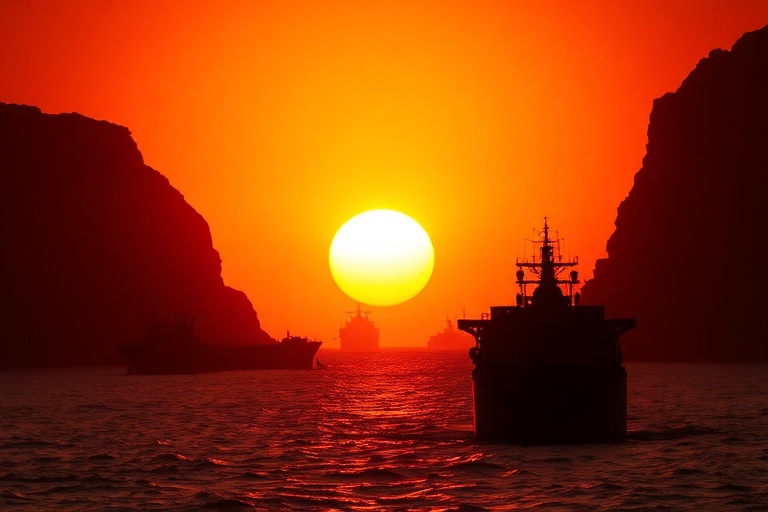
Hormuz News: Why the Strait of Hormuz Matters to Global Energy
The Strait of Hormuz: A Narrow Channel of Global Importance
The Strait of Hormuz is more than just a geographical feature—it is the world’s most critical chokepoint for oil and natural gas transport. Connecting the Persian Gulf to the Gulf of Oman, this narrow waterway, barely 21 miles wide at its narrowest point, facilitates the passage of roughly 20-30% of the world’s seaborne oil. For nations dependent on Middle Eastern energy, the stability of Hormuz is not just a regional concern but a global one. Disruptions here send ripples through financial markets, influence geopolitical alliances, and shape energy policies from Washington to Beijing.
In recent years, the strait has become a focal point of international tension. Geopolitical rivalries, maritime security challenges, and the ever-present risk of conflict have turned Hormuz into a flashpoint. The region’s complex web of alliances—between Iran, its neighbors, and global powers—adds layers of intrigue to an already volatile situation. Understanding Hormuz requires more than just a glance at a map; it demands a deeper look at history, economics, and the power dynamics that define global energy security.
The Historical Weight of Hormuz
The Strait of Hormuz has been a strategic crossroads for centuries. Ancient trade routes once carried spices, silk, and precious metals through its waters, connecting the Indian subcontinent to the Mediterranean. By the 16th century, Portuguese explorers and later British and Dutch traders recognized its importance, establishing forts and trade posts along its shores. The strait’s significance only grew with the discovery of oil in the Persian Gulf in the early 20th century. Suddenly, Hormuz was not just a trade route but the artery of the world economy.
This historical legacy is not merely a footnote. It informs modern geopolitics. Iran, which controls the northern shore of Hormuz, views the strait as a vital national interest. The 1953 coup that reinstated the Shah with Western backing, the 1979 Islamic Revolution, and the subsequent eight-year war with Iraq all shaped Iran’s approach to Hormuz. Today, Iran’s military posture—including its fleet of fast-attack boats and anti-ship missiles—reflects a strategy designed to deter adversaries while maintaining leverage over global energy flows.
Modern Challenges: Security and Geopolitical Tensions
The stability of the Strait of Hormuz is under constant threat from a mix of regional conflicts, proxy wars, and great-power competition. One of the most pressing concerns is the risk of a deliberate blockade or disruption. Iran has repeatedly threatened to close the strait in response to sanctions or perceived threats, a move that could send oil prices skyrocketing. In 2019, attacks on oil tankers near Hormuz, attributed to Iran, temporarily disrupted shipping and heightened tensions. The incident underscored how vulnerable global energy supplies are to localized conflicts.
Beyond Iran, other regional players complicate the picture. Saudi Arabia and the United Arab Emirates, both heavily reliant on Hormuz for oil exports, have invested in alternative export routes, such as the Abu Dhabi Crude Oil Pipeline and expanded ports in the Red Sea. Meanwhile, the United States maintains a military presence in the region, including its Fifth Fleet based in Bahrain, to ensure freedom of navigation. The presence of foreign navies, however, often escalates tensions rather than easing them. In 2021, a drone strike on a commercial vessel in the Gulf of Oman, linked to Iran, demonstrated how quickly maritime security can unravel.
These challenges are not isolated. They are part of a broader pattern of geopolitical maneuvering in the Middle East, where regional powers and global actors vie for influence. The rivalry between Iran and Saudi Arabia, the competition between the U.S. and China for energy security, and the ongoing Israeli-Palestinian conflict all intersect at Hormuz. Each actor brings its own calculus to the table, making the strait a microcosm of global power struggles.
The Economic Ripple Effect of Hormuz Disruptions
The economic impact of a Hormuz closure would be immediate and severe. Oil prices would surge, affecting everything from gasoline prices at the pump to the cost of manufacturing goods. Airlines, shipping companies, and energy-dependent industries would face higher costs, potentially slowing economic growth. In 2020, the U.S. Energy Information Administration estimated that a one-day closure of Hormuz could remove 18-20 million barrels of oil from the global market—roughly 20% of daily consumption.
This vulnerability has led to a diversification of global energy sources. Countries like the U.S., once heavily reliant on Middle Eastern oil, have reduced their dependence through shale production and renewable energy investments. Meanwhile, Asian nations such as China and India remain deeply dependent on Hormuz, importing over 70% of their oil from the Persian Gulf. For these nations, energy security is not just an economic issue but a national security priority. China, in particular, has sought to strengthen ties with Iran and other Gulf states, both to secure energy supplies and to counter U.S. influence in the region.
The strait’s economic significance extends beyond oil. Natural gas, which is increasingly replacing coal in power generation, also flows through Hormuz. Qatar, the world’s largest exporter of liquefied natural gas (LNG), relies on the strait to ship its gas to Asia and Europe. Any disruption here would have cascading effects on global energy markets, particularly in regions like Japan and South Korea, where LNG is a critical component of energy security.
What’s Next for Hormuz?
The future of the Strait of Hormuz hinges on a delicate balance of diplomacy, deterrence, and economic adaptation. One potential path forward is the revival of nuclear negotiations between Iran and Western powers, which could ease sanctions and reduce tensions. However, the prospects for such an agreement remain uncertain, particularly in light of Iran’s expanding nuclear program and its support for proxy groups across the region.
Another factor is the role of technology. Advances in renewable energy, energy storage, and carbon capture could reduce global dependence on Middle Eastern oil over time. Yet, the transition will be slow, and in the interim, Hormuz will remain a critical chokepoint. Meanwhile, technological innovations in maritime security—such as drones, AI-driven surveillance, and autonomous vessels—are being deployed to monitor and protect shipping lanes. These tools offer some hope but also introduce new risks, including cyber threats and the potential for miscalculation.
Ultimately, the stability of Hormuz will depend on the willingness of regional and global powers to prioritize cooperation over confrontation. The alternatives—escalating tensions, economic instability, and environmental risks—are too dire to ignore. For now, the world watches closely as events in the Strait of Hormuz continue to shape the global energy landscape.
Key Takeaways for Global Observers
Understanding the Strait of Hormuz requires recognizing its role as both a historical trade route and a modern geopolitical flashpoint. Here are the essential points to keep in mind:
- Energy Security: Roughly 20-30% of the world’s seaborne oil passes through Hormuz, making it a linchpin of global energy markets.
- Geopolitical Tensions: Iran’s military posture, regional rivalries, and great-power competition all converge at Hormuz, creating a volatile mix.
- Economic Impact: A disruption in Hormuz would send oil prices soaring, affecting industries and consumers worldwide.
- Diversification Efforts: Countries are investing in alternative energy sources and export routes to reduce their dependence on Hormuz.
- Future Outlook: The stability of Hormuz will depend on diplomacy, technological innovation, and the ability of global powers to manage tensions.
For those interested in the intersection of energy, geopolitics, and global markets, staying informed about developments in the Strait of Hormuz is essential. The stakes are too high to ignore.