Few footballers embody the spirit of consistency and leadership quite like Rafael Márquez. Born on February 13, 1979, in Zamora, Michoacán, Mexico, Márquez rose from modest beginnings to become one of the most respected defenders of his generation. His career spanned two decades, featuring stints with top European clubs and a record number of appearances for the Mexican national team. More than just a player, Márquez became a symbol of Mexican football’s global ascent during the early 21st century.
His journey was marked by tactical intelligence, aerial dominance, and a calm presence on the pitch. Often compared to players like Franco Baresi and Alessandro Nesta for his elegance and reading of the game, Márquez carved out a legacy that transcended borders. He was not only a defensive rock but also a player who could dictate the tempo of a match from deep positions. His ability to play as both a center-back and defensive midfielder made him a rare and versatile asset.
The Rise of a Mexican Star: From Atlas to Europe
Márquez began his professional career with Atlas in Mexico’s top division, where his performances quickly caught the attention of European scouts. His technical ability and composure under pressure set him apart from many of his peers. In 2000, he made the bold move to Europe by signing with AS Monaco in France. This transition was pivotal—not only for his career but for Mexican football as a whole, as he became one of the first wave of Mexican players to succeed in the highly competitive European leagues.
At Monaco, Márquez thrived under coach Didier Deschamps. His partnership with players like Ludovic Giuly and Jérôme Rothen helped Monaco reach the 2004 UEFA Champions League final, where they narrowly lost to Porto. This campaign established Márquez as a defender capable of competing at the highest level. His performances earned him a move to FC Barcelona in 2003, a decision that would further cement his reputation.
At Barcelona, Márquez became part of a historic era under Frank Rijkaard. He was the first Mexican to play for the Catalan giants and helped the club win two La Liga titles (2004–05, 2005–06) and the 2006 Champions League. His ability to play out from the back and his leadership in defense were instrumental in Barcelona’s tactical evolution during that period. Playing alongside legends like Ronaldinho and Carles Puyol, Márquez proved that Mexican defenders could excel in the world’s most demanding league.
From the Pitch to the Captain’s Armband: Leadership in Green
Márquez made his debut for the Mexican national team in 1997 at just 18 years old. Over the next 14 years, he became the heart of Mexico’s defense and eventually its captain. He represented Mexico in four FIFA World Cups (1998, 2002, 2006, 2010, 2014, and 2018), a record six tournaments including qualifiers, and captained the team in three. His longevity and consistency were unmatched in CONCACAF football.
One of his most memorable performances came in the 2006 World Cup in Germany. Despite Mexico’s early exit, Márquez captained the team with dignity and played a full 90 minutes in all four matches. His leadership was especially evident in the Round of 16 clash against Argentina, where Mexico pushed the South Americans hard before falling 2–1. Four years later, in South Africa, he again led Mexico to the Round of 16, though controversy surrounded his red card in the group-stage win over Uruguay, which many argued was overly harsh.
Márquez’s international career was not without controversy. His decision to play in a friendly for Mexico in 2017 while under investigation for alleged links to a drug cartel drew significant criticism. Though never charged, the incident cast a shadow over his final years in the national team. He retired from international football in 2018, ending his career with 147 caps and 17 goals—the most by any outfield player in Mexican history at the time. His final match, a 1–0 win over Croatia, was a fitting tribute to a player who had given everything for his country.
A Career of Reinvention: From Barcelona to MLS and Beyond
After leaving Barcelona in 2010, Márquez continued to defy expectations. He joined the New York Red Bulls in Major League Soccer (MLS), becoming one of the league’s early stars. His arrival brought prestige and helped grow the league’s profile among Latin American players. He played three seasons in New York, scoring key goals and mentoring younger defenders.
In 2014, he returned to Mexico, playing for Club León, where he won two league titles (2013–14 Clausura, 2014–15 Apertura). His leadership was pivotal as León transformed from relegation battlers to champions. He later had short stints with Atlas and Querétaro before retiring in 2018 at age 39—an extraordinary age for a defender in modern football.
Márquez’s career was defined by reinvention. He adapted to different leagues, styles, and roles, maintaining a high level well into his late 30s. His ability to read the game, his technical quality, and his mental resilience allowed him to compete at the top level for nearly two decades. Few defenders in history have managed such a sustained career with such consistency.
Legacy and Influence: The Márquez Effect on Mexican Football
Rafael Márquez’s impact extends beyond statistics and trophies. He inspired a generation of Mexican footballers to aim for Europe. Players like Carlos Salcedo, Diego Reyes, and Edson Álvarez have cited him as a role model. His success opened doors for Mexican defenders in top leagues, proving that they could thrive in physical and tactical battles across Europe.
Márquez also played a key role in Mexico’s tactical evolution. Under coaches like Ricardo La Volpe and Miguel Herrera, he was often the metronome of the team, dictating play from deep. His passing range allowed Mexico to build from the back, a concept that became central to their style in the 2010s. While Mexico never won a World Cup during his tenure, his presence helped the team become a consistent contender in CONCACAF and a respected opponent in global tournaments.
Off the pitch, Márquez became a respected figure in football governance. After retiring, he served as president of the Mexican Football Federation’s players’ commission and later joined the FIFA Council in 2021. His involvement in governance reflects his deep understanding of the game and his commitment to its future in Mexico.
In recognition of his contributions, Márquez was inducted into the Mexican Football Hall of Fame and received numerous honors, including the Golden Ball as Mexico’s best player in 2005 and 2013. He remains a sought-after ambassador for football development projects in Mexico and abroad.
A Look at His Playing Style and Attributes
Márquez was a defender of rare intelligence. He possessed excellent ball-playing ability, often stepping out of defense to start attacks. His first touch was clean, and his range of passing was comparable to that of a defensive midfielder. This made him a cornerstone of possession-based systems, whether at Monaco, Barcelona, or with the Mexican national team.
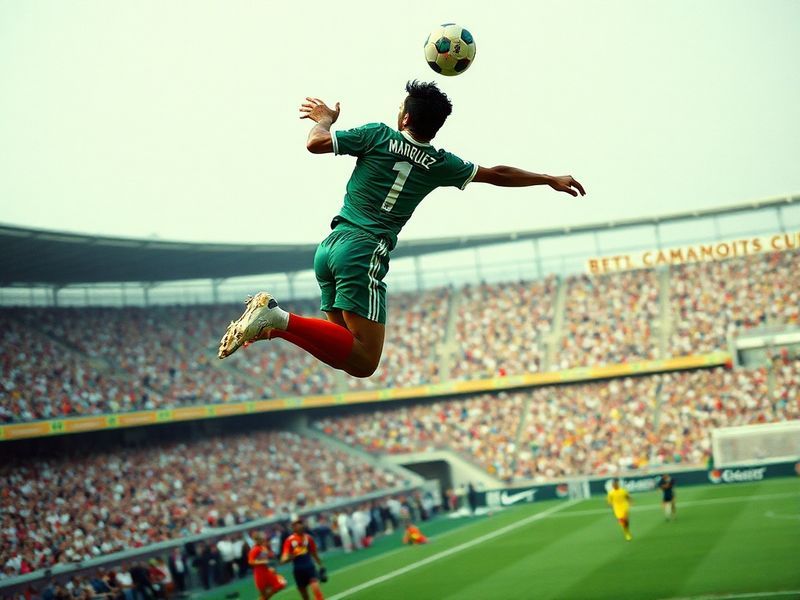
Defensively, he relied on positioning rather than aggression. His timing in tackles and headers was impeccable, and he rarely needed to make last-ditch challenges. He was also a threat from set-pieces, scoring crucial goals with his head throughout his career.
His leadership was another defining trait. On and off the pitch, teammates looked to him for guidance. His calm demeanor under pressure made him the go-to voice in critical moments, whether in a Champions League semifinal or a World Cup qualifier.
Where Does Márquez Rank Among Mexican Footballers?
When debating the greatest Mexican footballers of all time, names like Hugo Sánchez, Luis Hernández, and Cuauhtémoc Blanco often come up. But when it comes to defenders, Márquez stands at the top. His combination of longevity, success in Europe, leadership, and technical quality places him in a class of his own. While he may not have the goal-scoring record of a forward, his influence on the game’s tactical and cultural dimensions is unparalleled.
His career also coincided with a golden era for Mexican football, during which the national team regularly challenged top nations and Mexican clubs like Monterrey and Tigres rose to prominence in CONCACAF. Márquez was both a product and a driver of that era.
Conclusion: A Legacy That Endures
Rafael Márquez’s career tells the story of a player who overcame humble beginnings to achieve global recognition. From the streets of Zamora to the Camp Nou and beyond, he represented the best of Mexican football: skill, resilience, and pride. His journey inspired millions and helped redefine what it meant to be a Mexican footballer in the modern era.
While his later years were marked by controversy, his overall contribution to the game remains overwhelmingly positive. He leaves behind a legacy not just of trophies and caps, but of influence—on players, coaches, and fans alike. As Mexican football continues to evolve, Rafael Márquez remains a benchmark for excellence and a reminder of what dedication and talent can achieve.
For young Mexican players dreaming of a career in Europe, his story is a blueprint. For those who followed his path, he set a standard of professionalism and class. And for the fans, he gave moments of pride and joy that will be remembered for generations.
Explore more football legends and rising stars on Dave’s Locker Sports.
For analysis of modern tactical trends, visit our Analysis section.